
Game Info
Year
2022
Players
2-4
Age
12+
Playtime
90 min
Collection
Ratings
Creator Score
Mechanic profile
Not enough video data yet
Vibe profile
How this game feels to play
Description
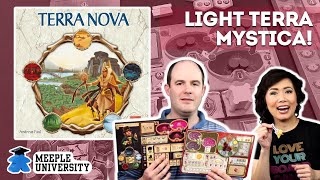
Terra Nova is a simplified version of the strategy game Terra Mystica. In the game, up to four players each control one of ten factions, each with different abilities. Compete against one another to explore new territories in peaceful competition, erect buildings, and achieve certain goals from round to round. Use your faction's special abilities in a clever way to control the largest territory at game's end and finish with the most points.
Featured Videos


Ask a Rules Question
Images

GID0317853.jpg

GID0317853_thumb.jpg
All mentions
Browse transcript mentions, sentiments, pros/cons, mechanics, topics, quotes, and references.
Total mentions: 19
This page: 19
Sentiment:
pos 9 ·
mix 3 ·
neu 1 ·
neg 2
Showing 1–19 of 19
Video VcOQ4yIN3HY
Watch It Played Discussion at 4:05 sentiment: positive
video_pk 89600 · mention_pk 238247
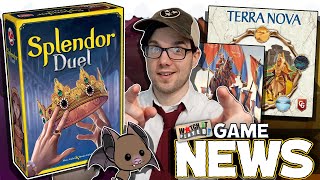
Click to watch at 4:05 · YouTube ↗
Overall sentiment (raw)
positive
Pros
- Simplified, streamlined, and accessible version of Terra Mystica
- Shorter play time and lower complexity
- Maintains tension and greatness of the original
Cons
none
Thematic elements
- Reaching different objectives each round with 10 different dynamically unique factions.
Comparison games
- Terra Mystica
Mechanics (from transcript analysis)
- Faction-based — Players will be able to choose from 10 different factions, all of which are dynamically unique.
- Objective-based — The aim is 'reaching different objectives each round'.
Video topics + discussion points
No key topics recorded for this video.
Quotes (from this video)
- this whole theme which i for one think is pretty unique just speaks to me
- i really am excited to see big box uve farming games leave the german countryside explore something fresh
- this new exciting marvel cinematic universe legendary expansion features characters from the first and second guardians of the galaxy movies featuring images pulled straight from both guardians of galaxy films recapturing the adventure
- terra nova is just that a more streamlined and accessible version of terra mystica
- Cosmos games also announced a brand new second expansion to Targi just like that out of the blue another expansion to one of my all-time favorite games
- this thing's going to go up against charizard a carves and lacquered box metal dragon and phoenix pieces stone textured resin tiles embroidered bags fabric game boards it's a sight to behold with a price tag that's also a sight to behold 350 dollars but for a luxury item to cherish for a lifetime i think this is a pretty amazing project
- i love the base game and this is a no-brainer to me
- the original king's dilemma was a blast so i'm really interested to see how this one unfolds
- that bit does sound different and exciting
- which i have to admit is a pretty cool theme for a game it sounds like the type of anime i like
References (from this video)
No references stored for this video.
Video t47jFiuUQx4
Meeple University Top 10 List at 2:21 sentiment: positive
video_pk 89371 · mention_pk 237222

Click to watch at 2:21 · YouTube ↗
Overall sentiment (raw)
positive
Pros
- Simpler version of a classic game
- Builds on established game lineage
Cons
none
Thematic elements
Comparison games
- Terra Mystica
- Gaia Project
- Tuscany
- Burgundy
Mechanics (from transcript analysis)
- Area Control — Mentioned in relation to Terra Mystica, implying a similar core mechanic.
Video topics + discussion points
No key topics recorded for this video.
Quotes (from this video)
- uh yes sister Ami yes by boarding guys and it has rondel worker placement game Wheel rather than a Rondo thank you thank you um but it was you know for everything that you'll see here it's fundamentally a uh simple worker placement leading to a tile placement but it's very interesting tile placement
- plain craft this is this was successfully kick-started we this is the deluxe edition with beautiful components by cardboard I can't say things right now cardboard Alchemy yeah very uh very big in the hotness at the moment this one indeed indeed
- next one is Evergreen now this is by the designer of photosynthesis it has some same feeling but I think it's not as special as rotationally as photosynthesis yeah you really struggle to uh to visualize what was going on with photosynthesis and even I did and I can rotate stuff in my head oh right yeah it's very challenging that one yeah this one Evergreen
- next one is endless winter now this is this is the uh the Australian version which has got gas Studios so I am part of goth Studios with Mark and Carl so there's no way I'm gonna review this game I'm just telling you that I think this is going to be it's well anticipated well anticipated it'll be a in my anticipated list not because I want to get it but because I'm excited for our partner Fantasia games so it's liberation
- if you're in Australia um Essen weekend corresponds with Pax Australia week and it'll be a demo there as well and hopefully be for sale there as well
- this is we're helping Mozart in his last days and this is also it is going to be I think it's really good the components are great it's double layered it's from Denver games which is the rectil guys let me show you the back of the box it boxes kind of like typical Euro gaming and I was looking at the components I was punching it out the other day and look at this side it's so cool it's like it's music book but it's a double layer player board ta-da it we have not played this yet as of today but it looks like kind of like the Concordia style card play which the deck building pool building pool action Action Pool thank you so theme is great so excited for this one
- so again what are your release am I going to see you at Essen let me know let us know in the comments section below and I'll be happy to also check it out maybe it is your game maybe someone else's game I don't care in any cases write in the comments and I'll check it out anything else Sam
- if you enjoy this video and you want us to make this sort of video or you know maybe our most anticipated other games or our whole Essence Hall games it's probably like should be another one which is showing and then compare this video with the next one anyways if you do that please let us know like the video comments below and subscribe and hit the bell
References (from this video)
No references stored for this video.
Video 0NwYb79CE5U
Getting Games Discussion at 7:07
video_pk 89373 · mention_pk 237260
Click to watch at 7:07 · YouTube ↗
Pros
none
Cons
none
Thematic elements
Comparison games
none
Mechanics (from transcript analysis)
Mechanics unknown.
Video topics + discussion points
No key topics recorded for this video.
Quotes (from this video)
No quotes stored for this video.
References (from this video)
No references stored for this video.
Video ACx6W_QOeiA
Meeple University Unboxing at 55:15 sentiment: mixed
video_pk 89305 · mention_pk 236966

Click to watch at 55:15 · YouTube ↗
Overall sentiment (raw)
mixed
Pros
- Simplified version of popular games
- Language independent components (mostly)
Cons
- Rulebook not initially in English
- Fewer components than the original
Thematic elements
- Exploration and settlement
Comparison games
- Terra Mystica
- Project Gaia
Mechanics (from transcript analysis)
- Area Control — Similar to Terra Mystica, likely involving placing factions on a map.
- Resource Management — Implied by the nature of Terra Mystica.
- Set Collection — Implied by the factions and components.
Video topics + discussion points
No key topics recorded for this video.
Quotes (from this video)
- I have not learned from previous years previous conventions had too many games
- this is a transportation and game which must have some sort of roots so that's always exciting for me
- this is the bit I like this is what makes me potentially see the game
- we people would run there line up in front of their booths and then slowly getting to the booths grab the game and then pay it's insane
- Spill feels like Disneyland for me
- wow look at this oh musics
- this is like beans everywhere
References (from this video)
No references stored for this video.
Video yDLltrTZLXw
kovray Convention Recap at 37:25 sentiment: other
video_pk 89124 · mention_pk 236320

Click to watch at 37:25 · YouTube ↗
Overall sentiment (raw)
Excited/Appreciative
Pros
- Lighter version of Terra Mystica
- Good entry point to heavier games
- Part of a larger game universe
- Takes the Terra Mystica experience and condenses it
Cons
- Still a heavy game, not for beginners.
- Not a light game by any means.
Thematic elements
Comparison games
- Terra Mystica
Mechanics (from transcript analysis)
- Area Control — Implied connection to Terra Mystica which features area control.
- Resource Management — Implied connection to Terra Mystica which features resource management.
Video topics + discussion points
No key topics recorded for this video.
Quotes (from this video)
- the fact that me and Ilia can just pull that game out and play it as a two player only game very excited
- this is not a light no it's not like I think I've seen some people compare to like for like Terra Mystic or for toddlers like that is not the case whatsoever this is still a heavy game but it is within that like hour to hour and a half chunk where Terra Mystika can be two to four hours
- Board game universes yes there's more games in the same universe which is one of my favorite things and you know that about me because I've said it in every video that we can I want to see more universes I want to see universes grow within the game so this is really cool
References (from this video)
No references stored for this video.
Video -dvPHdQke7g
Meeple University Top 10 List at 22:56 sentiment: positive
video_pk 89073 · mention_pk 236020
Click to watch at 22:56 · YouTube ↗
Overall sentiment (raw)
positive
Pros
- Good introduction to Terra Mystica
- Focuses on map gameplay
- Rewarding player interaction
Cons
none
Thematic elements
- Lighter version of Terra Mystica
Comparison games
- Terra Mystica
- Project A
Mechanics (from transcript analysis)
- Area Control — Players expand territory and gain benefits from proximity to opponents.
- Resource Management — Implied through upgrading buildings and managing resources.
- Track Advancement — Features track advancement, similar to Terra Mystica.
Video topics + discussion points
No key topics recorded for this video.
Quotes (from this video)
- there were a number of different ways to engine build and work towards you know you could get lots of large workers so you had lots of choice of actions or you could get lots of incomes but it ended up being a really tight battle on that tile placement the Army Warrior placement board
- it's the type of Cooperative that no Alpha player can take control
- the way you draft them here you've got so many things to think about
- it's a brilliant release
- this is the best real-time game there is because there's very few rules and that means you don't have to stop and ask each other the rules all the time
- it's highly interactive you look at other opponents what they are close to you can also steal one of their
- this is actually going to sound like quite an understated review because there's nothing there's not much new here this is a five action Euro it's got a map it's got a um you know it's got a track it's got all the sorts of things said collection nothing really new
- the dice drafting you mentioned before each die that you take it's going to have a color which tells you how many resources which tells you what resource you get it's going to have a number which tells you how many of that resource you'll get and it dictates what action the dye is connected to and the action points you'll get is equal to 7 minus the number on the die
- the map is really tight once people have built in locations it really blocks others out and that's a lot it's a lot tighter than I'm used to seeing these days on Euro map boards and it was what made it stand out
- what I like about this is that it's combo your egg combo your actions of other players back of cards
- you've always dropped like the risk yeah you've always got the risk if you're just waiting for that one little extra thing to come into someone's hand you've got that risk that they all get
References (from this video)
No references stored for this video.
Video cWlc5cW75QM
UndeadVikingVideos Discussion at 2:34:57 sentiment: mixed
video_pk 88138 · mention_pk 231641
Click to watch at 2:34:57 · YouTube ↗
Overall sentiment (raw)
mixed
Pros
none
Cons
- Too streamlined
- Lacked fun
Thematic elements
Comparison games
- Terraforming Mars
Mechanics (from transcript analysis)
- Streamlined version — Lance describes Terra Nova as a super streamlined version of Terraforming Mars.
Video topics + discussion points
No key topics recorded for this video.
Quotes (from this video)
- we don't even have to exist anymore
- The road to road to hell is paved in Good Intentions and all that
- it's a lot of Christmas man that's so much Christmas I'm GL I don't want to do that sounds like Christmas coming out your ass
- I just feel like you know I mean I know I complain all the time about the fact that like you know because you work in the industry you get kind of burnt out on games and whatever and it's a real thing but I mean it's just it's like I would love to find like a board game that like I didn't publish that when I played it I'd be like oh my gosh this game's freaking amazing I can't believe how cool this is that just doesn't seem to happen
- I think that's a good point I feel like still remember gamers are so pretentious possibly be attached to something so not non doesn't matter in any way in your world
- There's going to be somebody standing there being like N you did it wrong did it wrong should have done it like this shouldn't have done it don't fix it if it ain't broke you know that kind of all that kind of stuff just it's endless amounts of that kind of stuff is so that is it's part of the territory
- I mean you know it's it's it's it's it's it's it's it's it's it's it's it's it's it's it's it's it's it's it's it's it's it's it's it's it's it's it's it's it's it's it's it's it's it's it's it's it's it's it's it's it's it's it's it's it's it's it's it's it's it's it's it's it's it's it's it's it's it's it's it's it's it's it's it's it's it's it's it's it's it's it's it's it's it's it's it's it's it's it's it's it's it's it's it's it's it's it's it's it's it's it's it's it's it's it's it's it's it's it's it's it's it's it's it's it's it's it's it's it's it's it's it's it's it's it's it's it's it's it's it's it's it's it's it's it's it's it's it's it's it's it's it's it's it's it's it's it's it's it's it's it's it's it's it's it's it's it's it's it's it's it's it's it's it's it's it's it's it's it's it's it's it's it's it's it's it's it's it's it's it's it's it's it's it's it's it's it's it's it's it's it's it's it's it's it's it's it's it's it's it's it's it's it's it's it's it's it's it's it's it's it's it's it's it's it's it's it's it's it's it's it's it's it's it's it's it's it's it's it's it's it's it's it's it's it's it's it's it's it's it's it's it's it's it's it's it's it's it's it's it's it's it's it's it's it's it's it's it's it's it's it's it's it's it's it's it's it's it's it's it's it's it's it's it's it's it's it's it's it's it's it's it's it's it's it's it's it's it's it's it's it's it's it's it's it's it's it's it's it's it's it's it's it's it's it's it's it's it's it's it's it's it's it's it's it's it's it's it's it's it's it's it's it's it's it's it's it's it's it's it's it's it's it's it's it's it's it's it's it's it's it's it's it's it's it's it's it's it's it's it's it's it's it's it's it's it's it's it's it's it's it's it's it's it's it's it's it's it's it's it's it's it's it's it's it's it's it's it's it's it's it's it's it's it's it's it's it's it's it's it's it's it's it's it's it's it's it's it's it's it's it's it's it's it's it's it's it's it's it's it's it's it's it's it's it's it's it's it's it's it's it's it's it's it's it's it's it's it's it's it's it's it's it's it's it's it's it's it's it's it's it's it's it's it's it's it's it's it's it's it's it's it's it's it's it's it's it's it's it's it's it's it's it's it's it's it's it's it's it's it's it's it's it's it's it's it's it's it's it's it's it's it's it's it's it's it's it's it's it's it's it's it's it's it's it's it's it's it's it's it's it's it's it's it's it's it's it's it's it's it's it's it's it's it's it's it's it's it's it's it's it's it's it's it's it's it's it's it's it's it's it's it's it's it's it's it's it's it's it's it's it's it's it's it's it's it's it's it's it's it's it's it's it's it's it's it's it's it's it's it's it's it's it's it's it's it's it's it's it's it's it's it's it's it's it's it's it's it's it's it's it's it's it's it's it's it's it's it's it's it's it's it's it's it's it's it's it's it's it's it's it's it's it's it's it's it's it's it's it's it's it's it's it's it's it's it's it's it's it's it's it's it's it's it's it's it's it's it's it's it's it's it's it's it's it's it's it's it's it's it's it's it's it's it's it's it's it's it's it's it's it's it's it's it's it's it's it's it's it's it's it's it's it's it's it's it's it's it's it's it's it's it's it's it's it's it's it's it's it's it's it's it's it's it's it's it's it's it's it's it's it's it's it's it's it's it's it's it's it's it's it's it's it's it's it's it's it's it's it's it's it's it's it's it's it's it's it's it's it's it's it's it's it's it's it's it's it's it's it's it's it's it's it's it's it's it's it's it's it's it's it's it's it's it's it's it's it's it's it's it's it's it's it's it's it's it's it's it's it's it's it's it's it's it's it's it's it's it's it's it's it's it's it's it's it's it's it's it's it's it's it's it's it's it's it's it's it's it's it's it's it's it's it's it's it's it's it's it's it's it's it's it's it's it's it's it's it's it's it's it's it's it's it's it's it's it's it's it's it's it's it's it's it's it's it's it's it's it's it's it's it's it's it's it's it's it's it's it's it's it's it's it's it's it's it's it's it's it's it's it's it's it's it's it's it's it's it's it's it's it's it's it's it's it's it's it's it's it's it's it's it's it's it's it's it's it's it's it's it's it's it's it's it's it's it's it's it's it's it's it's it's it's it's it's it's it's it's it's it's it's it's it's it's it's it's it's it's it's it's it's it's it's it's it's it's it's it's it's it's it's it's it's it's it's it's it's it's it's it's it's it's it's it's it's it's it's it's it's it's it's it's it's it's it's it's it's it's it's it's it's it's it's it's it's it's it's it's it's it's it's it's it's it's it's it's it's it's it's it's it's it's it's it's it's it's it's it's it's it's it's it's it's it's it's it's it's it's it's it's it's it's it's it's it's it's it's it's it's it's it's it's it's it's it's it's it's it's it's it's it's it's it's it's it's it's it's it's it's it's it's it's it's it's it's it's it's it's it's it's it's it's it's it's it's it's it's it's it'
- Scott: Get out of your car, you know? Well, there was that video of that one person who worked for the post office that drove like drove their truck onto the uh lawn of the of the house to like and then leaned out the window and threw the package up to the door.
- Lance: I think it'll be deadlands the disne nice deadlands the Disney thing like I I think it's too much for the average Disney person like there's no V diagram between Disney and and and board games it's just I don't see it either.
- Scott: There are you you can you can like there's a guy really really nice dude meta met gcon and he's like I've got three games that I'm working on and he described the games to me and I said those games sound really neat and he said cool he's like do you want to play test them and I said we are booked out through 2020 2025.
- Lance: I mean it's it's a lot of fun um I mean it's a heavier Euro and it takes you know an hour and a half two hours to play but um I'm outelt no I'm kidding.
- Scott: but how much bigger are we still than we were say 10 years ago like it's massive it's insane games have moved so far into pop culture more than they were 10 years ago I think nobody would disagree with that except for maybe like Mass Market games you know
References (from this video)
No references stored for this video.
Video qgcRDiCzVeM
Getting Games Analysis sentiment: mixed
video_pk 87723 · mention_pk 229736
Overall sentiment (raw)
mixed
Pros
- quick playtime for a streamlined GT-style experience
Cons
- lack of depth compared to Terra Mystica for some players
Thematic elements
Comparison games
none
Mechanics (from transcript analysis)
Mechanics unknown.
Video topics + discussion points
No key topics recorded for this video.
Quotes (from this video)
- This has been such a fun thing I hope we keep doing it and get to episode 58
- it's been two and a half years honestly
- I love this game
References (from this video)
No references stored for this video.
Video 878GIJt8XpM
Getting Games Discussion at 34:37
video_pk 87348 · mention_pk 228095
Click to watch at 34:37 · YouTube ↗
Pros
none
Cons
none
Thematic elements
Comparison games
none
Mechanics (from transcript analysis)
Mechanics unknown.
Video topics + discussion points
No key topics recorded for this video.
Quotes (from this video)
No quotes stored for this video.
References (from this video)
No references stored for this video.
Video ro6E0uATlw0
The Dice Tower Interview at 6:52 sentiment: positive
video_pk 81240 · mention_pk 200649
Click to watch at 6:52 · YouTube ↗
Overall sentiment (raw)
positive
Pros
- Very pleasing music.
- Creates a cozy atmosphere with rain and thunderstorms.
- Addictive and engrossing.
Cons
none
Thematic elements
- Environmental restoration/rebuilding
Comparison games
none
Mechanics (from transcript analysis)
Mechanics unknown.
Video topics + discussion points
No key topics recorded for this video.
Quotes (from this video)
- officially Castles of Burgundy has grown on me.
- Betrayal at House on the Hill. Everyone's like that's not a party game. It's like a game night game. I'm like well, that's what I want.
- Bad Bunnies.
- It was it was it was really it was cute. I enjoyed that one.
- Do you expect any more Kinfire Delve sets to be produced?
- I don't expect any more to be produced, but I you know, and I can't even say that I want more to be produced. I'm very happy with what we have, and I like it. I think there's so much variety already. I don't need more. But if they produced it, I'd buy it because I'm a sucker and that's what I do.
- the biggest thing that I I think still shocks me sometimes is how small the industry is. It is still very um just a bunch of friends in a lot of time in a lot of ways, you know?
- It's um in a it's a well-established industry that still has that young excitement and and kind of um um, blood in it and I I I really like that.
References (from this video)
No references stored for this video.
Video CNl2wKKbDWE
BoardGameCo Analysis at 86:34:40 sentiment: negative
video_pk 80733 · mention_pk 197630

Click to watch at 86:34:40 · YouTube ↗
Overall sentiment (raw)
negative
Pros
none
Cons
- Felt like a worse version of Terramystica
- Don't see the appeal
Thematic elements
Comparison games
- Terramystica
Mechanics (from transcript analysis)
Mechanics unknown.
Video topics + discussion points
No key topics recorded for this video.
Quotes (from this video)
- I made three videos earlier this year. Three videos where I cover the different games I want to play, some games, some expansions, some games in 2024, all the various categories.
- Now, I've shown off some of the things they have in the past. I have this kind of messily over here right now. Just the various uh bits and bobs of various ways you can track 10 by 10 lists or you know uh the 5x5 lists or any different kind of challenges using fun little uh blanks that go in here and then you use little meeples to track the various uh scores you the various games you've played in order to see how well you're doing on your personal challenges.
- Um, I mean, I've played a bunch of games and I have various games I will want to play, but stick around to the end of this video and you'll see me uh put together on the fly with subject to change a challenge board for me to go through separate from my uh current challenge.
- Speaking of my current challenge, I have a package from him that just showed up over here.
- As much as Vegas Geek 3D does fun little magnetic boards, if you want a fun place to put your fun little magnetic board, check out these shelves behind me from Allplay, the table from AllPlay.
- Long story short, uh he saw that I have this challenge for myself of games I want to play. And so he said, "Hey, what if I think a challenge board for you?" And I was like, "That would be awesome."
- Do I actually have 35? 1 2 3 4 5 6 7 8 9 10. No, this is a 50 challenge board. Oh no, I need to add 50 games to the mix.
- I'm going to go ahead and open up the tokens and simply see how well we've been doing.
- Middle Ages is one of the games that I wanted to play and I have played Middle Ages.
References (from this video)
No references stored for this video.
Video 5mDVBSac19k
JestaThaRogue Analysis at 20:51
video_pk 80625 · mention_pk 196790

Click to watch at 20:51 · YouTube ↗
Pros
none
Cons
none
Thematic elements
Comparison games
- Terra Mystica
- Age of Innovation
Mechanics (from transcript analysis)
- Variable player powers — Mentioned as a game with replayability due to different faction plays.
Video topics + discussion points
No key topics recorded for this video.
Quotes (from this video)
- Every game I've ever bought, I've bought for a good reason. At least that's what I tell myself.
- I don't watch playthroughs cuz playthroughs tend to be too long.
- I think it's just the hype and how much money this project's making and all this buzz around it was making me think I should get on this now, and I just know that I'm going to get the cards, maybe play it twice, and then never play it again.
- If it can fit in this 4x4 Kallax, then it will stay. If it doesn't fit, then something's got to go.
- Will I still enjoy the game after 10 plays? It's not a question I ask myself.
- Those are the 10 questions I ask myself before buying a game
References (from this video)
No references stored for this video.
Video HOA_USM2u4I
Meeple University Review at 0:23 sentiment: positive
video_pk 64241 · mention_pk 157701
Click to watch at 0:23 · YouTube ↗
Overall sentiment (raw)
positive
Pros
- lighter version of Terra Mystica
- simple currency regime (money instead of priests/three currencies)
- power cycle and turn order passing add interesting pacing
- maps-focused with fewer terrains and buildings for easier play
- decent entry point for fans of Terra Mystica/Gaia Project
- art direction described as detailed yet approachable
Cons
- not as cheap as Terra Mystica
Thematic elements
Comparison games
- Terra Mystica
- Gaia Project
Mechanics (from transcript analysis)
- color-based placement — you can only build on spaces of your own color; can recolor spaces by paying to get spades to convert areas
- Competitive action locking (first to take power action) — the first player to take certain power-costing actions locks them off for others
- Neutral house to assist building — a simple neutral house can be placed to make building cheaper
- Passing tile and turn order — passing grants income tile and determines subsequent round order
- Power cycle (power tokens/discs) — gain power and move a disc along a power track; spend power to take actions
- Replacement/upgrading buildings — houses can be upgraded to trading posts and then to palaces with upgrades providing abilities
- River sailing and bridges — sailing enables building along rivers; bridges allow expansion to adjacent spaces
- Town points and big bonuses — found towns by accumulating seven points worth of adjacent buildings; towns grant points and in-game benefits
Video topics + discussion points
No key topics recorded for this video.
Quotes (from this video)
- I love Terra mystica
- I love project Gaia as well
- I personally recommend Terra Nova
- Terra Nova because that's the type of games I like
- for lighter one it's definitely give it a go
- it's a decent entry point and it's kind of like it uses the engine to focus on a map territory building
References (from this video)
No references stored for this video.
Video RkRryix9faI
Meeple University Discussion at 8:51 sentiment: positive
video_pk 63911 · mention_pk 157430
Click to watch at 8:51 · YouTube ↗
Overall sentiment (raw)
positive
Pros
none
Cons
none
Thematic elements
- Lightweight version of Terra Mystica; intended as a family-friendly, accessible entry point
Comparison games
- Terra Mystica
- Age of Innovation
- Gaia Project
Mechanics (from transcript analysis)
Mechanics unknown.
Video topics + discussion points
No key topics recorded for this video.
Quotes (from this video)
- "the original Terra Mystica"
- "it's a lighter version of Terra Mystica basically"
- "Gaia project is set far into the future of the same universe"
- "the tech track has combined elements of the old cult track and the way upgrades work"
- "one of the great things about age of innovation is that every game is going to play out differently"
- "age of innovation is the clear winner here"
- "that's how much I love age of innovation"
- "Teranova as a good entry point"
References (from this video)
No references stored for this video.
Video y7lpr-uGodQ
Board Gaymes James Review at 0:03 sentiment: positive
video_pk 62193 · mention_pk 154707
Click to watch at 0:03 · YouTube ↗
Overall sentiment (raw)
positive
Pros
- Awesome version of Terra Mystica, but lighter
- Quick setup
- Great vibe
- Preserves core terraforming concept
Cons
none
Thematic elements
- Array
- Planetary terraforming
- Competitive, strategic
Comparison games
- Terra Mystica
Mechanics (from transcript analysis)
- Area Control — Building on land creates regions under control.
- Resource Management — Shovels and powers on players' boards govern action costs and capabilities.
- Rondel — Players move around a circular action wheel to select actions, with distance influencing costs (represented by shovels).
- Rondel (action selection) — Players move around a circular action wheel to select actions, with distance influencing costs (represented by shovels).
- Terraforming / land transformation — The core concept of terraforming land to make it hospitable.
- Unique Player Powers — Each player has unique power effects that affect actions and resources.
- Variable Powers — Each player has unique power effects that affect actions and resources.
Video topics + discussion points
No key topics recorded for this video.
Quotes (from this video)
- this is an awesome version of teram mystica but much lighter
- you still have the core concept of trying to terraform the land that you are on for making it hospitable for the race that you are to do so
- you are going to move around this Rondell of terraforming ratings and
- shovels you need getting those shovels
- when you build on that land you're trying to get a nice area of control going
- If you are finding Tera a little bit too dony and too big of a setup this is a much quicker setup
- I would definitely give teranova a checkout
References (from this video)
No references stored for this video.
Video UZuspbfuXRQ
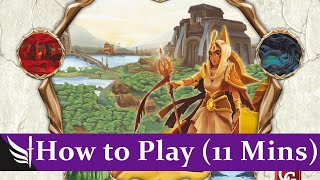
JestaThaRogue Rules Teach at 0:01 sentiment: neutral
video_pk 50976 · mention_pk 151333
Click to watch at 0:01 · YouTube ↗
Overall sentiment (raw)
neutral
Pros
- Clear, step-by-step setup demonstrated
- Demonstrates key mechanics via examples during setup and play
- Describes faction boards and initial placements
Cons
- Video is dense and lengthy, which may overwhelm new players
- Some rule details are complex and abbreviated in the narration
Thematic elements
- Races with special abilities attempt to make landscapes habitable and found towns
- Fantasy world where races terraform land and build towns across rivers
- Instructional demonstration with setup and rules explanation
Comparison games
none
Mechanics (from transcript analysis)
- Bridges — Pay money to build bridges over water to connect structures and expand adjacency
- Building and upgrading — Upgrade buildings from houses to trading posts to palaces, via paid costs and adjacency rules
- Habitable terrain conversion — Pay money to change terrain hex to the home terrain, place a home tile, then build a house on that space
- Network/Route Building — Pay money to build bridges over water to connect structures and expand adjacency
- Power and resource management — Power tokens move between bowls; spending power to perform actions via a round-based system
- Resource Management — Power tokens move between bowls; spending power to perform actions via a round-based system
- Sailing and river reach — Sailing track increases reach along rivers; higher sailing allows skipping spaces to access actions
- Town founding — Found a town when four adjacent buildings have a combined value of seven or more
Video topics + discussion points
No key topics recorded for this video.
Quotes (from this video)
- you play a fantasy race use their special abilities to make the landscape habitable for that race and build buildings to form towns and spread across the land
- found a town this happens automatically and does not count as an action
References (from this video)
No references stored for this video.
Video 0m2WjU71Grk
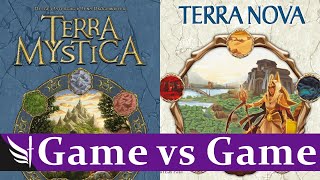
JestaThaRogue Analysis at 0:31 sentiment: negative
video_pk 50975 · mention_pk 139917
Click to watch at 0:31 · YouTube ↗
Overall sentiment (raw)
negative
Pros
- Simplified rules and higher accessibility
- Cleaner components and faster play
- Streamlined setup
Cons
- Fewer complex interactions
- Less thematic depth than Terra Mystica
Thematic elements
- Terraforming-centric space colonization with streamlined mechanics
- Science-fiction terraforming on newly discovered planets
- Lighter, more accessible flavor compared to Terra Mystica
Comparison games
- Terra Mystica
- Gaia Project
Mechanics (from transcript analysis)
- Adjacency bonuses — Power bonuses from adjacency exist but are adjusted relative to Terra Mystica.
- Money-based economy — Money is the primary resource; no workers or priests in Terra Nova.
- No sanctuaries — Sanctuaries and favorite tiles are absent; setup is streamlined.
- Palace-based abilities — Two palaces can be built in any order, each unlocking a different ability.
- Terraforming and building — Terraform and develop on planets with a simplified system.
- Terrain wheel simplification — Five terrain types instead of seven, making the terrain wheel easier to read.
Video topics + discussion points
No key topics recorded for this video.
Quotes (from this video)
- Two of the greatest games ever made
- I prefer the fantasy theme to Space theme
- The rule book is better than Terra Mystica but not as good as Terra Nova
- setup and rule book is boring
References (from this video)
No references stored for this video.
Video x4YRrlqe0x4
BoardGameCo Top 10 List at 7:01 sentiment: positive
video_pk 38769 · mention_pk 208042
Click to watch at 7:01 · YouTube ↗
Overall sentiment (raw)
positive
Pros
- familiar, solid framework
- ease of learning due to shared system
Cons
- not loved as the top pick; curiosity remains
- unclear if it outperforms other titles in the same family
Thematic elements
- terra/planetary colonization within a framework of TerraMystica-inspired play
- Terramystica-based systems; science fantasy civilization building
- system-driven civilization progression
Comparison games
- Gaia Project
- Terramystica
Mechanics (from transcript analysis)
- inter-system comparison — explores similarities/differences with Gaia Project and others
- Terramystica system inheritance — uses underlying TerraMystica framework to drive actions
Video topics + discussion points
No key topics recorded for this video.
Quotes (from this video)
- It's a deck building game that kind of gives me vibes of like let's go to Japan, like you're building your deck, but you're playing through your story and your life as you go through it.
- The art looks great. I'm very intrigued by the art.
- A 7.2 rating does not make me think it's going to fall into the need to add.
- This is a meta game around the hobby that we're in featuring all these various games as you deal with the worker placement.
- I love chaining rewards.
- Keyflower... I thought it was absolutely brilliant.
- Production holds it back a bit; I hope for a deluxeified version.
References (from this video)
No references stored for this video.
Video 9KhWRZlSrZs
Rolling Dice & Taking Names Discussion at 49:02 sentiment: positive
video_pk 1575 · mention_pk 4562
Click to watch at 49:02 · YouTube ↗
Overall sentiment (raw)
positive
Pros
- Strong thematic tie between speed/gear decisions and track design.
- Important decisions feel meaningful due to curve costs and heat management.
- Relatively streamlined take on Terra Mystica vibes without the same weight.
- Engaging engine-building through chained actions and power movement.
Cons
- Complexity can be intimidating for newcomers; requires patience to grok the curve/heat loop.
- Rule nitpicks around setup and edge-case interactions may arise in play groups.
Thematic elements
- Planetary colonization, terraforming, and resource-driven advancement
- Futuristic planetary terraforming and racing-themed development on a composed planetary landscape
- Euro-style, procedural with a racing-tinged flavor
Comparison games
- Terra Mystica
- Gaia Project
- Downforce
Mechanics (from transcript analysis)
- curve/track-drafting and curves — Movement is constrained by track curves; failing to manage curve costs leads to heat penalties and potential spinning out.
- deck-building (heat deck) — Players use a dedicated heat deck and gear cards to determine actions and track movement; discards and cool-downs shape future options.
- gear-shift movement — A simultaneous gear selection (1st through 4th) governs how many cards you play and how far you move on the board, factoring in curve costs and heat in the deck.
- Heat management — Heat cards accumulate as you speed through curves; you must discard or cool down heat to avoid penalties that disrupt your progress.
- resource- and power-tracking — Power tokens flow through bowls and are spent to take actions; power movement is a core pacing mechanic across rounds.
Video topics + discussion points
No key topics recorded for this video.
Quotes (from this video)
- Terra Nova is designed by Andreas Fowl and plays two to four players, and the sweet thing about this bad boy is that it only plays 60 to 90 minutes.
- This is a pure racing game; the gear-shift and curve mechanics create real tension as you balance speed and heat.
- Village Rails... these are the type of games that I love; they’ll stay on my shelf.
References (from this video)
No references stored for this video.
Transcript Navigation
Showing 1–19 of 19