/pic4583975.jpg)
Terramara is the name of the villages founded around 1500 B.C., mid- to late Bronze Age, in Northern Italy. People lived, travelled, and traded between the Alps mountain range and the river Po. The main occupations of the Terramara people were hunting, farming and metallurgy, casting bronze tools like axe heads in stone molds. The houses in the villages were built on piles, meaning each house is built above the ground, supported by wooden stakes.
In Terramara, you play as the chief of a clan living in one of these villages. Your goal is to develop your clan, exploring lands farther away to trade with other villages, and reach sacred places. You improve your battle strength and discover new technologies to create useful artefacts. The player who develops the best clan by gaining more development points becomes leader of all of Terramara and wins the game!
—description from the publisher


Mechanics (from transcript analysis)
Video topics + discussion points
Quotes (from this video)
- I finally decided that it's something that I should try to see how much money I'll actually make
- it's something I've been putting off for years like literally since I very first started this channel
- 80% is still well and good enough for me to go ahead with this
- sound is a bit magical in my old career that I've been doing for like 12 years
- I am planning on leaving them on as they are right now for the foreseeable future
- I don't want to flood people's timelines with all these little five to ten minute videos
References (from this video)

- host liked it, played it multiple times with different groups
- noting significant analysis paralysis in Terra Mara
Mechanics (from transcript analysis)
Video topics + discussion points
Quotes (from this video)
- it's one of the more interesting games that i've played recently
- I really liked Terra Mara and wanted to play it again
- Gloomhaven playthrough has reached the stratosphere as far as views are concerned
- The Crew is excellent
- I love dice in games but I dislike it when you have dice in games and there are just strictly good results and strictly bad results
References (from this video)

Mechanics (from transcript analysis)
Video topics + discussion points
Quotes (from this video)
- Cloudspire is one of those games that I would absolutely love to play more of and there are plans for a rematch between me and JP on my birthday week in July.
- The Graft is one of the new factions that just came out and it doesn't have a fortress. What it does is it has one piece on the board which moves around and that is their fortress. So, it's actually a mobile piece and it's big amoeba type thing.
- That's that's nonsense. Um where things like saving the game, the math, the upkeep is made trivial by the video.
- I have Frostpunk the board game. I have Frostpunk the computer game. They're the same game, but they are entirely different experiences.
- As much as I love Agemonia, it's a 30-minute setup each time we play because we're having to get all of these things out and these things and these things and these things. And that's just the nature of the game.
- No.
- Give me a good Uwe Rosenberg game, Feast for Odin. Feast for Odin solo, I love it. It's a beat your own score game, but I I love it.
- The reason why it was a bad experience for me is the solo mode for Perseverance is a very good solo mode at recreating what another player would do, but it was so far beyond my comfort level I really struggled.
- My favorite game in that category is probably either Tower Up or Ingenious. I might have to give it to Ingenious just because of my personal story with that game and the fact that I can play it with Vicky and her family and things like that.
- My copy of Imperium Classics, Imperium Legends, and Imperium Horizons have left my collection.
- I love Star Trek Captain's Chair, so there will never ever be a situation where I would prefer to play Imperium compared to Star Trek Captain's Chair.
- Assyria second edition, which has only just come out, is my favorite game from Garfield Games.
- So, if you're asking honestly for my favorite game from Garfield Games, it has to be Assyria second edition.
- The discussion has been had a number of times.
- It's not as easy as people think.
- 65% of people say that polyomino games are a subset of tile laying games.
- The secret word is scissors.
- As of this morning, we had 1,331 patron supporters.
- I will be back tomorrow at 4:00 with a live unboxing of the deluxe version of World Order.
- And then on Friday is the public public release of the final video in the Star Trek Captain's Chair series, which is the Pike solo play through.
References (from this video)

- Cool concept
- Has its fans
- Rough
- Hard to love
- Too long
- Should have been streamlined
Mechanics (from transcript analysis)
Video topics + discussion points
Quotes (from this video)
- Can we have the 90s back, please? Can we like start can like rewind back to like 89 90? Like just start there and like I'll take 10 years of the 90s again.
- The songs that remind us of the best times. The songs that remind us of the bad times.
- I drink a whiskey drink. I drink a vodka. I drink a drink. I drink a drink.
- I want to get out of here.
- They're still going around.
- What a [ __ ] horrible song.
- It's so really terrible. Like, but it was so great. Like, at the time it was like everybody listened to it was like that's the song. So catchy though. So catchy. So good.
- Doesn't have to be good. It just has to sell.
- You're an idiot then.
- I mean, no, he's uh the John Spencer Blues Explosion uh album Orange uh was R was rated by I think it was I think it was Playboy rated it the number one album to have sex to.
- Everybody should listen to the Reverend Horton Heat.
- That's fair.
- And I am whenever nobody's like I've never even heard of the replacements. I was like, are they on someone's roof?
- Well, you [ __ ] suck.
References (from this video)

Mechanics (from transcript analysis)
Video topics + discussion points
Quotes (from this video)
- And honestly, I'm not really sure I'm going to be focusing too much on any one specific game. I guess as I see them.
- My one of my sons loves Armymen. He is. I'm going to have to get a photo later before the day is over because he is going to want to see me near army gear.
- The crew is actually fantastic. I met them the other night at the um the the the demo the media demo tonight.
- Memorial 44 to me is luck as to where you can actually go followed by luck as to what you roll. I can deal with one of those two looks both together and I just feel like I don't have the agency I want.
- Terraria new expansion coming soon. That's the first time I'm hearing of that.
- This which looks fantastic. I have not seen this properly set up. Bridge or bust. Uh this feels like an insane system. It's based on like it's got to be based on like those video games. I don't know. This feels This feels crazy. Toy factor high gameplay possibly not as much my jam.
- This has been a light UK Games Expo tour. Next year I hope to do better.
- Long story short, uh Friday I slept in because of the plane and catching up on sleep. And then Sunday the trains were down. So um between the two I got you I got you uh late on the coverage.
- This is more intended as like, hey, if you haven't been to UK Games Expo, you want to get a sense of the similarities or differences to other conventions. Hopefully, this gave you a light touring of showing.
References (from this video)
- The objective decks are liked.
- Buying extra cards and culling from the deck feels good.
- The components are well-done, including player boards, dice, and card art.
- It doesn't feel like a cash grab; effort was put into the design.
- The potential for interesting elements exists.
- The game is extremely long, far exceeding the box estimate of 45 minutes per player.
- There is no save state, making it very difficult to play.
- The game is very fiddly with numerous components and setup/teardown challenges.
- Movement is very slow.
- Chopping wood feels like a chore.
- Combat is a luck fest and can be unsatisfying.
- The game can slow to a crawl when dealing with bosses and their specific rules.
- The board game doesn't offer enough compelling advantages over the video game.
- The grind of the video game doesn't translate well to a board game format.
- It feels like a failed experiment.
- The long playtime combined with fiddliness is a significant barrier.
- exploration, building, fighting mythical creatures
- Minecraft
- Slay the Spire
Mechanics (from transcript analysis)
- Combat — Players engage in combat with enemies and bosses using dice rolls, influenced by weapons and armor.
- cooperative play — Players work together to achieve common objectives to win the game.
- Deck Building — Players play cards from their hand to perform actions, and can acquire new cards to improve their deck over time.
- Dice Rolling — Dice are used for combat resolution, determining attack and defense outcomes.
- exploration — Players move around a board composed of tiles, discovering new biomes and encountering enemies.
- Objective Fulfillment — Players win by completing a series of objective cards, which can involve various in-game actions.
- Resource gathering — Players gather resources like wood and stone through actions like chopping trees and digging.
- tile laying — The game board is constructed using terrain tiles that players explore and add to.
Video topics + discussion points
Quotes (from this video)
- This game is not 45 minutes per player and it's not even close.
- My son and I, when we played through this, it took us 9 hours to go through it.
- The number one culprit for sure is the fiddliness of setup and teardown mixed with the length.
- I don't think that translates to a board game.
- I think it's a failed experiment.
- I'd love to see some of this stuff maybe in other games and I like to see it done.
- I just can't recommend it.
References (from this video)
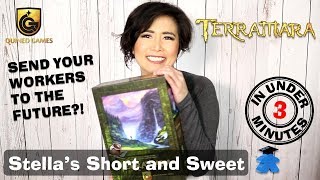
- Unique worker placement mechanics
- Artifacts provide flexible action options
- Artwork/style is appealing
- Replayability through artifact strategies
- Solid euro game feel
- Board space can feel tight; larger board or smaller meeples would help
- Culture River space isn't very clear in this transcription
Mechanics (from transcript analysis)
- block/territorial control via chieftain — A chieftain can block other players from placing on certain spaces.
- caravans and artifacts — Caravans and artifact cards influence actions and offer strategic options.
- culture track — Culture progression unlocks more artifact options.
- End Game Bonuses — Some spaces and bonuses are resolved at the end of rounds, affecting end-game scoring.
- end-of-round timing and bonuses — Some spaces and bonuses are resolved at the end of rounds, affecting end-game scoring.
- Modular Board — Boards are modular, changing layout between games.
- Modular boards — Boards are modular, changing layout between games.
- Resource Management — Managing resources is a core element of the gameplay.
- Worker Placement — Players place workers on action spaces; mechanics center on placing workers and managing when they return.
Video topics + discussion points
Quotes (from this video)
- I like that the artifacts give you options to engine build your actions so you can focus on certain things
- the game is of medium to heavy complexity
- I think the game offers unique worker placement mechanics
- it is a pretty solid euro game
- I can see us playing this game again and again trying different artifact strategies
References (from this video)
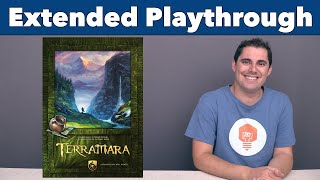
- Deep, multi-path strategy with tangible endgame payoff
- Rich interaction through raids, blocking crossroad spaces, and reserve crafting
- Strong thematic flavor with terrain types and artifact synergies
- Varied early-to-late game decisions that keep players engaged
- High complexity and many moving parts can be intimidating for new players
- Early game resource scarcity can slow progression
- Endgame scoring can be highly contingent on artifact draws and opponent moves, sometimes volatile
- Resource collection, exploration, caravan movement, and artifact-driven scoring, with a strong emphasis on crossroad actions and season-like rounds.
- A tribal frontier world featuring forests, plains, rivers, and mountains where players explore, harvest resources, and craft artifacts.
- Euro-style engine-building with narrative flavor via on-board events, terrain effects, and artifact bonuses.
Mechanics (from transcript analysis)
- Artifact crafting and card cycling — Artifacts are crafted from refined resources, granting immediate and ongoing effects. The deck is refreshed between rounds and higher-level artifacts replace lower-level ones.
- Caravan movement and crossroad economy — Caravans shuttle between crossroad spots to unlock culture, resources, and points. Crossroads provide strong upgrade and scoring opportunities and can be blocked by opponents.
- Card Crafting — Artifacts are crafted from refined resources, granting immediate and ongoing effects. The deck is refreshed between rounds and higher-level artifacts replace lower-level ones.
- Character progression and discounts — Characters flip from young to experienced to gain new bonuses and alter how military, caravan, and crafting interactions work (e.g., not losing military on occupied spots).
- Crossroad upgrades and homeland dynamics — Crossroads provide upgrades, caravan moves, and military benefits. Some spots allow permanent bonuses that affect endgame scoring (e.g., flags and outposts).
- Endgame scoring structure — Scoring is multi-faceted: artifacts, crossroads progress, outposts, caravan track positions, and resource conversion efficiency all contribute. Conditional scoring cards can dramatically shift final tallies.
- Military track and raiding — A central military track determines advantages in conflicts and triggers raid mechanics, where players can steal resources from others with some penalties or bonuses depending on character traits.
- Resource Management — Resources exist in raw form and refined form. Players convert raw into refined via actions or workers, with specific crossroad and artifact effects granting discounts or bonuses.
- Resource system: raw vs refined — Resources exist in raw form and refined form. Players convert raw into refined via actions or workers, with specific crossroad and artifact effects granting discounts or bonuses.
- Track Advancement — A central military track determines advantages in conflicts and triggers raid mechanics, where players can steal resources from others with some penalties or bonuses depending on character traits.
- Worker Placement — Players place workers to gain resources, advance caravans, and activate crossroad actions. Workers refresh and cards reset each round.
- Worker placement and action resolution — Players place workers to gain resources, advance caravans, and activate crossroad actions. Workers refresh and cards reset each round.
Video topics + discussion points
Quotes (from this video)
- I really like the look of this card
- this crossroad spot is a very powerful upgrade action
- I think it's time to become experienced with our character
References (from this video)
- High innovation in action selection and variability
- Strong team pedigree behind the design
- Possibly overwhelming on first play
- Misunderstandings or teaching gaps can derail experience
- Ship workers into the future to perform actions with long-term payoffs
- Ancient/epic setting involving time-tethered workers and engine-building
- Strategic, system-driven
Mechanics (from transcript analysis)
- direct player interaction — Player choices affect others through competition for actions and resources.
- set/engine building — Engine-building with variable variability and plan execution.
- Tableau Building — Assemble a set of actions and workers to optimize engine output.
- worker placement / future-time actions — Send workers into the future to trigger powerful actions that may not return.
Video topics + discussion points
Quotes (from this video)
- none of these games are bad games
- this is an absolutely fantastic game
- this is a polyomino game
- cockroach poker is the best party game I have played
- this entire list is a bluff
- it's the best game that awakened realms has produced with the exception of iss Vanguard