/pic7386321.jpg)









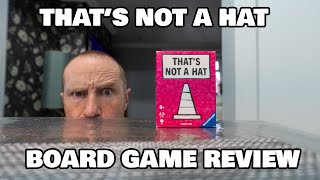










That's Not a Hat Deep Dive
What the Community Thinks About That's Not a Hat
That's Not a Hat has earned genuine enthusiasm across the board gaming community. Reviewers consistently highlight how the game delivers disproportionate fun given its simplicity. It plays beautifully as a party game that brings groups together around shared laughter and confusion. The community recognizes it as a modern classic for casual gatherings, family events, and introducing non-gamers to the hobby.
Core Mechanics That Define That's Not a Hat
Memory and Observation
The game's foundation rests on players remembering what gifts they have received. When a card is revealed and gifted face-down, it moves out of sight. Later, when called upon to pass it forward, players must recall what that hidden card actually depicts. This memory element grows increasingly challenging as the game progresses and more cards accumulate on the table. Reviewers emphasize how quickly memory fails, even for cards seen just moments before, creating natural opportunities for humor when someone confidently insists they remember something they clearly do not.
Bluffing and Doubt
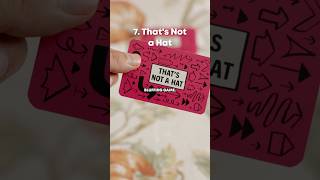
Because memory is fallible, bluffing becomes essential. When you pass a card, you must state what it is, whether or not you actually remember. The recipient can either accept the gift and say thank you, or challenge you by declaring "That's not a hat," forcing a reveal. This simple challenge mechanic transforms a memory game into a game of reading people and gauging confidence levels. The bluff works when the giver convinces others they remember correctly, even when uncertainty clouds the moment.
The That's Not a Hat Experience
Unrelenting Laughter
Reviewers repeatedly emphasize that the game is hilarious to watch and play. The humor emerges not from the game's mechanics themselves but from watching players fail at memory in real time, create increasingly unconvincing bluffs, and react with surprise when caught. Someone confidently insisting "This is a bicycle" while clearly uncertain produces genuine laughs. The game creates these moments repeatedly, with each round offering fresh opportunities for awkwardness and comedy.
Inclusive and Accessible
The game works remarkably well with mixed groups. Reviewers highlight that it requires no prior gaming knowledge, no complex strategy, and scales gracefully from 3 to 8 players. More importantly, it works across language barriers. Players who speak different languages can play together because the game transcends reliance on vocabulary or cultural knowledge. The act of remembering a simple picture and either truthfully or falsely naming it translates universally.
What Makes That's Not a Hat Stand Out
Elegant Simplicity with Hidden Depth
The game has no right to be as entertaining as it is. The core loop, repeated dozens of times, consists of drawing a card, stating what it is, and passing it. Yet this simplicity never becomes boring because the memory element ensures each round produces genuine uncertainty. Unlike many party games that rely on external entertainment (trivia, celebrity knowledge, physical stunts), That's Not a Hat creates comedy purely from the interaction between the game state and human memory. The game is short enough to play multiple rounds without fatigue, letting players engage at whatever depth they choose.
Perfect Bluffing Game Design
While many games attempt bluffing, That's Not a Hat makes bluffing the natural solution to an honest problem: you actually do forget what cards are. This authenticity distinguishes it from games where bluffing feels artificial or forced. A player truly uncertain about what they're passing may accidentally develop a convincing bluff through sheer honesty about their confusion. Conversely, someone who remembers perfectly might be doubted simply because they seem uncertain. The game creates beautiful reversals where truthfulness and dishonesty become indistinguishable to observers.
Potential Drawbacks
Memory as a Limiting Factor for Some Players
While most reviewers celebrate the memory element as a strength, some players might find it frustrating rather than funny. Players with strong facial expression control or those genuinely uncomfortable with public bluffing may feel pressured or exposed. The game asks players to essentially fail at remembering and then lie about it in front of others. For certain personalities or group dynamics, this vulnerability might reduce enjoyment rather than enhance it.
Limited Strategic Depth
The game offers virtually no strategic decision-making in the traditional sense. The only real choice is whether to accept a gift or challenge it, and this choice largely depends on reading faces rather than game information. For players seeking strategic puzzles, meaningful decision points, or games where decisions meaningfully affect odds, That's Not a Hat delivers none of these. It is purely a social experience, which makes it perfect for its intended purpose but misaligned with players seeking tactical gameplay.
If You Enjoy That's Not a Hat
Players drawn to That's Not a Hat typically appreciate bluffing games with low teach times and high social payoff. Cockroach Poker offers mean-spirited deception in a similarly compact format. Codenames delivers collaborative wordplay with the same party game energy. Trio and other memory games appeal to the same crowd seeking accessible, language-independent gameplay. Monikers shares the quick-turnaround party game appeal with escalating rounds of hilarity. Love Letter provides tense deduction in a micro-game package. These games prioritize creating moments of genuine interaction over complex rule sets or lengthy play times.
What Reviewers Are Saying
"This game has no right to be as fun as it is. You're giving gifts to each other while trying to remember who gave what and which gift you have in front of you, and it's so much fun."
— Paula Deming
"It plays well with also families and friends that speak different languages. It's perfect."
— Banter and Boards
"I really enjoyed That's Not a Hat because it is a fun game because you test your memory and you're laughing at everybody else who can't remember what they have."
— Our Family Plays Games