/pic4226421.jpg)













The Artemis Project Deep Dive
What the Community Thinks About The Artemis Project
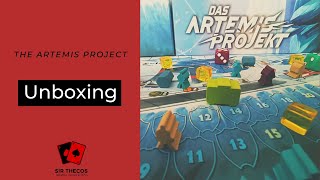
The Artemis Project has earned genuine enthusiasm from the board gaming community for its clever marriage of mechanics and theme. Reviewers like Sir Thecos and 3 Minute Board Games consistently praise its ability to deliver meaningful strategic decisions across a wide range of player counts, from solo play to a chaotic five-player table. The game, designed by Daryl Andrews and Daniel Rocchi and published by Grand Gamers Guild, strikes a balance between accessibility and depth, with a rulebook that teaches clearly while governing surprisingly rich interactions between players competing for the same spaces.
Core Mechanics That Define The Artemis Project
Dice Placement With a Push-Your-Luck Gamble
At its heart, The Artemis Project is a dice-placement game where the value on your die matters as much as where you place it. Players roll their dice and assign them to action spaces colonizing Europa, but many spaces resolve in a particular order, creating a press-your-luck gamble. A higher die often grants better rewards, yet it also exposes you to being outcompeted at crowded spaces, while a lower die might still secure a modest reward unopposed. This creates a fascinating tension: commit a powerful die and risk a crowd, or play conservatively for a safer but smaller gain.
Cascading End-Game Scoring Across Multiple Domains
Scoring in The Artemis Project spreads across expeditions resolved through dice placement, colonist collection, building construction, and resource conservation. Rather than points trickling out steadily, most arrive in a comprehensive end-game phase, which keeps the contest tense until the final round and rewards players who build coherent engines across several scoring categories. Players must balance immediate payoffs against long-term colony development, so every placement resonates with end-game implications rather than existing in isolation.
The The Artemis Project Experience
A Surprisingly Mean, Interactive Competition
Beneath its sci-fi veneer about colonizing Jupiter's icy moon lies a game of pointed player interaction. The push-your-luck mechanism is not merely luck; it is anticipation and bluffing about which spaces rivals will crowd. A relief track compensates players who get squeezed out, preventing anyone from being shut out entirely, yet the core loop stays competitive and tense. Reviewers note it plays as a genuinely mean game in the best sense, rewarding timing, reading opponents, and the occasional bold play that disrupts someone else's carefully laid plan.
Scalable Gameplay From Solo to a Full Table
The Artemis Project stands out for its flexibility. Solo players face AI drones that occupy spaces and simulate crowding, and a similar variant restores tension at two players. Three to five players hit the sweet spot where every action space becomes contested and interaction peaks. The round structure keeps play length manageable even at higher counts, and the game scales gracefully without feeling broken at either end. This versatility means a group can return to it repeatedly without the experience growing stale.
What Makes The Artemis Project Stand Out
Elegant Rulebook and Thoughtful Components
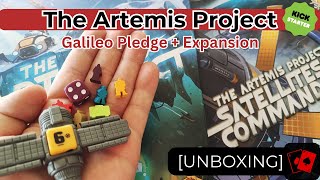
The game excels in presentation. Its rulebook is well organized, with numbered setup steps, clear images, and abundant examples that teach intuitively. Component quality matches the design: wooden colonist tokens in different worker types, chunky dice in player colors, recessed player boards that keep pieces from sliding, and artwork that stays thematically coherent. A spaceship token that physically shakes workers out of a bag is a delightful flourish, the kind of unnecessary-but-charming touch reviewers compare to the dice tower in Wingspan or the tree in Everdell.
Risk-Reward Decisions on Every Action
Every placement in The Artemis Project forces a meaningful choice. Will you bid high on a building and risk being outbid into a consolation reward? Will you place a high die on an expedition to grab a lucrative result, or a low die to signal that you want the expedition to succeed for everyone? Will you hire scarce colonists early or fill gaps later? The game never asks for a mindless action; every die shapes your trajectory toward one of several viable scoring paths.
Potential Drawbacks
Setup and Organization Overhead
The game includes many small components across multiple resource types, building cards, expedition decks, and colonist tokens. Without a dedicated insert, players often supply their own storage or spend several minutes sorting before play. The setup is not mechanically complex, but physically managing the board and components can slow the first experience. Once a group develops an organization system, this friction nearly disappears, though fresh players may find the pre-game logistics daunting.
Two-Player Mode Requires Adjustment
The crowding mechanism that makes the three-to-five-player game sing becomes less effective with only two players, since fewer dice in circulation means fewer opportunities for meaningful blocking. The game remains playable at two, and many groups add solo-mode drones to recreate the tension of contested spaces, but this is a house rule rather than the default. The Artemis Project truly shines in its intended sweet spot of three or more players.
If You Enjoy The Artemis Project
The Artemis Project shares DNA with several notable games. Fans seeking similar worker-placement-with-a-twist might explore Dinosaur Island and Tiny Epic Dinosaurs, which balance placement with risk and hidden information. Players who love the engine-building and multi-path scoring will appreciate Wingspan and Everdell, which similarly reward coherent tableau growth, though Artemis adds more direct conflict over shared spaces. Each rewards the careful, contested decision-making that gives The Artemis Project its bite.
What Reviewers Are Saying
"This is an amazing game. It plays well in all player counts, also solo, but also up to five players."
— Sir Thecos
"This game pretty much excels in the dice-placement mechanic. That is something it really excels in, and it's a really cool risk-and-reward kind of thing."
— Sir Thecos
"The value of the dice changes the benefits you get from them. They're also recovered and refreshed at the end of the turn, like a classic worker-placement game."
— 3 Minute Board Games