
/pic5988903.jpg)





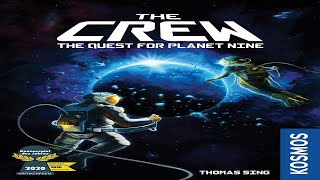














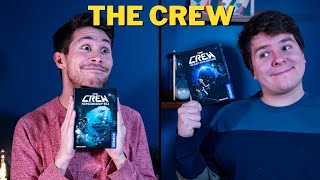


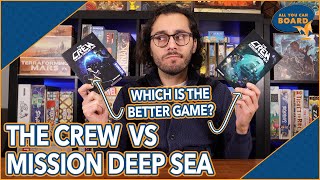














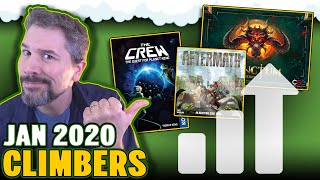

The Crew: The Quest for Planet Nine Deep Dive
What the Community Thinks About The Crew: The Quest for Planet Nine
The Crew has earned remarkable recognition across the board gaming community as a standout cooperative experience that defies the traditional trick-taking formula. Reviewers consistently highlight how the game manages to feel both approachable in its core mechanics and intellectually demanding through its mission structure. The enthusiasm centers on one core truth: this small-box game contains depth that belies its elegant simplicity. Content creators from casual streamers to competitive gamers have embraced The Crew as a landmark title that proves cooperative gameplay can deliver moments of pure satisfaction when everything clicks into place.
Core Mechanics That Define The Crew: The Quest for Planet Nine
Trick-Taking with a Cooperative Twist
At its heart, The Crew operates using the classic trick-taking mechanic where players play cards in sequence and the highest card of the leading suit wins the round. However, the game subverts expectations by making all players work together toward shared victory rather than competing for individual tricks. Each round presents specific winning conditions drawn from a logbook of 50 escalating missions. One player might need to win the gold five, while another must claim the pink eight, and a third must secure any rocket card. This cooperative reframing transforms trick-taking from a zero-sum competition into a puzzle requiring silent collaboration. The constraint that players cannot fully communicate what cards they hold creates constant tension between wanting to help teammates and needing to keep information hidden. Reviewers describe this as creating those magical moments where the team seems to operate on a shared wavelength, pulling off victories that feel impossible until they happen.
Limited Communication Under Pressure
Communication in The Crew operates under strict rules that evolve throughout the campaign. Players can place single communication tokens to indicate whether a card is their highest, lowest, or only card of a given suit. Some missions introduce a distress signal allowing players to pass one card before play begins. These constraints mean that teammates must develop an implicit understanding through observation and inference. When a player needs to communicate a complex hand, they must do so through positioning tokens on cards that simultaneously serve other purposes. This restriction prevents the game from becoming trivial while forcing meaningful decision-making about what information is worth revealing. Players experience genuine stress during final tricks when the margin between success and failure narrows to a single card choice, yet celebration erupts when the team navigates these situations through nothing more than educated guesses and careful observation of each other's plays.
The Crew: The Quest for Planet Nine Experience
Cerebral Puzzle-Solving
The Crew creates what reviewers describe as distinctly puzzly moments where teams face seemingly impossible scenarios. Missions might appear unwinnable on first examination, yet solutions emerge as players work through the logic of card distribution and trick sequencing. The intellectual engagement comes not from random chance but from the deterministic nature of the dealt hand. Knowing that a solution exists within the constraints, because the game designers deliberately constructed winnable puzzles, teams must excavate the right strategy. This cerebrality appeals to players who enjoy games requiring genuine tactical thinking rather than relying on luck. The satisfaction of cracking a particularly brutal mission rivals the best puzzle-solving experiences in modern board gaming, making The Crew attractive to strategically-minded players seeking genuine intellectual challenge.
Collaborative Accomplishment
Unlike cooperative games where one player's optimal play dominates, The Crew requires genuine teamwork where every player's decisions matter equally. Success depends on building implicit trust and learning to read subtle signals from companions. When the team succeeds at a mission that seemed impossible just minutes earlier, the celebration feels earned and collective. Reviewers consistently highlight this as the game's greatest strength, the creation of shared moments of genuine accomplishment. There is no hiding individual failures behind lucky rolls or the skill of a stronger player. Every team member must execute their role, interpret vague signals correctly, and trust their companions to do the same. This collaborative pressure transforms The Crew from a mere game into a bonding experience for groups willing to embrace the challenge together.
What Makes The Crew: The Quest for Planet Nine Stand Out
Mission Campaign Structure with Escalating Complexity
The fifty-mission logbook provides exceptional replayability while creating a natural difficulty progression. Early missions teach the mechanics with relatively straightforward objectives. Mid-campaign missions introduce wrinkles like forcing specific trick sequences or creating unusual card distribution scenarios. The logbook structure means groups can tackle missions in order, creating a narrative arc of escalating mastery. Some missions become legendary within playgroups, the ones that nearly broke the team but ultimately resulted in unforgettable moments. This campaign design gives The Crew a persistence other trick-taking games lack. Rather than repeating the same game with minor variations, each mission presents a distinct puzzle with its own character and challenge signature. Many reviewers note they have completed multiple full campaigns and still discover new strategic depths.
Accessibility Paired with Surprising Depth
The Crew bridges an unusual gap: it teaches in approximately three minutes, yet contains strategic depth that reveals itself across dozens of plays. New players understand the basic mechanics instantly. The restricted information model quickly becomes intuitive. Yet within this accessible framework lives genuine complexity. Card counting, probability assessment, trick sequencing, and information management create strategic layers that become apparent only through repeated play. Casual players can enjoy the game for the social collaboration and puzzle-solving satisfaction. Experienced players discover optimization paths and develop communication systems that evolve over time. This dual accessibility makes The Crew unusual among trick-taking games, it welcomes newcomers while rewarding deep engagement.
Potential Drawbacks
Communication Restrictions Can Feel Arbitrary
While communication limitations create strategic tension, some players find the token system unintuitive or cumbersome. The binary nature of high/low/only designations, while elegant, cannot express every nuance a player might want to communicate. Certain game states create situations where the available communication tokens cannot convey crucial information, leading to moments of frustration rather than satisfaction. Additionally, players who strongly prefer full information or maximum communication may find the restrictions feel more punitive than strategic. The game demands acceptance of its specific communication philosophy; players seeking different collaborative frameworks may feel constrained rather than engaged.
Limited Thematic Immersion
The space exploration theme serves primarily as window dressing rather than creating meaningful narrative immersion. The cards feature suit names referencing planets and a cover story about searching for a ninth planet, but these elements do little to enhance the actual gameplay experience. The mission logbook provides minimal flavor text or narrative progression between missions. For players who derive significant enjoyment from thematic resonance or narrative development, The Crew may feel hollow beneath its elegant mechanics. The game succeeds entirely through mechanical puzzle-solving rather than through fictional depth or world-building. This design choice makes sense for a 20-minute game but may disappoint those seeking richer thematic integration.
If You Enjoy The Crew: The Quest for Planet Nine
Players captivated by The Crew should explore The Crew: Mission Deep Sea, which applies the same cooperative trick-taking system to an undersea rescue theme with equally creative mission design. The Mind offers similar limited-communication collaborative challenge through a different mechanical lens. For players seeking related cooperative experiences without trick-taking, Hanabi provides comparable information-management puzzle-solving. Pandemic: First Contact delivers comparable cooperative escalation across a campaign structure. Captain Is Dead offers cooperative space-themed gameplay with distributed decision-making. Those wanting different trick-taking approaches should try Diamonds for traditional competitive trick-taking or Yokai Septet for team-based trick-taking with reversible victory conditions. Heave-ho! provides accessible cooperative gameplay with similar physical accessibility.
What Reviewers Are Saying
"The missions where that happens are just some of the best experiences I've had in 2020 and even maybe in general playing a board game playing a card game. I've played this in person I played this online it is so great."
— All You Can Board
"Cooperative trick taking with missions and very limited table talk slash player communication and it's just one of the best games ever. When you all get on the same page and magically complete a really tricky mission as a team without ever telling each other what cards are in your hand I mean no accomplishment feels as good as that."
— Paula Deming
"It's a game that will be popular for a lot of people because it takes mechanics familiar to those who play bridge, 500, hearts and other trick taking games but gives them a new lease on life. The huge draw of the crew is trick taking games are popular worldwide with people outside of hobby gaming."
— 3 Minute Board Games