/pic3496085.jpg)




















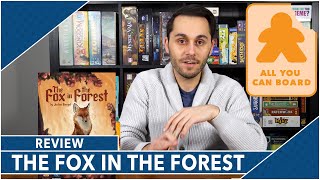






The Fox in the Forest Deep Dive
What the Community Thinks About The Fox in the Forest
The Fox in the Forest has earned devoted fans across the board game community, and for good reason. Channels like Jamie, Tabletoptiktok and Board Game Hangover consistently highlight it as one of the strongest two-player card games available, a standout that breaks through the fatigue many players feel toward traditional trick-taking games. What makes it remarkable is how it transforms the familiar trick-taking formula into something genuinely fresh and engaging, even for players skeptical of the genre.
Core Mechanics That Define The Fox in the Forest
Odd Cards and Special Powers
At its heart, The Fox in the Forest uses a deck of three suits numbered 1 to 11, but with one crucial twist: every odd-numbered card (1, 3, 5, 7, 9, and 11) carries a special ability printed on it. The Fox, the Swan, the Woodcutter, and other fairy-tale characters each trigger unique powers when played, while the even-numbered cards serve as straightforward rank values. This elegant design choice, from Renegade Game Studios, ensures that every card feels purposeful and that players cannot rely on pure probability. Each hand becomes a puzzle of timing and tactical thinking around the available powers.
The Balance Mechanic: Humble vs. Greedy Scoring
The most distinctive element of The Fox in the Forest is its inverted scoring system. Unlike traditional trick-taking games where you want to win as many tricks as possible, here you win by taking the right number of tricks. Players score a healthy bundle of points for remaining humble (taking very few tricks) and score nothing at all for being greedy (sweeping the vast majority of tricks in a round), with the middle range yielding proportional points. This creates a fundamental tension: you must sometimes play defensively, intentionally losing tricks to avoid greed, while still trying to win enough for a decent score. The design forces both players into a delicate dance of give-and-take, preventing runaway leaders and keeping every hand competitive.
The Fox in the Forest Experience
Quick, Accessible Teaching and Play
Despite the novelty of its special powers and inverted scoring, The Fox in the Forest teaches remarkably quickly and cleanly. The reference cards explain what each odd card does and how the scoring works, making it easy to guide a new player through their first hand. Once those first few tricks resolve, players grasp the core loop immediately. A single round plays in around 15 minutes, and players choose a target score to tailor the session length. This accessibility combined with surprising strategic depth makes it an ideal crossover game: light enough for casual players, meaty enough to hold the attention of strategic gamers.
Strategic Layers Beneath a Simple Surface
What truly elevates The Fox in the Forest is how much genuine decision-making hides within its simple rules. Timing the use of special powers becomes critical. Do you burn that Woodcutter ability now to block a dangerous card, or save it for later when you might need to shift the trump suit? Watching what cards your opponent holds, remembering what has been played, and predicting their next move are all essential. The game rewards careful observation and players who think several tricks ahead, creating a remarkably chess-like quality for such a short game.
What Makes The Fox in the Forest Stand Out
A Genre-Redefining Take on Trick-Taking
Many players carry baggage about trick-taking games, viewing them as dry or repetitive. The Fox in the Forest defies these expectations by making the value of winning depend entirely on restraint and strategy rather than raw card strength. The greedy mechanic completely reframes what players want from each hand. This single change transforms trick-taking from a game about optimizing your best outcome into one about managing risk and outmaneuvering your opponent's expectations. Reviewers who generally dislike trick-taking report being pleasantly surprised by how much The Fox in the Forest breaks the mold.
True Two-Player Symmetry
The Fox in the Forest was designed from the ground up for exactly two players, and it shows. There is no scaling to larger groups, no house rules needed, no player sitting idle. Both players face identical win conditions and opportunities, creating a genuinely symmetric competitive experience. The special powers and scoring system ensure neither player has an inherent advantage, leading to games that feel balanced and nail-biting right through the final trick.
Potential Drawbacks
Limited Replay Variety
Because the deck is fixed and every game draws from the same cards, some players eventually notice patterns emerging. The special abilities remain constant, and optimal strategies can crystallize over many plays. For players who demand constant novelty or who play the same game dozens of times, The Fox in the Forest may eventually feel familiar. Reviewers note this usually takes many plays to set in, and the low price point means the game delivers tremendous value long before any fatigue arrives.
Trick-Taking Ceiling
Despite its innovations, The Fox in the Forest is still fundamentally a trick-taking game. For players who have a visceral dislike of the genre, special powers and clever scoring will not change their core preferences. Some reviewers note that for players who view all trick-taking as inherently stale, this game will not be a conversion experience, though community feedback suggests its inverted goals tend to win over many skeptics.
If You Enjoy The Fox in the Forest
Players drawn to The Fox in the Forest often gravitate toward other two-player card games with tactical depth, such as The Crew, which shares the trick-taking framework but layers a cooperative twist with escalating challenges. Those who love the special-power cards might explore Love Letter, where hidden information and timing create psychological gameplay. Fans of the elegant balance mechanic may also enjoy 7 Wonders Duel, which forces players to manage competing objectives and resist the temptation of pure optimization. For more from the same world, The Fox in the Forest Duet offers a cooperative variant.
What Reviewers Are Saying
"I hate trick-taking games in general, but he loves them. Fox in the Forest has some unique parts with character abilities, and while it's not as complex as The Crew, it's still got some unique parts. I love it because the game costs ten bucks. You play it twice and have a good time and you've made your money."
— Tabletop Turtle
"This is a fantastic two-player-only trick-taking game. All of your odd-numbered cards have a special ability on them. Normally in trick-taking games you just want to take the most tricks, but in this game, how many you take determines how many points you get. If you take very few tricks you're considered humble and you score well, but if you take almost all of them you are considered greedy and you score nothing."
— Jamie, Tabletoptiktok
"My pick is The Fox in the Forest. It's a trick-taking game with a twist where you play one against one, but your interest is not necessarily to take all the tricks. A lot of cards have special abilities, so there will always be twists. It's a good balance between fun elements and being a serious game that involves a lot of strategy. It's just fun."
— Board Game Hangover