








The Grimm Masquerade Deep Dive
What the Community Thinks About The Grimm Masquerade
Reviewers see The Grimm Masquerade as a light, approachable social deduction game with presentation that punches above its weight. Druid City Games and Skybound Games published it, and the design is credited to Tim Eisner, Ben Eisner, and James Hudson. Each player takes the identity of a fairy tale character at the Beast's masquerade ball, keeps that identity hidden, and tries to unmask everyone else. The shared view is that the game is quick, charming, and easy to teach, though its deduction depth is modest compared with heavier titles in the genre.
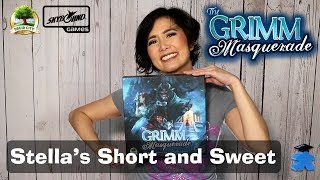
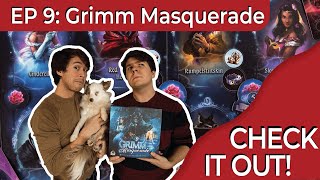
The channels differ mainly on how much weight they give the social side. Tom Vasel of The Dice Tower gave it a seven and argued that it works especially well with smaller groups, where every player is trying to guess which fairy tale character the others are. Alex Radcliffe of Board Game Co placed it in the middle of Druid City Games' catalog, calling it accessible and good looking but not their favorite in the genre. Elia and Tyler of Cabre were the most enthusiastic about the nostalgia and the bluffing. Stella of Meeple University framed it as a light game that can fit into a party setting, and in a separate roundup of 2019 light games, Stella placed it among the titles that play well with a mixed group.
Core Mechanics That Define The Grimm Masquerade
Set Collection
Each character in The Grimm Masquerade has boons, the artifacts they love, and banes, the artifacts they dread. Every round, a player draws two artifacts one at a time, gives one to another player, and keeps the other in front of them. Collecting three boons wins the round outright, while collecting two banes eliminates a player, so every card taken is a judgment about which set is still reachable. Elia and Tyler of Cabre noted that this exchange also leaks information, since the cards a player passes reveal something about what they are chasing. Stella of Meeple University summarized the design as a blend of puzzle deduction, set collection, and hand management, which fits the way acquisitions double as clues.
Deduction
The deduction layer grows out of the artifact passing. Because each character's loves and fears are gradually visible through the cards moving around the table, players rule out identities over the course of the round. Cabre's hosts described the key insight as learning who people are not, which makes it easier to point a finger and score. Accusation is the riskiest action. A player can spend two matching artifacts to name a character, and Cabre explained that a wrong guess hands the accused a rose instead. Stella of Meeple University framed the core premise as trying to conceal your own identity while working out everyone else's, and Alex Radcliffe of Board Game Co described the same loop as slowly piecing together who each masked character is before accusing them.
The Grimm Masquerade Experience
Tense Bluffing at the Ball
Reviewers describe a table that is constantly watching and second-guessing. Stella of Meeple University called the game intense, with a lot of interaction as players try to collect, give away cards, or bluff about what they want. Because each pass can be genuine or a deliberate misdirection, players must read one another closely. The cost of a wrong accusation keeps the tension high, since a bad guess rewards the accused with a rose. The satisfaction comes from holding back until the evidence feels solid, then making the call at the right moment.
Nostalgic Fairy Tale Whimsy
The theme is what many reviewers mention first. Elia and Tyler of Cabre said the game is very nostalgic and reminded them of childhood because of its cast of fairy tale characters, and they tied the appeal to the Grimm brothers' stories and to the pleasure of playing a figure like Red Riding Hood. The result feels less like a cutthroat contest and more like a costume party in which the masks matter. Tom Vasel of The Dice Tower also highlighted the artwork as a reason the game stands out on the shelf.
What Makes The Grimm Masquerade Stand Out
Artwork and Production
Art is the feature reviewers praise most consistently. Cabre called the illustrations absolutely fantastic and said the production quality is great. Tom Vasel said the game has some really good artwork, and Alex Radcliffe described it as good looking enough to keep it on the table. Stella of Meeple University, in a list of light and party games published in 2019, also singled out the great artwork as part of the game's appeal.
Quick, Accessible Table Play
Reviewers consistently describe the game as quick to learn and easy to teach, which is why it earns a place at mixed tables. Cabre said it is relatively quick to play and that light games like this make it easy to invite new people into the hobby. Alex Radcliffe said the game is simple enough that the reviewer's family still asks to play it. Stella of Meeple University said the rules were not too much for a group and that the game could fit into a party setting. The combination of a familiar theme and a short session makes it a practical gateway, even for players who are not deduction specialists.
Potential Drawbacks
Luck in the Artifact Draws
Not every reviewer is comfortable with the randomness. Elia and Tyler of Cabre pointed out that when the draws do not help, a player can be forced to take their own bane, which is not a pleasant feeling. They added that players who want to avoid luck may find the game less satisfying, although the variable action cards that appear each round give some players new options to adapt to.
Lighter Than Dedicated Deduction Fans May Want
Some reviewers feel the game is too light for players who want deep social deduction. Alex Radcliffe said it is not their favorite in the genre, and Cabre was direct that players who are not into social deduction probably will not enjoy it. Stella of Meeple University described its social deduction as quite light compared with the games they usually champion. Cabre also noted that the two-player variant is slightly modified, so players who want the full experience should expect the three-to-five-player table to be the main event.
If You Enjoy The Grimm Masquerade
Players who enjoy The Grimm Masquerade's bluffing and hidden identities will find familiar satisfaction in One Night Ultimate Werewolf and The Resistance. Alex Radcliffe drew that comparison directly, noting that The Grimm Masquerade is less a hidden role game in the sense those titles are and more a game in which you play a character you are trying to conceal while unmasking others through artifact exchanges. Players who value the way a single pass of a card can reveal someone's loyalties will find that exchange a welcome change of pace, while fans of the sharper, role-based reveals in the comparison titles will recognize the same tension in a different form.
What Reviewers Are Saying
"It's light, it's simple, it's not my favorite game in this genre of game, but it's accessible, looks beautiful, and to this day my daughter still asks to play this game, so it gets played."
— Alex Radcliffe, Board Game Co
"I gave this one a seven because I think it works really well with smaller groups of people as you're trying to guess which fairy tale person the other team is. Has some really good artwork."
— Tom Vasel, The Dice Tower
"The deduction piece is really interesting. I like the fact that you can draw one card at a time and you end up giving one to somebody and keeping one for yourself, because you get these little hints as to what people are and aren't so. And I think that's the important part is you learn who they aren't, so it makes it easier to point the finger and get points."
— Elia and Tyler, Cabre