/pic6218039.jpg)


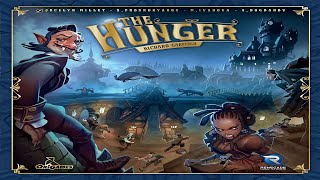








The Hunger Deep Dive
What the Community Thinks About The Hunger
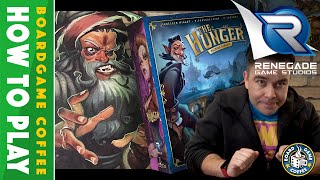
The Hunger has quietly earned respect from serious board gamers despite flying under the radar compared to its spiritual predecessor, Clank!. Reviewers consistently highlight how Richard Garfield's vampire-themed deckbuilder strikes a unique balance between accessibility and mechanical depth, offering something different enough from popular push-your-luck games to deserve attention from players who thought they'd already explored the genre.
Core Mechanics That Define The Hunger
Deck Building with a Twist
At its heart, The Hunger asks players to manage a growing deck of increasingly problematic cards. Each human hunted adds victory points but also cogs up the deck with zero-movement cards, forcing players to make constant decisions about card acquisition. This creates natural tension: the more successful you are at hunting, the slower you become. Unlike traditional deckbuilders where your investment compounds into pure power, here success creates immediate friction that must be managed through card digestion mechanics or clever deck composition.
Single Unified Resource System
The game employs one elegantly simple resource, speed points, that players spend on both movement and card purchases. This eliminates the resource-juggling complexity that frustrates newcomers to games like Clank!, where managing multiple currency types becomes a cognitive burden. Whether spending on position or acquisition, the math is straightforward, yet the strategic choices remain rich: every speed point spent is a choice between inches outward or cards inward.
The Hunger Experience
Push-Your-Luck Racing
The core tension mirrors Clank! but without the randomization ceiling that can derail games. The 15-round clock creates genuine urgency, but unlike bag-draw mechanics that punish bad luck, every position decision is something players control directly. Early in the game, confidence runs high, surely there's time to hunt just a bit more. By mid-game, hesitation sets in. By the endgame, it's pure white-knuckle judgment: can I make it back, or will I combust to ash and lose everything?
Thematic Immersion
The theme resonates because it reinforces mechanics perfectly. Getting slower as you hunt makes intuitive sense, you're literally carrying more weight. Location-based bonuses feel earned rather than arbitrary. Treasures, familiars, and secret missions create a believable vampire lifestyle, and the lighthearted cartoony art prevents the supernatural theme from feeling heavy-handed. This is a game where the flavor exists to serve the mechanics, not overshadow them.
What Makes The Hunger Stand Out
Scalability to Six Players
The Hunger plays two to six players without feeling stretched thin. The board expands to accommodate player count, card selection stays plentiful through scaling of the hunt track, and player interaction remains balanced whether crowded or sparse. Finding a competitive non-party game that truly works at six players is rare enough that this alone makes The Hunger noteworthy for larger groups or playgroups tired of standard player counts.
Clever Card Interaction and Combo Building
While not a combo-heavy game in the tradition of Dominion, The Hunger rewards recognizing synergies. Human subtypes pair with familiar abilities, permanent familiars grant bonuses that scale with human collection, and the mission system creates multiple scoring paths. Savvy players learn to plan their deck trajectory toward their secret mission or public objectives rather than grabbing whatever's cheapest. The puzzle is personal to each game state.
Potential Drawbacks
The Fear of Failure Paralyzes Early Plays
First-time players often struggle because the threat of instant defeat, turning to ash in sunlight, creates decision paralysis. Even though the game offers multiple return zones (castle for points, cemetery for -5 points, mountains for scaling penalties), newcomers frequently play it too safe on their first game. This isn't a design flaw so much as a teaching moment: explaining that cemetery returns are often viable removes much of the anxiety, and second plays typically feel far less cautious.
Overshadowed by Clank! in Players' Minds
The Hunger arrived amid comparisons to Clank! that didn't always work in its favor. Some players expecting identical experiences found themselves disappointed by the absence of bag-pull randomization or the more aggressive hand-management of Clank!. Yet these differences are precisely why The Hunger deserves independent evaluation: it offers push-your-luck decisions without the RNG ceiling and resource management without splitting currencies. It's not Clank! with vampires, it's a deliberately different approach to the same core tension.
If You Enjoy The Hunger
Players who love The Hunger tend to gravitate toward games that balance theme with mechanical innovation. You'll find kinship with Clank! for obvious reasons, but also with Bunny Kingdom, another Richard Garfield design that proves the designer excels at creating games where flavor and function interlock cleanly. If the deck-building appeals, explore Dominion for deeper economic puzzles, but The Hunger's advantage is speed and narrative arc: your game tells a story of escalating greed meeting inevitable consequence.
What Reviewers Are Saying
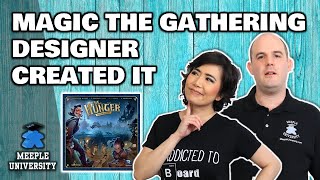
"The mechanic of deck building combined with the push-your-luck element of when to stop going out and start heading back to your castle, plus the arts and the thematic elements being really good, it's really nice where you get human but then you get slower after that."
— Meeple University
"The game is a lot like Clank! in that it's a deck building game and you need to get back before the game's over, you don't score any points. What doesn't exist is the whole noise mechanism, the whole bag, the whole Clank! thing. With just one resource for moving and buying, it makes buying stuff so much easier."
— Rolling Dice & Taking Names
"The Hunger is super fun. You almost did make it back though! I almost did, yeah. I almost did because I was very very fast. I love this game. I love vampires. I love the artwork. You can't really go wrong with that, but I enjoy every time you play it."
— Foster the Meeple