/pic3339655.jpg)
















The Lost Expedition Deep Dive
What the Community Thinks About The Lost Expedition
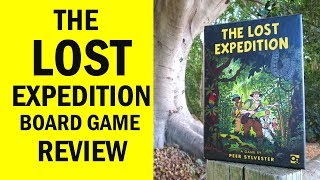
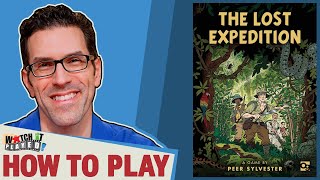
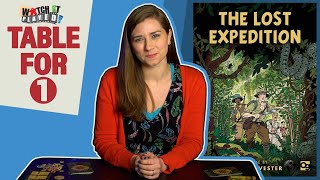
The Lost Expedition stands out as one of the most thematic and immersive card games in the modern board game landscape. Reviewers like Totally Tabled and Watch It Played consistently praise its ability to tell a compelling survival story through elegant mechanics and evocative artwork, delivering a cooperative experience where every decision carries weight. The game, designed by Peer Sylvester and published by Osprey Games, earns respect both as a challenging multiplayer adventure and as one of the finest solo experiences available, proving that depth and emotional resonance need not require complexity.
Core Mechanics That Define The Lost Expedition
Sequential Event Resolution and Dynamic Hand Management
At the heart of The Lost Expedition lies a card-sequencing system where players collectively arrange event cards into a trail, then resolve them in order to advance toward the Lost City of Z. In the morning phase, cards must be ordered under tighter constraints, forcing tactical thinking before consequences resolve. The evening phase loosens that rule, granting greater control but a narrower window to prepare. This dual-mode design creates fundamentally different decision spaces from round to round. Players must balance immediate survival against long-term progress, choosing which cards to hold or play to keep at least one explorer alive to the end.
Resource Scarcity and Expertise Spending
The game's three core resources, health, food, and ammunition, are deliberately limited and rarely feel abundant. When resolving event cards, players must choose whether to spend these scarce resources or suffer harsher consequences such as losing health from an explorer. Expertise cards earned during the journey can substitute for resources at critical moments, but only by discarding them. This produces elegant decision cascades: preserving ammunition for a future threat may mean risking starvation now, and burning food to heal is a gamble on finding more later. The tension between immediate survival and strategic positioning grows as the expedition lengthens and options narrow.
The The Lost Expedition Experience
Thematic Immersion Through Striking Artwork and Narrative Cards
Each oversized card in The Lost Expedition features striking, evocative artwork that brings the Amazon to life. From piranhas and electric eels to jaguars and fever-inducing encounters, the illustrations tell a visual story without long blocks of text. As players arrange and resolve these cards round by round, they construct a narrative arc of their expedition, with each card representing a distinct peril or opportunity. The art anchors the theme to every mechanical interaction, making resource losses and explorer deaths feel like genuine consequences in a survival story rather than abstract penalties. Players often narrate events aloud, weaving the outcomes into a cohesive tale of exploration and sacrifice.
Intense Decision-Making Under Pressure
The Lost Expedition delivers consistent tension and tough choices despite its straightforward rules. Every card resolution prompts the group to discuss which penalty to accept or which benefit to claim, turning the game into a negotiation of survival priorities. Should the team sacrifice ammunition to gain food, or take the health hits and hope to find resources later? Do they push forward at the cost of weakening explorers, or preserve strength and risk running out of time? These decisions gain weight because failure means permanent loss. The simple rules never obscure the profound strategic complexity of shepherding a party through a gauntlet of dangers.
What Makes The Lost Expedition Stand Out
Solo Design Rooted in Cooperative Play
The Lost Expedition excels as a multiplayer cooperative game, but its solo mode ranks among the finest available. In solo play, the core sequencing mechanic remains intact while the player gains full control over hand positioning, which paradoxically increases the pressure: every outcome rests on the player's decisions, with no one else to lean on. The same exploration and survival themes hit harder alone, and the brisk play length means a full expedition takes around fifty minutes, making replays feasible even when losses mount. Whether solo or cooperative, the game keeps its narrative drive and emotional stakes intact.
Elegant Rules Masking Strategic Depth
The Lost Expedition shows real restraint in design. The rules are simple enough to grasp in a single teaching, yet the interactions generate surprising depth. The morning-evening dichotomy, the expertise substitution system, and the choice to drop cards from the path or spend resources instead all layer complexity without visible seams. New players enjoy the thematic journey immediately, while experienced gamers discover subtle positioning strategies and resource-optimization puzzles that reward repeated plays. This combination of approachability and depth is rare, and it is a large part of why the game retains such a devoted following.
Potential Drawbacks
Significant Luck Variance in Card Draw
While The Lost Expedition offers meaningful decisions about card positioning, deck composition and draw order introduce considerable randomness. A brutal sequence of animal encounters or hazards, combined with unlucky reshuffles, can create nearly unwinnable states before players can respond. Sometimes the cards simply align to punish a team despite sound decisions. This fits the survival theme, where fate is as much an adversary as planning, but players seeking puzzle-like control may feel victim to bad luck more often than to strategic missteps, and solo play makes a punishing shuffle harder to shrug off.
Repetition Across Plays
The expedition structure stays consistent across player counts, using the same basic trail and card deck. The main variable is the number of explorers controlled and the hand sizes available for sequencing. While the cooperative dynamic shifts with group size, the core puzzle and encounter progression feel similar from game to game. Players who approach The Lost Expedition primarily as a puzzle to solve may exhaust its novelty faster than those who embrace it as a narrative experience, since the variety in outcomes leans more on card luck and difficulty settings than on evolving mechanical discovery.
If You Enjoy The Lost Expedition
Players who gravitate toward The Lost Expedition typically enjoy cooperative survival with strong themes and accessible rules. Pandemic shares the collaborative decision-making and escalating tension, though in a contemporary disease-fighting setting rather than jungle exploration. Robinson Crusoe: Adventures on the Cursed Island offers deeper resource management and strong solo play wrapped in a similar survival narrative. Arkham Horror: The Card Game mirrors the narrative intensity and permanent consequences of an expedition's hardships for players who want a campaign arc. And The 7th Continent delivers a sprawling, exploration-driven survival experience for groups ready for a much larger commitment.
What Reviewers Are Saying
"Card games rarely feel this intense. Each card is illustrated with striking, evocative artwork, and as you play cards into a sequence, they end up telling a story without long paragraphs of text. The rules are simple and it plays quickly, but it always manages to provide tough decisions and tense gameplay."
— Totally Tabled
"We are literally about to die. We have one health left on everyone, one food, no ammunition, and we now have to play a card. People are going to die. That's what's going to start happening. This solo mode is pretty tough."
— Watch It Played
"The Lost Expedition has plenty of stress and the theme is the opposite of sunny and happy. Nevertheless, this is a game I constantly turn to when I'm just not feeling great, and I always find it enjoyable. It's one of the few simple and quick games that still really captures exploration and survival."
— Totally Tabled