














The Mandalorian: Adventures Deep Dive
What the Community Thinks About The Mandalorian: Adventures
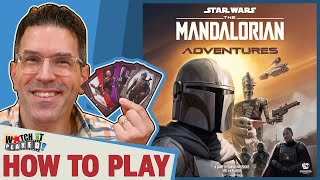
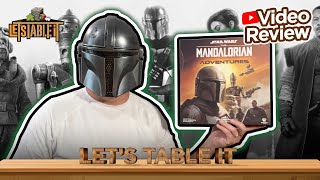
The Mandalorian: Adventures has struck a rare balance among reviewers, delivering both mechanical depth and thematic accessibility. Paul Groen ranked it among his favorite games of the year, Let's Table It praised its clean rulebook and family appeal, and Watch It Played walked through its cooperative mission structure in detail. Reviewers consistently describe the experience as refreshing and smooth, appreciating how the game translates the tension and narrative arc of the television series into tabletop form for families and seasoned gamers alike.
Core Mechanics That Define The Mandalorian: Adventures
Hand Management and Action Selection
At its heart, The Mandalorian: Adventures, designed by Cory Kesa and Josh Peer, is a hand management game where every card becomes a tactical decision. Each turn, players choose two different actions from four available slots: Move, Attack, Intel, or Plan. Cards carry strength values from one to four, and that number determines how effectively you execute the chosen action. A strength-three card sends a hero up to three spaces when played to Move, or deals three damage when played to Attack. This simplicity masks a deeper layer of choice, since played cards accumulate in each action slot and their combined strength triggers consequences at the end of the turn.
The Event-Driven Crisis System
Tension emerges through the event system, which punishes unchecked aggression and rewards careful planning. After each player's turn, the game checks whether any action slot has reached a strength threshold. Cross the first threshold and an event card fires, sending enemies to move, attack, or spawn reinforcements. Push higher and the game resolves a crisis before drawing the event. This creates a genuine push-your-luck tension: you want to accumulate strength to achieve objectives, yet every point of strength edges the board closer to overwhelming you. Reviewers noted how this encourages players to think beyond raw combat and weigh whether an aggressive play will trigger a cascade of new threats.
The The Mandalorian: Adventures Experience
Story-Driven Scenarios with Progressive Complexity
The Mandalorian: Adventures unfolds through branching scenarios tied to the first season of the show. Each mission opens with a comic-style briefing that anchors players to a story they already know. The guide deck, a sequenced stack of cards that players flip as they complete objectives, gradually introduces new rules, character cards, and sealed-envelope surprises, so the first playthrough functions almost as a tutorial while later missions demand mastery. Let's Table It noted that this pacing works especially well for families, since children can grasp the four-action core in the opening mission and discover new depth over later plays.
Adaptive Difficulty and Flexible Player Count
The game accommodates one to four players across difficulty settings that scale health values and hand sizes to match the group. Solo players control two characters from a shared deck, while groups can play scenarios designed for fewer characters by mixing character decks together, a flexibility reviewers praised. Because the rules adapt the threat layout and objectives to the scenario rather than the head count, the same map can feel fresh across multiple playthroughs with different combinations of heroes.
What Makes The Mandalorian: Adventures Stand Out
Thematic Consistency with Elegant Mechanics
What separates The Mandalorian: Adventures from similar cooperative titles is the marriage of mechanical clarity and thematic coherence. Reviewers emphasized that the rulebook is exceptionally clear and the core systems resolve quickly once learned, yet each mechanic reinforces the feeling of a tactical Star Wars adventure. Intel actions let you scout threats before stumbling into danger, planning actions represent genuine tactical preparation, and unlocking access to objectives requires real teamwork. Mechanics and theme reinforce each other, so following the rules feels like making in-fiction decisions.
Free Content and Long-Term Support
Beyond the base box, additional scenarios have been released for free online, extending the game's variability well past what the box initially promises. Reviewers noted that supporting the game with ongoing free content rather than paywalls signals confidence in the design. Combined with an expansion and a modular scenario system that allows replaying maps with different objectives, the game grows in complexity and replay value without artificial padding.
Potential Drawbacks
Density of Passive Effects in Advanced Scenarios
As missions progress and character decks accumulate special abilities, the game layers in numerous passive effects that trigger under specific conditions. Reviewers reported still occasionally forgetting trigger conditions mid-turn even after many plays. The intensity of tactical decision-making sometimes overshadows peripheral mechanics like damage thresholds and ability stacking, leading to moments where the table needs to pause and rewind. This reflects the game's ambitious scope rather than poor design, but later scenarios demand real attentiveness.
Information Asymmetry and Secrecy Mechanics
The Intel action intentionally hides threat information from other players, letting a single player scout a location and report back. While this creates valuable uncertainty and curbs analysis paralysis, reviewers noted that the secrecy works best with experienced groups who can balance transparency with mystery. Newer tables sometimes struggle with when to hold information back, softening the intended tension until everyone settles into the rhythm.
If You Enjoy The Mandalorian: Adventures
Players drawn to The Mandalorian: Adventures often gravitate toward Gloomhaven, which pairs tactical scenario play with character progression across a campaign. Star Wars: Imperial Assault offers similar mission variety in the same universe, though with a heavier combat focus. For cooperative card-driven tension in a different skin, Marvel Champions delivers hero-team play with escalating villain threats. Reviewers comparing it to other licensed games rated The Mandalorian: Adventures as cleaner and tighter than sprawling alternatives like Star Wars: Outer Rim, making it a strong pick for groups that want narrative cooperation without a long teach.
What Reviewers Are Saying
"The gameplay of this game I found very refreshing and very enjoyable. It is not a super complicated game. Games play relatively quickly. It's smooth gameplay. It's scenario-based."
— Paul Groen
"The rule book was pretty straight on, it explained everything. I never questioned how something would actually work or was confused about anything. The game wasn't too complicated, which was nice."
— Let's Table It
"In the Mandalorian Adventures, you and the other players will work together to complete the mission. It's a cooperative mission-based game where you play as the Mandalorian and his allies."
— Watch It Played