












The Plum Island Horror Deep Dive
What the Community Thinks About The Plum Island Horror
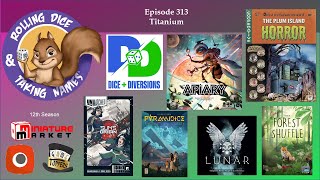
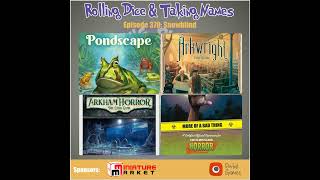
The Plum Island Horror is a cooperative survival game from GMT Games, designed by Herman Lutman, the designer of Dawn of the Zeds. Reviewers agree on its core appeal: a tense, chaotic evacuation of a quarantined island in which every faction is racing to save civilians while a growing horde closes in. Rolling Dice and Taking Names describes it as a game where the group must decide together how to split responsibilities, with one player fighting, another keeping the horde moving, and another handling crowd control and evacuation.
The praise is consistent. Reviewers repeatedly highlight the smoothness of the rules once learned, the distinct identities of the factions, and the way the game turns a board full of tokens into a living threat. Drive Thru Games calls the game "a good time," although it is more measured about the balance. Its reviewer has played the game three times and says it is "a little bit easy and a little bit more complex than I think it should be for the weight of the actual game."
The main disagreement is about length and pacing. Rolling Dice and Taking Names found that the game dragged in places, particularly when the group had to make difficult decisions, and noted that a single session can run two to three hours. Meet Me at the Table and other reviewers see the newer scenario options as a direct response to that complaint. Board Games UnLocked, which compared the game to a tight campaign, praised its replayability and its ability to be replayed quickly, but also noted that the game can feel unbalanced when it does not match the reviewer's expectations.
Core Mechanics That Define The Plum Island Horror
Action Following
Action Following is central to how the game feels on the table. When one faction takes its turn, the next faction in the turn order may "follow" with its own actions, but only at a cost. Rolling Dice and Taking Names explains that each follow action forces a draw from the Fate deck, and if the card calls for an event, the event resolves and the follow chain ends. Players therefore face a constant push-your-luck decision: take one more action to set up the next turn, or risk drawing a card that brings a new threat onto the board.
Meet Me at the Table shows how this plays out in practice. Its playthrough highlights the difference between two-player and larger games, since with two factions each side still gets its follow actions even when an event is drawn. This keeps the rhythm of the game tight and makes the group constantly weigh whether a small advantage is worth the risk of an unwelcome event.
Variable Phase Order
The Plum Island Horror does not use a fixed sequence of turns. Each round, players draw tokens from a bag. Faction tokens let that group take its turn, fate tokens resolve horde movement and spawning, and the impending doom token forces an event. Reviewers say this randomness creates real tension about who acts next and how much can be accomplished before a bad token appears. Rolling Dice and Taking Names notes that the bag turns the game's turn order into a shared gamble, so no group can plan its round with certainty.
Herman Lutman's design uses this uncertainty to keep the factions interdependent. Because a faction may be drawn at any point, the group cannot always set up the perfect sequence, and the reviewers describe having to adapt on the fly when a turn arrives earlier or later than expected.
The The Plum Island Horror Experience
Tower Defense Tension
Reviewers describe the feel of the game as a tower defense puzzle in which the towers are people. Hordes of mutated creatures spawn at the top of several lanes and move down the board, stopping to fight any faction member or civilian they reach. Meet Me at the Table calls the game "essentially a tower defense game while also trying to save all of our civilians out on the board." The stacks of creatures slow down as they grow, which means a large stack is both a threat and a warning that a fight is coming.
Cooperative Survival With Dark Humor
The second feeling reviewers mention is a goofy, B-movie tone that softens the grim setup. The Discriminating Gamer describes the game as a "kind of a bad B-movie" with "some really fun choices," and the overall experience is closer to a campy horror film than a grim simulation. The Plum Island setup, with its tennis court, neighborhood watch, and mutated monsters, reinforces that tone. Players feel the stakes without losing the sense that the game is meant to be fun.
What Makes The Plum Island Horror Stand Out
Faction Synergy and Asymmetry
The factions are the most praised feature. Each group controls several characters with unique abilities, and those abilities combine with the other factions in ways that reward coordination. Rolling Dice and Taking Names notes that the factions are symmetric on their own boards but asymmetric in relation to each other, which makes them feel distinct without requiring separate rulebooks for each group. Replayability follows from the variety of combinations, since each faction brings different tools to the same evacuation problem.
Expansion Scenarios and Nightmare Mode
Reviewers see the 2024 expansion, sometimes called More of a Bad Thing, as a major improvement. Rolling Dice and Taking Names describes its shorter scenarios and new factions as a fix for the base game's length, and it reports that the expansion also adds a semi-cooperative option and a Nightmare mode that reverses some follow action rules. Meet Me at the Table calls the expansion "what this game really needed," because the base game offered only one scenario, a nine-round survival match. The new scenarios give the group more ways to play, and the Alarming mode changes the scoring so that civilian deaths subtract from the evacuation total.
Potential Drawbacks
Length and Setup Time
The most common criticism is the time commitment. Rolling Dice and Taking Names found that the game ran long and that some decisions slowed it down. Its guest, who was looking for something that finishes in about ninety minutes, said the game was probably a two-hour experience once teaching was included. The expansion's shorter scenarios answer this concern, but the base game still asks for a substantial evening.
Predictability Once the Strategy Is Found
Drive Thru Games raises a subtler concern. The reviewer says the game feels "artificially complex" because its rules and components are busy, but once a player works out the optimal approach, the challenge drops considerably. The same video notes that the board and card clutter can make the game feel "fiddly on the eyes." Reviewers who like replay value point out that the randomness of the Fate deck and event cards helps keep each session different, but those who prefer tight puzzles may find the challenge fades after a few plays.
If You Enjoy The Plum Island Horror
Players who enjoy The Plum Island Horror's cooperative pressure will find a similar tension in Dawn of the Zeds, the earlier Herman Lutman design that shares the same horde-management DNA. Those who value the feeling of a group managing a shared crisis under time pressure may also enjoy Dead of Winter, which pairs survival scarcity with a traitor element. Fans of its tower defense rhythm and its follow-action risk management could look at Pandemic for a cooperative game with a clear sense of escalating threat. Players drawn to the dark humor and crowded board may appreciate Zombie Side, while The Sentinel Tactics offers a different take on coordinated, asymmetric roles under a rising threat.
What Reviewers Are Saying
"This is what this game really needed. There was only one scenario with the base game. It was surviving nine total rounds trying to get a total of 26 or more escape points for saving civilians, and that was the game. Now there are five scenarios."
— Colin, Meet Me at the Table
"I think what's cool is just the fact this is 100% a co-op game. We're trying to decide what to do, maybe one person's really good at fighting and they're going up and trying to keep the horde moving, maybe somebody's good at crowd control or moving the tokens along and helping to evacuate."
— Rolling Dice & Taking Names
"On the other side of that coin it's like complex in a way, there's just like a lot going on, but like I said the game loop's pretty simple, but it feels sort of like somehow artificially complex or artificially difficult, because once you can kind of sit there and sort of piece out the optimized strategy to do, the game is relatively easy. I have not lost any of the three games that I've played."
— Drive Thru Games