/pic2853682.jpg)













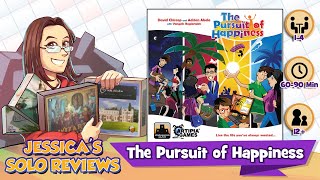
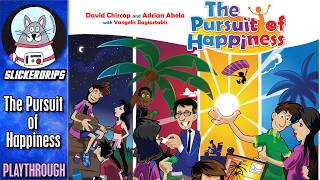









The Pursuit of Happiness Deep Dive
What the Community Thinks About The Pursuit of Happiness
The Pursuit of Happiness stands out among life-simulation games as a worker-placement experience that captures the genuine complexity of balancing competing demands across a lifetime. Channels like Meeple University and Actualol consistently praise how the game's mechanics reinforce its theme of life progression, where every decision carries weight and consequence. Unlike abstract strategy games, The Pursuit of Happiness creates deeply personal stories through its card-driven systems and time-management core. Players find themselves making choices that reflect real-world tradeoffs, from career advancement to relationships to personal projects, all while managing the ever-present pressure of aging.
Core Mechanics That Define The Pursuit of Happiness
Worker Placement as Time Management
The fundamental mechanic reframes worker placement in a thematic way: your workers are time tokens. Each round represents a stage of life, and players spend limited time on education, jobs, relationships, projects, and possessions. What makes this brilliant is how the mechanic becomes increasingly constrained as the game progresses. When you commit to a job or a partner, they consume time automatically each round, leaving you fewer tokens to spend elsewhere. This creates a natural arc where early-game freedom gradually yields to the obligations you have chosen, reflecting how real life works. Retiring from a job or ending a relationship is possible but costly, adding genuine weight to character decisions. Published by Artipia Games and Stronghold Games, the design keeps theme and mechanism tightly linked.
Hidden Happiness and Synergistic Engine-Building
Victory points are called happiness, kept hidden until game end, which drives interesting decision-making. The game rewards players who build coherent life paths where cards and choices complement each other. An artistic hobby pairs well with a creative career, for example, while a high-powered job generates money but costs time and may increase stress. A partner who values creativity provides happiness bonuses if your life reflects those values. This synergy system means no single path guarantees victory; instead, players must discover what combination of life choices works for their character, creating a satisfying puzzle of personal narrative combined with mechanical optimization.
The Pursuit of Happiness Experience
Living a Unique Life Every Game
Each play unfolds as a completely different life story. One player might become a high earner who accumulates wealth but endures stress and burns out early. Another might skip traditional career paths entirely, volunteering in the community and prioritizing relationships and hobbies. Some characters never marry; others do. Some pursue multiple projects; others focus on a single calling. The deck offers enormous variety through projects, jobs, relationships, hobbies, and items, ensuring players discover something new with each playthrough. The narrative possibilities deepen further with expansion content, which adds new life experiences that inform a character's goals across the decades.
Thematic Coherence and Emotional Resonance
What elevates The Pursuit of Happiness beyond a typical worker-placement game is how seamlessly theme and mechanics align. Everything makes intuitive sense within the life-simulation frame. Stress builds as you take on too many commitments, and reaching old age means time accelerates as fewer rounds remain. The game focuses on the journey rather than morbidity. Players find themselves emotionally invested in their characters' outcomes, celebrating card draws that fit their narrative or regretting paths not taken. The game proves satisfying whether you optimize for points or follow thematic instincts, giving it appeal across different playstyles.
What Makes The Pursuit of Happiness Stand Out
A Meaningful Alternative to The Game of Life
The Pursuit of Happiness modernizes and deepens the concept behind the decades-old classic The Game of Life. Where Life prescribes a narrow path of marriage, house, children, and retirement, The Pursuit of Happiness opens many possibilities. There is no mandatory sequence; players can design childless careers, skip higher education, volunteer instead of working, or pursue unconventional partnerships. This freedom creates emergent narratives impossible in prescriptive games. The mechanical depth also distinguishes it: player choice matters, planning ahead pays off, and synergies reward thoughtful construction. Yet it remains accessible, since the core rules teach quickly despite the complexity that emerges through play.
Replayability Through Varied Card Pools
The base game offers a rich experience, and the broad deck of projects, jobs, partners, and items ensures wide variety from game to game. Expansions introduce new life stages, items, and modules that expand or modify the core experience, letting players customize the complexity to taste. Rather than forcing every module into play, the game allows a single collection to serve casual players seeking a simple life simulation or enthusiasts chasing maximum thematic immersion.
Potential Drawbacks
Stress and Aging as Harsh Mechanics
The aging and stress mechanics, while thematically sound, may not appeal to all players. Accumulating too much stress can age your character prematurely and end their story before the final scoring. Some find this mechanically satisfying as it adds pressure; others view an early exit as frustrating, particularly if driven by unlucky cards. Managing stress requires deliberate attention, and new players sometimes struggle with the balancing act, leading to rough first games.
Light Player Interaction
The Pursuit of Happiness is largely a parallel, build-your-own-life experience. Players compete for cards in the central display and for turn order, but there is little direct conflict between opponents. Reviewers who prefer negotiation, confrontation, or constant interaction may find the game too solitaire in feel, since most of your attention stays on your own tableau and life choices rather than what others are doing.
If You Enjoy The Pursuit of Happiness
If you appreciate The Pursuit of Happiness, consider CV, a dice-driven tableau-builder where you craft a career and life through card acquisition. Last Will explores life and money from a comedic angle, tasking you with spending an inheritance as quickly as possible. For those who love the worker-placement core specifically, Village delivers mechanical satisfaction with a poignant tone as your workers age over generations. And The Game of Life itself remains worth revisiting to appreciate how much The Pursuit of Happiness improves on the classic template.
What Reviewers Are Saying
"The game is so funny, very thematic, and very relatable, like having your life in a game. You can get project cards like learning a foreign language, and later you can upgrade from basic phrases to fluent. You can get a partner that takes your time worker but gives you points and influence. The cards in the game kill me. They're really one of the best parts of the game."
— Meeple University
"I really like this game because of the funny things you'll say when you play it. Like, I'm so glad I decided to raise a family with Sonia because it's giving me two happiness every round, but it's so time consuming and I want to run a marathon, but I'm acting in a play and I don't have time right now. You also have fun objectives like live fast, die young: be the first to die living it up."
— Board Game Dad
"Everything makes sense with the theme. You tell such an interesting story with this, and that's why I love it. I love that theme of living life, but I also love how good of a story you can tell. Every time you play, you live a completely different life. There are so many different paths to happiness, and nothing is necessarily the right or wrong answer, but you're trying to find things that work with each other."
— Actualol