/pic2576459.jpg)
/pic7009391.jpg)
/pic2453810.jpg)
/pic7203269.jpg)
/pic1215982.jpg)
/pic1849390.jpg)
/pic2576459.jpg)
/pic7203303.jpg)
/pic876255.jpg)
/pic1398895.jpg)
/pic3564143.jpg)
/pic3972142.jpg)
/pic8783294.png)
/pic3033330.jpg)
/pic2225958.jpg)

/pic2519675.jpg)
/pic2604284.png)
/pic3021686.jpg)
/pic5164305.jpg)
/pic3493866.jpg)
/pic4415135.jpg)
/pic3662950.jpg)
/pic3966906.jpg)
/pic4233915.jpg)
/pic6951766.jpg)
/pic6746296.png)
/pic5578189.jpg)
/pic5735695.jpg)
/pic7037062.png)
/pic7181914.jpg)
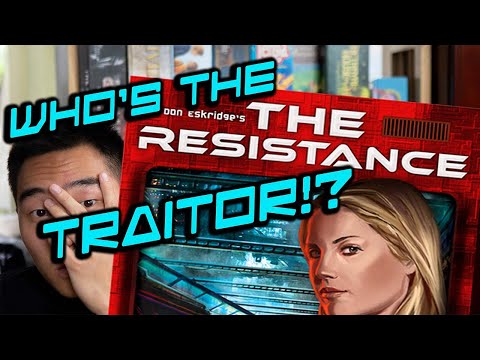






































The Resistance Deep Dive
What the Community Thinks About The Resistance
The Resistance stands as one of the most celebrated social deduction games ever created. Game designers and enthusiasts consistently rank it as a transformative experience that fundamentally changed how they approach both playing and designing games. Its elegance has made it a go-to introduction to the social deduction genre, while its depth ensures that experienced players continue to discover new strategic layers even after hundreds of plays.
The game's influence extends far beyond casual play. Professional designers point to The Resistance as a watershed moment in tabletop gaming. Its success spawned an entire branch of social deduction games, making it not just a great game but an evolutionary jumping-off point for the entire genre. The community recognizes that The Resistance solved fundamental problems that plagued earlier games like Werewolf, creating what many consider the purest form of social deduction.
Core Mechanics That Define The Resistance
Mission-Based Voting and Deduction
The brilliance of The Resistance lies in replacing Werewolf's elimination mechanic with mission-based gameplay. Rather than voting to eliminate players throughout the game, players vote to approve teams for missions. This shift was revolutionary because it eliminated the moderator requirement and removed player elimination entirely. Every player remains engaged for the entire game, participating in every mission attempt regardless of their role. The good players try to send teams of exclusively good players on missions, while the spies strategically place themselves to sabotage critical missions. This creates a constant flow of logical deduction where each mission result generates concrete information about team composition.
When a mission succeeds, players know with certainty that all team members were good. When a mission fails, players know with equal certainty that at least one spy was on the team. This information-gathering mechanism allows players to build an ever-tightening logical framework. Unlike Werewolf, where information gathering relies heavily on observation and body language, The Resistance transforms the game into a puzzle where mission results serve as clues. Players deduce team memberships through careful logical analysis, creating an intellectual challenge alongside the social element.
Hidden Roles and Social Manipulation
The game's second core mechanic involves hidden team assignments that remain secret until game end. Spies know who each other are from the game's opening night phase, while good players have zero information about team composition. This asymmetrical information creates what designers call the informed minority versus uninformed majority dynamic. Spies must coordinate subtly without revealing themselves, while good players must use both logic and social intuition to identify infiltrators. The best spies succeed by blending seamlessly into team selections, proposing reasonable missions that fail in ways that appear logical rather than obviously sabotaged. Meanwhile, good players must learn to read their opponents' decision-making patterns, understanding when someone's logic suggests they possess insider knowledge of team composition.
The Resistance Experience
Controlled Social Deception and Managed Stakes
Players consistently describe The Resistance as creating intense social deduction without the chaos of Werewolf-style games. The mission-based structure keeps discussion focused and logical rather than devolving into pure accusation. Each mission provides a concrete anchor point for conversation. Players can point to specific mission results and say with certainty who must have been involved. This transforms the game from a pure social bluff into a puzzle with deducible answers. One player noted that The Resistance excels because the conversation stays productive and analytical. Players argue about facts and logical deductions rather than making purely personal accusations. The tension builds from trying to solve a puzzle while your opponents actively work to keep you from solving it.
The game manages social risk better than most deduction games. While players absolutely lie and deceive, the game's structure channels that deception through mission selection and voting rather than encouraging personal attacks. A player can lose and still feel satisfied because they participated fully in every mission. They built their theories, tested them, and either solved the puzzle or fell for a clever spy strategy. This creates what reviewers call strong payoff with minimal punishment. Even players eliminated as suspicious to mission voting still participate in subsequent missions and retain agency in the game's outcome.
Deep Replay Value Through Emergent Strategy
The Resistance remains fresh across hundreds of plays because strategy evolves with player skill. Beginners focus on simple deduction from mission results. Intermediate players develop theories about voting patterns and team selection strategy. Advanced players engage in multi-layered deception, where spies coordinate through subtle clues and good players prepare for those signals. The conversation element means each group plays the game differently. A group of new players might explore the puzzle aspect with pure logic. A group of veterans adds layers of psychological warfare, fake alliances, and deliberate misdirection. The same game rules support radically different experiences based on player sophistication.
Reviewers frequently mention that The Resistance becomes almost completely different games depending on player count and group composition. A 5-player game plays tight and tense with limited information. A 10-player game sprawls across multiple factions and requires tracking numerous player theories simultaneously. Adding new or experienced players shifts the entire dynamic. This scalability and flexibility mean that The Resistance consistently feels fresh, challenging returning players to develop new strategies while remaining accessible to newcomers.
What Makes The Resistance Stand Out
Elimination of Moderator Requirement and Player Elimination
The Resistance solved two critical design problems that limited Werewolf's appeal. Traditional Werewolf requires a non-player moderator, removing one person from the game's social experience. That moderator must manage complex rules, track night phase interactions, and make judgment calls about ambiguous situations. The Resistance needed no moderator because all information passes through mission voting and results. Every player receives the same information simultaneously through votes and mission cards. This change democratized the game, making it accessible to groups without a designated gamemaster.
Equally important, The Resistance eliminated first-round player elimination. In Werewolf, a player killed early spends most of the game watching others play. This created a logistical nightmare for parties where engagement matters. The Resistance keeps every player active throughout, eliminating downtime and frustration. Even spies discovered early remain part of the game, creating a tense endgame where exposed spies must still participate while everyone knows their allegiance. This design choice fundamentally changed what social deduction could be as a genre.
Perfect Brevity and Accessibility
The Resistance plays in approximately 30 minutes regardless of player count, making it ideal for diverse gaming contexts. The rules are genuinely simple. Players understand core mechanics in minutes, yet the strategic depth ensures that multiple plays reveal new complexity. New players typically grasp gameplay by the second round, then begin participating in genuine strategy by round three or four. This learning curve is steep enough to keep players engaged without becoming steep enough to frustrate newcomers. The portability and quick setup make it a game that travels easily and accommodates spontaneous play. Several reviewers mentioned carrying it to pubs, airports, and social gatherings specifically because it works in almost any circumstance.
Potential Drawbacks
Poor Scaling at Extreme Player Counts
While The Resistance generally scales well from 5 to 10 players, it shows genuine weaknesses at table extremes. With fewer than 5 players, the information imbalance between spies and good players becomes pronounced. With more than 10 players, the game struggles with imbalanced power and excessive downtime. In 9 or 10 player games, one spy player can unilaterally sabotage a mission single-handedly, creating frustration for teams that spent time negotiating. At extreme player counts, some players spend significant time waiting for their turn to speak during mission discussions. The game works beautifully in its 5 to 8 player sweet spot, but deviates notably in either direction.
Potential for Dominant Personalities to Control Play
Some groups report that The Resistance can become dominated by players who speak most assertively. A confident player with a theory can convince the group to accept their logic whether it's correct or not. Conversely, quiet players might never get their theories heard, regardless of validity. The game heavily rewards vocal participation and confidence in argumentation. Groups with significant personality imbalances sometimes report that the game becomes less about logic and more about persuasion ability. While this reflects genuine social skill, it can shift the game from a puzzle with a correct answer toward a pure social game where louder voices win regardless of evidence.
If You Enjoy The Resistance
Players who love The Resistance often gravitate toward Avalon, which uses identical core mechanics with special role cards that add additional information layers. Merlin and the Assassin transform the final endgame into a second-order puzzle where good players know enemy composition but must hide this knowledge. Secret Hitler appeals to Resistance fans seeking mission-based play with additional resource management. Codenames offers similar team-based deduction but focuses on word association rather than social tells. Dead of Winter provides a traitor mechanic alongside cooperative play, creating suspicion during collaborative gameplay. The Resistance's greatest legacy is inspiring an entire family of games that tweak, extend, or fundamentally reimagine its core mechanics.
What Reviewers Are Saying
"The Resistance is one of the purest social deduction games out there. It does so many things right with perfect timing, reasonable pricing, and a quintessential place in the genre."
— Shelfside
"I wrote a 40-page Avalon guide because this game caught me and everyone else in my group. Both the on-the-table game of pure deduction and the above-the-table game of chaos and deceit were both really good and drew in different people."
— Stonemaier Games
"It's a game where you get to lie to your friends and stab them in the back. You can take all these skills that you shouldn't normally use in real life and apply them to a game. It's a lot of fun, and when it works, it's absolutely brilliant."
— No Rolls Barred