/pic6740248.jpg)
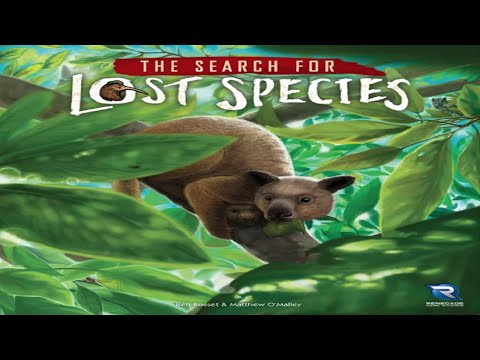



















The Search for Lost Species Deep Dive
What the Community Thinks About The Search for Lost Species
The Search for Lost Species arrives as a spiritual successor to the well-loved The Search for Planet X, trading outer space for a naturalist expedition across a wilderness map. Published by Renegade Game Studios, this 2023 deduction game brings logic-puzzle solving into physical movement and a real conservation mission. Meeple University and Board Game Spotlight both praised the craft of the design, and reviewers highlighted the partnership with Re:wild, an organization that actually searches for these creatures in the wild, as evidence that the theme runs deeper than decoration. The community response leans enthusiastic, praising the balance of exploration, deduction, and time pressure, with difficulty modes that let players of different experience levels compete fairly.
Core Mechanics That Define The Search for Lost Species
App-Assisted Deduction with Map Movement
At its heart, The Search for Lost Species is a logic puzzle played across a map. Players move their meeples around the wilderness, with every action costing time on a central track. The app serves not as a gimmick but as a thoughtful referee, delivering location-specific clues based on which hexes players survey. Reviewers appreciated that the app sidesteps bookkeeping and removes the need for one player to hold the answers. A single phone can be passed around the table without breaking the deduction flow, since the game does not demand that everyone own a device, and the app tracks each player's difficulty selection independently so mixed-experience tables stay fair.
Animal Rules, Time Pressure, and Town Visits
Each game introduces several accompanying animals on the map, every one governed by its own behavioral rule about how it clusters or which spaces it avoids, and the lost species adds further clues on player reference cards. Time pressure flows from the expedition-leader system, where whoever lags furthest behind on the time track moves next, forcing choices about when to take powerful but expensive actions. Town visits grant abilities and research, while camera traps reveal perfect information about a hex at the cost of time, staying in place until the expedition leader cycles back. This produces a constant tension between gathering information and spending the time economy.
The The Search for Lost Species Experience
A Cerebral Race with Mounting Information
The game unfolds as a quiet deduction puzzle punctuated by moments that feed clues to everyone at once. Reviewers emphasized the psychological dimension. As players place location tokens face-down, revealed only when the expedition leader passes, the table fills with tension around the unspoken question of how close a rival is getting. Board Game Spotlight captured this directly, noting that you never know how close opponents are to finding the species, and that this uncertainty is what truly drives the game. Early turns feel exploratory, but by mid-game the board fills with information and crossed-off possibilities, accelerating toward a climactic location guess that rewards spatial reasoning and logical elimination.
Replayability Through Multiple Species and Maps
The game ships with several different lost species, each carrying unique logic rules, which impressed reviewers compared to Planet X, where players always hunt the same target. A double-sided board adds further variation, with one side offering boat movement and generous surveying ranges and the other forcing tighter searches on foot. With different animals to locate, multiple difficulty modes, and two maps, each play feels fresh. Reviewers noted that the game rewards practice, since players who internalize the animal rules and optimal movement gain subtle edges, making it well suited to recurring game nights.
What Makes The Search for Lost Species Stand Out
Thematic Depth and Real-World Conservation
The partnership with Re:wild elevates the theme beyond flavor. The creatures players hunt, including Attenborough's long-beaked echidna, a lost tree kangaroo, and a rare monitor lizard, are real species the organization actively searches for in the field. Board Game Spotlight emphasized Renegade's commitment to sustainability, noting that the game ships in sugar-cane paper with environmentally conscious manufacturing rather than excess plastic. The wooden boat, wooden meeples, and clear iconography feel tactile and intentional, evidence that thematic integrity and physical craftsmanship reinforce each other.
Accessible Complexity and Hidden Depth
The Search for Lost Species presents a deceptively simple surface. Players survey, research, place tokens, and guess, all teachable in minutes. Yet beneath that accessibility lies real strategic layering: the town economy rewards forward planning, placing tokens early offers points but telegraphs your hunches, and camera traps trade time for certainty. The difficulty modes do not weaken the base game so much as adjust the starting clue count, keeping newcomers from drowning while veterans face genuine pressure. Reviewers observed a satisfying ramp, with manageable early turns giving way to dense optimization puzzles as the board fills with constraints.
Potential Drawbacks
Time Management Demands Attention
The time track is not trivial, and the game asks for careful sequencing of expensive actions. Players cannot zone out on others' turns, since tracking face-down tokens, found animals, and which rival might be close to solving demands constant engagement. For some tables this focus is the appeal, but for casual sessions it can feel taxing. The game also punishes a wrong location guess with a stiff time penalty, which nudges players toward conservative play over bold hunches.
App Dependency and Learning Curve
While reviewers praised the app's design, the game depends on it to generate clues, with no print-and-play alternative. The interface has minor friction points, and orientation setup is easy to get wrong. Teaching requires explaining several systems at once, including survey ranges, time costs, town benefits, and animal rules, so a first play can feel chaotic before the pieces click. Once they do, the experience improves dramatically, but the on-ramp is steeper than lighter deduction games.
If You Enjoy The Search for Lost Species
If you love The Search for Lost Species, start with The Search for Planet X, its direct predecessor, which delivers similar app-assisted deduction in a space-exploration setting. For location-based logic in a different style, Cryptid challenges players to triangulate a hidden creature through process of elimination. Fans of the spatial and nature angles will appreciate Cascadia for its satisfying tile puzzles, and those drawn to the conservation ethos will find a kindred spirit in Wingspan, which celebrates wildlife through engine-building rather than deduction.
What Reviewers Are Saying
"What's new compared to the Search for Planet X is the map movement. It feels more visual, tactile, and tactical. You move around your meeple on the map according to the action you are taking, and the different difficulty levels are great if you play with someone who's good at logic puzzle deduction."
— Meeple University
"As the game goes on, you don't know how close your opponents are getting to finding it. There's this tension where you're like, how close are they to finding the lost species? I see that they're putting site tokens out and getting some victory points, but how close are they to deducing it? That tension is what really drives this game."
— Board Game Spotlight
"I love how the different site tokens are different, so it's very easy when you're playing a game where you have to parse a lot of information. Especially in a deduction game, you don't want to make your brain work harder on just the little ins and outs, because you're trying to be a detective."
— Board Game Spotlight