/pic4873141.jpg)

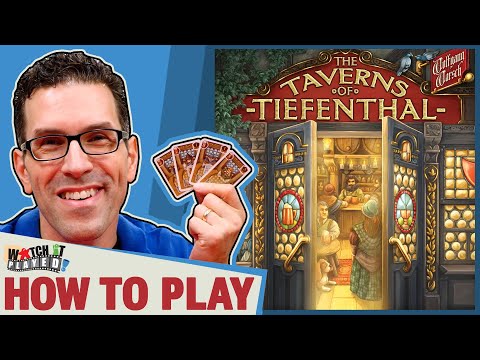
















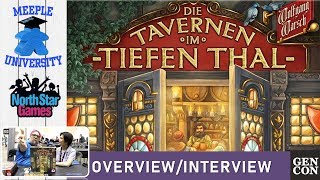










The Taverns of Tiefenthal Deep Dive
What the Community Thinks About The Taverns of Tiefenthal
The Taverns of Tiefenthal has captured the attention of board gamers across multiple content creators and gaming circles. This Wolfgang Warsch design consistently generates discussion about its unique blend of mechanics and thematic execution. Community responses range from enthusiasm for its elegant design to measured appreciation for its particular style of gameplay. The game stands out as a conversation piece within deck-building communities, with reviewers recognizing both its innovative approaches and its demands on player engagement.
Core Mechanics That Define The Taverns of Tiefenthal
Deck Building with a Tavern Theme
At its heart, The Taverns of Tiefenthal combines deck building with tavern management in a way that feels thematically cohesive. Players build a deck of customer cards throughout the game, starting with basic patrons and progressively acquiring more valuable guests. The deck-building aspect drives decision-making as players carefully curate which customers to recruit. This mechanic pairs naturally with the tavern setting, where acquiring desirable clientele represents genuine business progression. Unlike pure deck builders, the customer cards here serve dual purposes, contributing to both the game's mechanical flow and its narrative feel.
Dice Drafting and Action Selection
The dice drafting component provides the game's moment-to-moment decision-making. Players roll four dice and select one die to place, moving the remaining dice along for other players to draft in turn. This creates a familiar pattern reminiscent of games like Seven Wonders and Sushi Go, where the draft order and available options shift based on earlier selections. The dice values directly trigger actions on the player board, and this connection between the physical dice and mechanical outcomes creates satisfying gameplay moments. Players can observe dice being passed and anticipate upcoming opportunities, adding a layer of tactical planning to what might otherwise be straightforward action selection.
The Taverns of Tiefenthal Experience
Cozy Atmosphere and Satisfying Progression
Multiple reviewers highlight the game's remarkable ability to create a cozy, inviting atmosphere. The medieval tavern setting combines with component quality and art direction to establish an experience that feels warm and engaging. As players upgrade their taverns by flipping tiles, the board visually transforms throughout the game. The inclusion of special components like beer glass dice holders and unique tavern pieces enhances this tactile, thematic experience. The game succeeds in making players feel as though they are genuinely managing a developing tavern business rather than simply manipulating abstract systems. This thematic coherence elevates even straightforward mechanical actions into satisfying narrative moments.
Engagement and Pacing
The game typically plays in 60 to 90 minutes depending on player experience, offering moderate downtime between turns. Reviewers note that the game moves with reasonable speed despite multiple simultaneous card draws and dice drafting phases. The nine-round structure provides enough game depth to feel substantial without overstaying its welcome. Players remain engaged during other turns as they observe which dice are being drafted and strategize about upcoming decisions. The modular nature of the game supports variability in complexity, allowing different playstyles and experience levels to find their rhythm.
What Makes The Taverns of Tiefenthal Stand Out
The Synergy Between Deck Building and Dice Drafting
Few games manage to integrate deck building and dice drafting as seamlessly as The Taverns of Tiefenthal. Rather than feeling like two separate systems bolted together, the mechanics reinforce each other. The deck determines what customers arrive, while the dice determine which actions can be taken. This interdependency creates meaningful choices about how to develop the tavern's infrastructure. Players can invest in employees like dishwashers who manipulate dice values, or in servers who provide bonus dice, creating chains of dependencies that make the engine-building aspect satisfying. The game rewards thoughtful sequencing and card acquisition decisions in ways that feel organic to the theme.
Modular Content and Scalable Complexity
The base game includes four modular expansions that escalate the complexity for experienced players. These modules cover different aspects like schnapps and spirits, bards and entertainment, variable setup options, and guest signature tracking for bingo-style bonus scoring. The inclusion of these modules within the base box provides immediate replay value and allows groups to gradually introduce new rules without purchasing additional products. This thoughtful design acknowledges that some players want gateway-level experience while others seek greater strategic depth. The option to play with or without modules makes The Taverns of Tiefenthal adaptable to different table preferences and experience levels.
Potential Drawbacks
Luck and Variance in Card Draws
A significant aspect of the gameplay involves drawing cards from a shuffled deck, which introduces variance that some players find problematic. The random order of customer arrivals can create turns where players draw many low-value cards, resulting in minimal progress. Conversely, other players might draw powerful customers early, creating imbalance. While the deck-building aspect allows some mitigation through strategic card acquisition and removal, the opportunities to thin the deck are limited compared to pure deck builders. This luck factor occasionally makes the game feel swingy, where fortunate draws can accelerate certain players' engines while others struggle with slow turns. The nine-round structure means these swings can significantly impact final standings.
Limited Catch-Up Mechanisms
Once players establish their tavern engines, pulling ahead becomes increasingly difficult to overcome. The rich-get-richer dynamic means players who draw favorably early often maintain their advantage throughout the game. Those who fall behind due to unlucky card draws face limited options to recover, as the tools to dramatically reshape an engine mid-game remain constrained. This creates situations where player agency feels diminished if they've had a string of disappointing draws. The tight scoring window and limited round count compound this issue, as there may not be sufficient opportunities to recover from early setbacks.
If You Enjoy The Taverns of Tiefenthal
Players who love The Taverns of Tiefenthal often gravitate toward other games combining theme with elegant mechanics. Obsession similarly integrates guest collection with worker placement in a period setting, offering comparable strategic depth. Seize the Bean uses customer drafting mechanics in a coffee shop setting with satisfying engine-building elements. The Quest for El Dorado combines deck building with racing mechanics for players seeking a faster, more streamlined experience. Clank merges deck building with push-your-luck dungeon crawling for those wanting adventure alongside card development. Dune Imperium pairs deck building with worker placement in an immersive thematic package. Lords of Waterdeep appeals to players seeking straightforward worker placement without deck building. For those wanting more substantial engines, Concordia and Lacrimosa offer sophisticated hand management and multi-use card systems that reward planning and combo construction.
What Reviewers Are Saying
"The deck-building and the dice drafting together is so unique and so much fun. The flipping over of all the tiles is so cool because the UI/UX really makes you feel like you're running a little bar."
— Meeple University
"I found this kind of meh. Not bad. I didn't think it was a bad game. I just found it kind of meh. It didn't really win me over. The problem is the luck factor just kind of makes the game a little bit too swingy."
— The Broken Meeple
"I just love the theme so much. It is so cozy. I don't know what it is about this game that makes me feel just so cozy. The deck building aspect is in the guests, and it is just such a fun game."
— The Board Game Garden