































The Witcher: Old World Deep Dive
What the Community Thinks About The Witcher: Old World
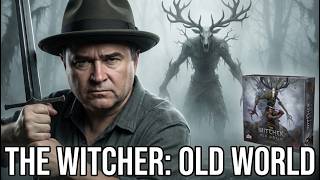
The Witcher: Old World has captured the imagination of board gamers since its 2023 release from Go On Board and CD Projekt Red. Reviewers and players consistently praise the game for its thematic richness, engaging deck-building mechanics, and the way it transports players into the monster-hunting world of Andrzej Sapkowski's fantasy universe. Whether through solo play or group experiences, players find themselves drawn into an immersive experience that respects the source material while delivering compelling strategic gameplay.
Core Mechanics That Define The Witcher: Old World
Dual-Purpose Card Play and Movement
At its heart, The Witcher: Old World features a deceptively elegant system where cards serve two distinct functions. During the movement and exploration phase, players discard cards matching terrain symbols to travel across the game board. These same cards transform into combat tools during battles, where their colored edges chain together to form combo sequences. This dual-purpose design creates meaningful tension in deck-building decisions. Players must balance acquiring cards for mobility with securing cards that generate powerful attack combinations, drawing icons, and defensive shields during combat. The beauty of this system lies in its clarity: every card you build into your deck serves both purposes, eliminating dead cards and creating satisfying moments when a previously purchased card proves crucial.
Deck Building Through Market Mechanics
Rather than accumulating cards through traditional draw mechanisms, players purchase cards from a shared market each turn. The market displays six cards with varying costs, and players pay not in gold but by discarding cards from their hand. This creates an interesting economy where spending a card to acquire a card feels like a meaningful trade-off. The market costs shift based on position, making timing and positioning matter. Players who recognize when a particular card has become more affordable can plan their turns accordingly. This system keeps deck construction accessible throughout the game, allowing new players to continuously improve their starting deck while preventing any single player from running away with power through early resource accumulation.
The Witcher: Old World Experience
Monster Hunting as Tactical Combat
Fighting monsters represents the core of the progression loop. Each monster has its own card with a life value and special abilities. Players shuffle their entire deck plus discard pile into a single life pool, making deck size literally equal to hit points. This elegant design means the investment in deck-building directly correlates to survivability. Combats proceed as alternating turns where the player plays card combinations trying to deal damage while the monster attacks based on opponent choices. Having a trail token for a monster, obtained by tracking them at specific locations, grants first-move advantage. Victory nets gold coins, trophy points, and progress toward winning the game. If the player wins decisively, they gain two trophies and fatigue, forcing them to discard cards from their deck. Strategic depth emerges from understanding when to fight, which monsters present the best opportunities, and how to manage the attrition of fatigue.
Exploration as Narrative Adventure
When players choose exploration instead of combat, they draw from either the city or wilderness deck and experience short narrative encounters. A nearby player reads a two-option story snippet, and the active player chooses their response. These encounters often provide quests that send players to specific locations or offer immediate rewards like gold, cards, or equipment. The exploration decks feature richly evocative text that captures the tone of the Witcher universe, from encounters with merchants and travelers to dangerous magical situations. Some explorations reference numbered event cards, creating chains of storytelling that unfold as players complete them. This layer transforms the game from pure mechanics into a narrative journey, building character and immersion.
What Makes The Witcher: Old World Stand Out
Five Unique Witcher Schools with Distinct Specialties
Each of the five witchers represents a different school, each with unique specialty attributes that activate during combat. The School of the Wolf, Cat, Griffon, Bear, and Viper each possess distinct mechanical abilities that influence how that witcher plays. This specialization extends beyond mechanics into the aesthetic and thematic identity of each character. When players select their witcher, they are selecting an identity and playstyle, not merely mechanical variation. Trophy cards earned during combat slide under the witcher board, gaining ongoing abilities that synergize with the school's specialty. This system ensures that games feel different depending on which witcher you play, and that long-term investment in a character becomes rewarding as abilities accumulate.
Gorgeous Components and Table Presence
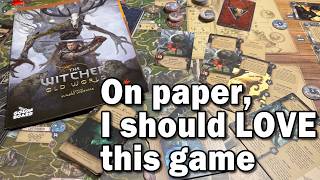
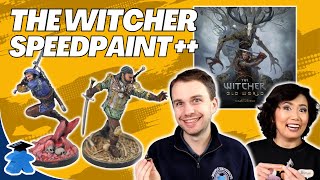
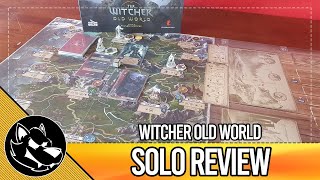
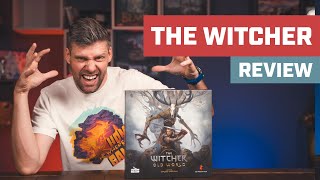
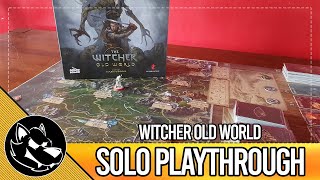
The production quality immediately impresses. The game board depicts the Witcher world with detailed artwork and folded map sections showing various locations. Each witcher receives a thick, double-layer player board with clear spaces for tracking attributes and housing trophy cards. The deluxe version includes beautifully painted monster miniatures, each with intricate detail and character. Monster cards feature evocative artwork that captures the diverse creatures witchers encounter. The card art throughout maintains thematic consistency while remaining visually distinct. Even the basic components like location tokens and attribute markers feature appropriate iconography. This level of attention to component quality and aesthetics creates an experience where the game's presentation reinforces the immersion.
Potential Drawbacks
Significant Time Investment and Player Count Scaling
The Witcher: Old World plays significantly longer with more players. At two players, a game typically runs 90 to 120 minutes, allowing the experience to flow smoothly. With four or five players, total time can stretch considerably as each additional witcher extends turns and increases downtime for waiting players. While the game includes features designed to keep non-active players engaged, such as controlling monsters during combat and betting on other witchers' battles, the mathematical reality remains that more players means longer waits between turns. Some players may find the downtime problematic, particularly those who become impatient during extended turns by other participants.
Attribute Leveling Restrictions
The game restricts attribute advancement through limiting location actions. Players can only raise basic attributes at their school location or at general attribute locations, but cannot raise basic attributes beyond their current witcher level using basic location actions. This design prevents certain snowballing and encourages specialization, but occasionally creates frustration when a player knows exactly what they want to do but cannot perform that action yet. To advance beyond certain thresholds, players must spend gold at their school location, creating a resource sink that some may find tedious. While the restriction serves a mechanical purpose in pacing progression, it occasionally creates moments where the optimal strategy requires more setup than players anticipate.
If You Enjoy The Witcher: Old World
Players who love The Witcher: Old World should explore Blood Rage for similar area control and asymmetric player abilities. Scythe offers comparable table presence and shared resource markets with distinct faction asymmetry. Mage Knight provides deep solo experiences with punishing combat systems and strategic puzzle-solving. For those drawn to the Witcher IP specifically, the Witcher Adventure Game offers a lighter, more direct adaptation of the source material. Skyrim: The Board Game captures similar fantasy adventure themes with quest-driven gameplay.
What Reviewers Are Saying
"You are going around and exploring the land trying to raise your stats and your skills, there are four different attributes that you can care about, one of which is your specialty associated with your school, and every Witcher that you play has their very own specialty that activates during battle."
— Tabletop Tolson
"The stories and the adventure in those wilds and city decks are just dynamite, just absolutely where the fun is in addition to battling and fighting monsters which is super, super duper fun."
— Meeple University
"Fighting is just fun and the way that other players are getting involved when it's not their turn is they are operating as the monster, they will get the monster deck shuffled up and they will decide whether they're going to bite or they're going to ram before they turn the card over."
— ON TABLE Board Games