










Throw Throw Burrito Deep Dive
What the Community Thinks About Throw Throw Burrito
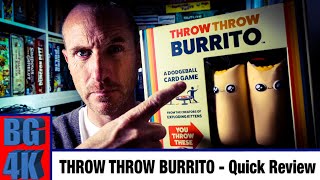
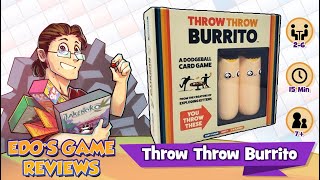
Reviewers describe Throw Throw Burrito as a deliberate hybrid of two familiar party formats. The game comes from the team behind Exploding Kittens, and Shelfside sums it up as spoons with dodgeball added to the mix. Players race to collect sets of matching animal cards, and whenever a burrito card lands, the table erupts into a physical fight with soft toy burritos. Reviewers agree that the rules are short to learn, and the rulebook earns praise for explaining the core game on one side and offering clarifications for ties, cheating, and special cases on the other.
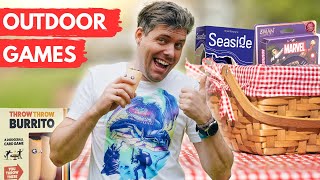
Opinions on the game itself are overwhelmingly positive. Board Game Coffee praised the packaging and the clear window on the box that shows off the burritos, and the same team highlighted the rainbow retro branding and the illustrated burrito characters. Shelfside noted that the clear window on the box draws curious onlookers who immediately ask what the game is. The Shelf Side tier list reaction placed it high for a simple reason: it is the kind of game that gets pulled out at most parties, and it is easy to bring in a crowd that does not normally play tabletop games. The consensus is that Throw Throw Burrito works best as an icebreaker and a social game rather than a deep strategy experience.
Core Mechanics That Define Throw Throw Burrito
Real-Time Set Collection
Throw Throw Burrito has no turns. Every player simultaneously passes a card to the left and draws from the right, trying to assemble a set of three matching cards as quickly as possible. Board Game Hangover describes the rhythm plainly: players draw, discard, draw, and discard until they collect three of the same animal, and then they place that set in front of them for a point. Reviewers note that the matching cards appear frequently because the hand limit is five, which keeps every player busy and makes the racing feel constant. Shelfside observed that players have to read their hand and commit to a set in a few seconds, and that the real-time pressure makes each decision brief and instinctive.
Throwing, Bouncing, and Flipping Battles
The physical half of the design is built into the burrito battles. A burrito brawl pits the players seated on either side of the set player against each other, a burrito war involves everyone except the player who triggered it, and a burrito duel has two players stand back to back, take three paces, and turn to throw. Reviewers describe the penalty as a point swing rather than elimination. Each hit costs a point, and Shelfside highlighted the design choice that keeps everyone in the game: players collect burrito bruises as penalties instead of being eliminated, so everyone stays in the game until the round ends. The result is a dexterity layer that reviewers find both funny and tense.
The Throw Throw Burrito Experience
Chaotic Physical Comedy
Reviewers consistently describe the table as chaotic in the best possible way. Board Game Coffee was surprised by how soft the burritos were, and the group laughed as players dodged and deflected each other throughout the unboxing and their first playthrough. Shelfside filmed a session in which the host dove, blocked, and deflected throws from a kneeling position, and the footage captured the kind of spontaneous yelling and falling that reviewers say defines the game. The stakes feel low because the burritos are soft, which makes the comedy easier to enjoy.
Addictive Quick Rounds
The other feeling reviewers return to is the pull to play again. Rounds are short, and each one ends quickly enough that players want to try again with a faster approach. Shelfside described the game as very addictive because players always feel they can improve on the next round, and they called it an easy game to keep playing until everyone is tired from running around. Shelf Side pointed out that the game produces surprising moments of skill and reaction across the table, which keeps the experience fresh even for groups that have played many times.
What Makes Throw Throw Burrito Stand Out
A Blend of Spoons and Dodgeball
Reviewers repeatedly return to the concept itself. Shelfside noted that there are few games that fully deliver a dexterity party experience built on spoons, and that Throw Throw Burrito does so while keeping the rules simple enough for almost anyone to join. The reviewer also observed that the game adds much more movement than spoons alone, with players moving around the table to grab burritos from the middle and dodge throws. Shelfside summarized the appeal as dodgeball plus spoons, which captures why the game feels like a natural extension of two familiar party games.
Soft, Safe, and Accessible to Any Crowd
The soft construction of the burritos is one of the most praised features. Board Game Coffee described the burritos as having a satisfying squish, and reviewers note that they can be thrown at people without much risk of injury. Accessibility is the second strength. Board Game Coffee applied what it called a mom test and concluded that the game passes it, because the simple rules and cute art make it approachable for older relatives. Shelfside agreed that the game fits well with friends who do not normally play board games.
Potential Drawbacks
Space and Breakage Requirements
The most common concern is that Throw Throw Burrito needs room. Shelfside flagged the need for a big open space, the risk that cards get damaged from being grabbed so aggressively, and the difficulty of playing in smaller living spaces. Board Game Coffee raised a similar concern when the reviewer imagined a mother reluctant to have burritos thrown around the house, and it noted that the game is more comfortable in a living room with clear space. Reviewers also observed that noise and jumping can make the game hard to host in apartments or shared housing. The soft burritos reduce the risk of harm, but they do not remove the need to clear loose objects from the room.
Limited Strategic Depth
Some reviewers note that the game rewards speed and reaction more than planning. A player in the Shelfside session said they had heard there was little brain work involved, and that they kept trying to think about strategy before deciding the game was not meant to be played that way. Shelfside described the option to simply turn off your brain and enjoy the chaos. Players who want deeper decisions may find the game sits closer to a reaction game than a planning game.
If You Enjoy Throw Throw Burrito
Reviewers most often point to Spoons as the game that inspired Throw Throw Burrito. If you already enjoy the fast drawing, grabbing, and reaction-based chaos of Spoons, Throw Throw Burrito adds a physical layer that turns each set into a potential fight. Shelfside called it a better version of the classic card game for players who want more movement.
Exploding Kittens is the other natural comparison. Reviewers note that Throw Throw Burrito comes from the same designers, and Shelfside observed that the card art and rhyming animal names carry the same absurd humor. Players who enjoy the goofy tone of Exploding Kittens will recognize the style, although Throw Throw Burrito asks for much more physical space and activity.
What Reviewers Are Saying
"Just draw, discard, draw, discard, and try to collect three. Everyone does that at the same time. Chaos."
— Board Game Hangover
"What son does not want to throw a rubber burrito in their father's face and just smack them? It's fun."
— Board Games for One
"This is a party game that's really easy to keep playing until everyone's actually just tired from running around in the game."
— Shelfside