/pic6029065.jpg)






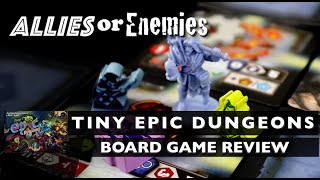

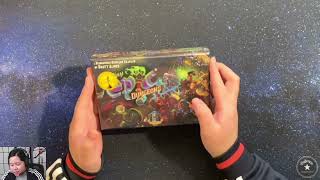

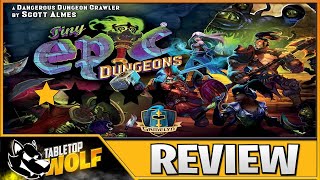

Tiny Epic Dungeons Deep Dive
What the Community Thinks About Tiny Epic Dungeons
Tiny Epic Dungeons lands in a fascinating position within the board gaming community. Some reviewers hail it as one of the strongest entries in the Tiny Epic line, praising its compact size and engaging cooperative adventure. Others describe it as a punishing, symbol-heavy challenge that leaves new players frustrated. This divergence reflects a game that succeeds brilliantly for some playstyles but demands specific expectations to enjoy.
The title has attracted intense engagement from solo players and cooperative groups alike. Multiple reviewers note it generates meaningful stories of defeat and learning, while others cite the difficulty as a fundamental design misstep. What becomes clear across all discussions is that Tiny Epic Dungeons doesn't aim for casual, breezy gameplay. This is a lean, tense dungeon crawl compressed into a box you can hold in one hand.
Core Mechanics That Define Tiny Epic Dungeons
The Torch Track and Time Pressure
At Tiny Epic Dungeons' heart sits the torch track, a ruthless timer that shrinks with every hero action. This mechanic forces constant decision-making: do you explore an unknown room, loot an item, search for the minion that bars your path to the boss, or rest to recover health? Your torch light diminishes whether you succeed or fail. Kill a minion and you gain six spaces back. Run out of torch light and the game ends immediately. Reviewers frequently mention this mechanic as the core driver of moment-to-moment tension. It shifts the experience from leisurely dungeon exploration into frantic resource management, where time matters more than territory covered.
Dice System and Set Collection
Combat and skill checks rely on a clever dice system where ones and twos add to higher rolls, providing a built-in mitigation layer. This prevents total failure while still requiring smart card play. Outside combat, players build loot sets like the Lion, Bear, Phoenix, or Panther collections. Complete a full set and you gain powerful bonuses: extra health from melee attacks, shield values, or other character-specific enhancements. The dice tutorial helps new players quickly grasp the core resolve mechanic, though the overall rulebook density remains a consistent point of friction for learners.
The Tiny Epic Dungeons Experience
Roguelike Difficulty and Learning Loops
Tiny Epic Dungeons embraces difficulty. Reviewers note win rates of 25 to 50 percent for experienced players. Many report reaching the boss only after numerous attempts, and some never reach the final confrontation at all. This punishing design echoes old-school video games like Metroid, where failure teaches positioning and resource conservation. Players die, learn what went wrong, and try again. On the surface, this sounds engaging. But the gap between "knowing you made a mistake" and "actually being able to adjust" can feel vast when the game offers no difficulty slider. House rules become common, with players adjusting the torch track marker or respawn mechanics to feel less locked in a death loop.
Variability and Replayability
Every dungeon is unique. Random tile draws create different room layouts each play. Boss selection is random. Which minions spawn and when depends on the torch track progression. Different heroes bring different strengths and special abilities. Loot drops vary wildly. This procedural generation means that two playthroughs rarely feel identical, driving players back for repeated sessions. One reviewer reported playing six times in a single day after their first successful boss encounter. The discovery-driven nature keeps veteran players curious about what combination of luck and skill might finally yield victory.
What Makes Tiny Epic Dungeons Stand Out
Component Quality and Presentation
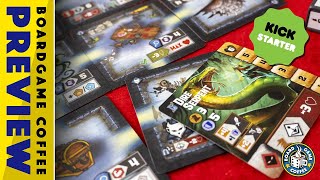
Gamelyn Games executed the production beautifully within the tiny box constraint. Individual hero miniatures look clean and characterful, distinguishing each class visually despite their modest size. The minion meeples with printed designs are particularly praised as among the best-looking meeples reviewers have encountered. Dungeon tiles are terrific quality. The small box feels premium and sits comfortably on most shelves. One reviewer called it the prettiest game in the Tiny Epic series to date. The art direction, even on goblin tokens that might initially seem generic, grows on players after extended play. Setup and teach time remain mercifully brief for experienced players.
Expansions Add Meaningful Depth
The Potions and Perils mini-expansion introduces one-use items with strategic costs. The Stories expansion adds new heroes, additional bosses and minions, a side quest deck, and the Epic Dungeon variant, a three-level gauntlet that grows progressively harder as your heroes grow stronger. Reviewers emphasize that the core box contains enough content to sustain extended play, but Stories specifically feels essential for those wanting long-term engagement. The modular nature allows players to mix and match expansion content without overwhelming the base experience.
Potential Drawbacks
Brutal Difficulty Without Official Mitigation
The game's difficulty tuning divides the audience sharply. Some find challenge exhilarating. Others report feeling locked in death loops, repeatedly knocked down by minions or bosses, with the torch draining relentlessly. One reviewer played six times without ever defeating the final boss. Multiple reviewers note that on BoardGameGeek, a consistent complaint emerges: many players never reach the boss encounter at all, dying in the dungeon or running out of torch light first. Unlike modern roguelikes such as Elden Ring, which offer alternative progression routes and leveling systems, Tiny Epic Dungeons forces you through the same gauntlet with no official difficulty adjustment. The designer's responses suggest this difficulty is intentional, but the lack of an in-box slider or recommended house rules in the rulebook left some reviewers feeling abandoned.
Symbol Density and Rulebook Organization
Reviewers consistently flag the rulebook as dense and symbol-heavy. The Tiny Epic series' commitment to language independence creates a situation where nearly every mechanic, item type, and ability relies on iconography. While this works for experienced players, new learners face a steep conceptual slope. Gamelyn Games released a day-one digital rulebook supplement to clarify symbols and abilities, but this essential content should have shipped in the box. One reviewer, who is partially blind, struggled significantly until accessing the supplementary rules. The base rulebook uses tiny text and symbol reference charts that demand rereading. Multiple reviewers describe the learning experience as miserable, with rules questions arising mid-play that find no clear answer in the rulebook text.
If You Enjoy Tiny Epic Dungeons
You likely gravitate toward cooperative games with genuine consequences. You appreciate roguelike design philosophies where failure teaches. You don't mind replaying scenarios multiple times to chase victory. You value rich thematics and adventuring atmosphere. You appreciate the hobby of miniature assembly and painting. You want a portable dungeon crawler that actually delivers a full dungeon-crawling experience. You play with a group that commits to house rules when needed. You embrace longer campaigns with the Stories expansion. Games like Shadows of Brimstone, Gloomhaven, Massive Darkness, and Aeon's End may appeal similarly, though each offers different difficulty tuning and scope. If you loved Tiny Epic Galaxies or Tiny Epic Defenders, expect a much more ambitious ruleset and higher challenge floor.
What Reviewers Are Saying
"Every turn counts and you need to have each other's back which is both part of the challenge and part of the fun."
— Allies or Enemies
"It took us six tries to finally kill our first boss and that was all in one day and then we immediately played again."
— Allies or Enemies
"It's a very nice mechanics on push your luck so trying to achieve stuff and a lot of dice rolling of course. You will have different heroes that you can play with and it plays well with two three four people and it's really fun."
— Board Stupid