





Tír na nÓg Deep Dive
What the Community Thinks About Tír na nÓg
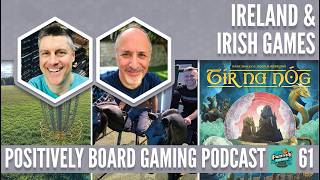
Tír na nÓg is a drafting and grid-building game set in Irish myth, and the reviewers who covered it tend to agree on one thing: it asks more of the player than its gentle presentation suggests. Several channels placed it among their favorite releases of the year. The Flip Side praised its Celtic mystical theme, its artwork, and the quality of its decisions, while BoardGameBollocks called it a surprise hit at the table and found it very intriguing from the first session. Positively Board Game came at it from the opposite direction. Jamie bought the game for its artwork and storytelling theme before ever having played it, which is a fair picture of how the box sells itself.
Core Mechanics That Define Tír na nÓg
Each turn a Storyteller marker is placed into an open space between two cards, and the player takes cards that touch that Storyteller. Because the next pick depends on where the marker sits, placement and drafting are one decision rather than two. A flip card revealed at the start of each round tells the automated opponent whether to take the highest or the lowest available card, so the draft shifts character partway through the round. Some cards carry powers that can move another player's Storyteller, extend a color, or reach into the discard piles, which adds further options to every turn.
Cards are then laid out in three rows that each score in a different way. The top row rewards cards that do not repeat a number within their row or column. The middle row rewards each card that is lower than the card to its left. The bottom row begins from a fixed total and subtracts each card's value, counting duplicate values only once. Contiguous groups of the same color earn majority points, and a player needs at least two cards of a color before that color can score at all. Goal cards, which the reviewers often describe as sagas, add a race element, since the first player to complete a goal such as filling a row or collecting all four colors claims it. Each round, players give up one card from their hand, so the pool of options narrows as the game goes on.
The Tír na nÓg Experience
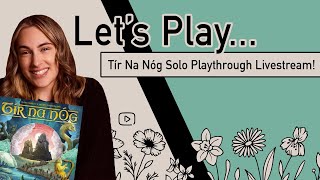
Most of the excitement comes from the moment-to-moment puzzle. Players describe constantly weighing which cards to chase, which to actually get, and where to play them, with each choice carrying consequences for the scoring rows and the color groups. A card that looks ideal for one row can break a color group elsewhere, and a placement made early in the game can restrict options several rounds later. The solo mode lets the player set how many cards the opponent discards before majorities are scored, which gives a clear way to adjust the challenge. Board Game Garden, whose stream was a solo run, said that the difficulty system was one of the features it liked most.
The experience is not always forgiving. Reviewers describe the frustration of losing a placement to a card that arrived at the wrong moment, and the relief of recovering a plan that seemed lost. Several players mention that the best sessions are the ones where the final scoring reveals how much a single early choice mattered.
What Makes Tír na nÓg Stand Out
The art is the first thing most reviewers mention. The mythic, Celtic imagery gives the game a distinct identity on the table, and the presentation of the Otherworld themes creates a sense of place that many abstract games lack. Board Game Garden said plainly that it really loves the art, and the storytelling framing is a major reason that Jamie wanted to buy the game in the first place.
The Blessings and Burdens expansion is the other major talking point. It introduces bridges, portals, and new objectives, and it changes the end-of-round discard so that the card given up alters the relative value of the colors. Runesouls argues that this change alone is reason enough to add the expansion to the base game, because it makes an already tough choice carry real weight. The reviewer also notes that the expansion can be mixed in piece by piece, letting a group choose only the portals, the objectives, or the variable color scoring rather than all three at once.
Potential Drawbacks
The most common criticism is that the theme sits on top of the mechanics rather than driving them. Runesouls describes the game as close to a pure abstract, with the setting providing only a light layer over the card drafting and grid building. The reviewer also wishes the stories tied more closely to the abstract objectives, and notes that the expansion omits the Celtic pronunciation guide that appears in the base game, leaving players unsure how to say the names aloud.
Difficulty is the other concern. Reviewers call the game crunchy, with every card carrying a value, a color, and possibly a power, and each scoring layer stacking on the others. Because placements are hard to undo, a weak early turn can be difficult to recover from, and new players may feel that the game is outpacing them. Experienced puzzle players tend to find the experience rewarding, while casual groups may need a patient teacher and a forgiving first game.
If You Enjoy Tír na nÓg
Players who enjoy Tír na nÓg's row-by-row scoring puzzle will find a similar satisfaction in Calico, which rewards careful color and pattern placement on a shared grid in much the same deliberate way. The drafting tension of choosing a card knowing it narrows every later pick is also central to Azul, another game where Runesouls' sense of a "pure abstract" wrapped in a light theme will feel familiar. Players drawn to Tír na nÓg's Celtic storytelling layer and its goal-card race element should look at The Castles of Burgundy, which pairs tight tile placement with the same feeling that an early choice can echo for the rest of the game.
What Reviewers Are Saying
"I'm just better at puzzly games than I am at any other games"
The Board Game Garden
"This game is the purest of pure abstracts."
Runesouls
"This game, the game is brutal to you and I love that."
Runesouls