




































Tower Up Deep Dive
What the Community Thinks About Tower Up
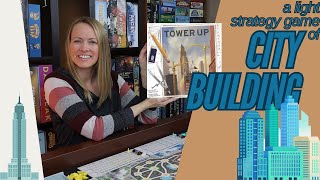
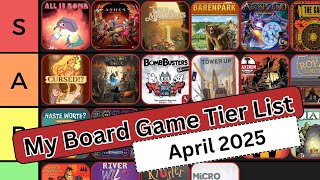
Tower Up emerged in 2024 as an unexpected triumph that earned enthusiastic endorsement from prominent board game reviewers. Multiple top-tier critics featured the game prominently in their annual rankings, with several placing it among their personal top games of the year. The consensus centers on a single powerful observation: Tower Up achieves something increasingly rare in modern board game design, a system so refined and elegant that it manages to feel simultaneously breezy and strategically substantial.
Core Mechanics That Define Tower Up
Resource Acquisition and Tower Construction
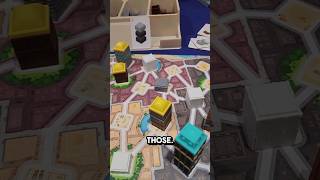
Tower Up distills its decision space into two fundamental actions, each crucial to victory. On a player's turn, they either acquire colored bricks by drawing a resource card from the central display, or they invest their accumulated bricks to build a new tower. The acquisition pathway provides flexibility: players can gather resources needed for future turns, scaling their wealth to respond to changing board opportunities. The construction pathway demands immediate commitment. When placing a new tower on an empty plot, the player must select a color different from all adjacent buildings, then spend one brick of each adjacent building's color to elevate those neighbors. This mandatory elevation transforms what might appear as a gift into a calculated cost, forcing players to navigate dense board states as the game progresses.
Track Climbing and Victory Points
Tower construction drives the core scoring mechanism: players climb tracks corresponding to the colors they expanded, earning endgame bonuses for roofs placed atop completed buildings. The game layers public objective cards atop this track-climbing foundation, creating a race element that adds urgency to positioning decisions. Players compete to achieve common goals, maintaining presence across all five map regions, or controlling multiple roofs on single buildings, while simultaneously pursuing personal track advancement. The interplay between individual optimization and contested public prizes generates constant tension.
The Tower Up Experience
Mechanical Elegance in Action
Reviewers consistently praise the game's purity of design. The ruleset contains minimal special cases or situational modifiers; instead, the core systems create emergent complexity through interaction. The densifying board, as towers rise and players consume available construction spaces, naturally increases decision pressure without requiring additional rule layers. Early turns feel open and exploratory, granting players multiple viable directions. Mid-game transitions into a race for contested spots and carefully positioned expansions. Late-game becomes a chess-like calculation of remaining opportunities, with experienced players making rapid, confident moves. This flow feels intentional rather than coincidental, suggesting thorough design discipline.
Gateway Game Performance
One reviewer identified Tower Up as the game they recommend first to non-gamers curious about modern board gaming. The teaching burden is remarkably light: explain card drawing, explain building with adjacent costs, explain track climbing and roofs, then play. Within fifteen minutes, players grasp the entire system. Yet what follows is recognizably game-ful, meaningful choices at every turn, visible consequences for every decision, visible tension between players pursuing incompatible goals. The game proves equally engaging for heavy strategy enthusiasts and casual players, suggesting a genuine spanning of the hobby's audience spectrum.
What Makes Tower Up Stand Out
Refined Simplicity as Design Achievement
Tower Up occupies a rare design space. Many games attempt minimalism and settle for shallowness; many games achieve strategic depth and burden players with rules overhead. Tower Up accomplishes both simultaneously through obsessive refinement. The resource card display permits exactly three visible options, creating transparency while limiting choice overload. The adjacent-building cost structure eliminates arbitrary scoring thresholds. The single-action-per-turn format eliminates action economy analysis paralysis. Each design choice removes friction without reducing decision relevance. Critics identified this quality as institutional excellence, the kind of design that suggests a developer willing to cut eight attractive ideas to polish the ninth into perfection.
Strategic Depth Within Accessible Bounds
Initial plays feel breezy and approachable; subsequent plays reveal increasing sophistication. The "layers of the onion" metaphor appeared repeatedly in community discourse. New players discover branching strategies: aggressive early expansion versus conservative resource accumulation, pursuing public objectives versus building personal track strength, racing to dense board areas versus maintaining access through sparse positioning. No single strategy dominates; the public objective cards shift optimal approaches between plays. This variability prevents dominance by optimized play patterns, keeping the game fresh across repeated plays.
Potential Drawbacks
Accessibility Through Constraint
Tower Up's elegant simplicity comes from aggressive scoping decisions that some players might perceive as limitations. The game makes no attempt at theme integration beyond window-dressing terminology; the brick-placement and track-climbing systems are pure abstraction. Players seeking thematic immersion or experiencing narrative integration will find none. The thirty- to forty-five-minute playtime suits quick play sessions and tournament structures but excludes longer campaigns or evolving storylines. The player scaling mechanism relies on board density as a natural throttle; the game does not include difficulty variants or scaling rules for uneven skill tables.
Strategic Accessibility and Player Skill Expression
Reviewers noted that apparent simplicity masks legitimate decision complexity when assessing Tower Up for varied player groups. Teaching the game remains easy, but playing it well demands spatial reasoning, forward planning, and opportunistic positioning skill. A mismatch emerges: new players grasp the rules instantly but may not appreciate the strategic implications of their placement choices. Experienced players quickly identify optimal zones and tile sequences. This creates a potential gap between surface accessibility and depth-of-play satisfaction, particularly across a wide skill spectrum.
If You Enjoy Tower Up
Tower Up aligns closest with titles emphasizing tile placement, resource management, and spatial optimization. Players drawn to Manhattan, Sky Towers, Barcelona, or similar compact yet thinky games will recognize Tower Up's design lineage. Fans of games with elegant resolution mechanics and high decision-point-per-minute ratios should investigate Tower Up. The game suits players who value snappy turns and visible board state evolution over lengthy individual turns or hidden information. Those seeking games that welcome both casual and experienced players at the same table will find Tower Up's accessibility-to-depth ratio compelling. Gateway players preparing for deeper hobby engagement and strategic gamers seeking portable, fast-playing titles represent optimal audiences.
What Reviewers Are Saying
This one I think has again potential to be an evergreen. I'd be extremely proud of myself if I designed this game. The pure system here of trying to just draw a card and that dictate which bricks you can take or start a new building is so pure. It's super fun and the board quickly gets swallowed up by the other players.
— Chairman of the Board
Tower Up is the game that I recommend if you are ever in a situation where you've got non-gamers who haven't played anything other than Monopoly or Cludo and are potentially interested in what this gaming hobby is about. It is so good. Simple rules, really easy to learn, really interesting gameplay. It has objectives to aim for and plays in thirty minutes.
— Gaming Rules!
There is strategy involved that people aren't really saying because it's such a lightweight game. But there is a lot of strategy here on what you want to do and when to take certain cards. The family really enjoyed it, so when I say hey do you want to play this or this, they'll usually pick Tower Up.
— Rolling Dice & Taking Names