/pic6214088.jpg)
















Trails Deep Dive
What the Community Thinks About Trails
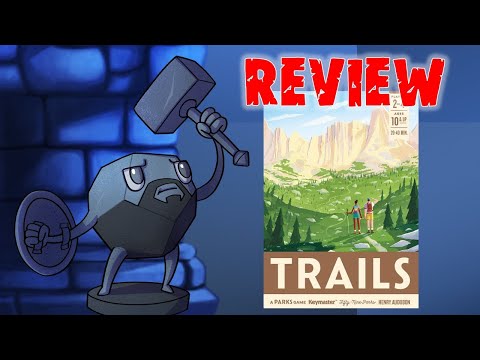
Trails occupies a unique position in the board gaming landscape as a streamlined companion to the acclaimed Parks. Reviewers consistently praise it as an accessible entry point that distills the core appeal of its larger sibling into a tighter, faster experience. The game has earned recognition from prominent voices in the community, including placement on multiple top-ten lists for games that successfully achieve their "smaller but better" ambitions. Players appreciate that Trails manages to deliver meaningful decisions and satisfying progression without requiring the commitment of longer games, making it an ideal gateway for newcomers while remaining engaging for experienced gamers.
Core Mechanics That Define Trails
Resource Management and Badge Collection
At its heart, Trails operates as a resource management puzzle combined with set collection. Players navigate a trail gathering three resource types (leaves, acorns, and rocks), converting these materials through various actions to ultimately complete badges that award victory points. The genius of this system lies in how accessible it feels initially while concealing genuine tactical depth. Every player faces constant decisions about which resources to pursue, which badges to chase, and when to commit their gathered materials. The eight-resource hand limit creates meaningful tension throughout the game, forcing players to carefully consider what they carry forward and what they must leave behind.
The Canteen System and Photo Mechanic
The canteen introduces a risk-reward element that shapes turn-by-turn planning. When full, a canteen allows players to travel as far as they wish in one turn before requiring a return to the trail head for refilling. This single-use power creates moments of dramatic possibility but demands foresight about positioning and timing. Photography adds another layer of engagement, allowing players to spend resources for cards that contribute both points and bird symbols (a separate scoring vector). The photo acquisition mechanic offers meaningful choice: draw two cards and select one, or claim a card from the discard pile. This interplay between immediate advantage and risk creates memorable moments of strategic consideration.
The Trails Experience
A Relaxing Yet Engaging Journey
Reviewers consistently emphasize the emotional experience of Trails. The theme of hiking through natural beauty translates directly into gameplay through beautiful artwork and intuitive mechanics. Players genuinely feel the progression of a day hike, moving from trail head toward end and back again, gathering experiences and memories (represented by collected cards). The 40-minute runtime allows Trails to deliver a complete arc without overstaying its welcome. Multiple reviewers note that Trails creates a contemplative, strategic space where players can enjoy leisurely decision-making rather than rushed calculations. The Fifty-Nine Parks aesthetic elevates the entire experience, making the table visually striking during play.
Dynamic Game Evolution Through Night
A signature design element sets Trails apart from its predecessor: the sun mechanic creates an evolving landscape. As players progress toward the trail end and activate the sun bonus, the token advances and eventually causes trail sites to flip to their nighttime sides. These flipped tiles become more valuable, offering doubled resource yields or free photo actions. This progressive enhancement creates a ramping difficulty curve that feels organic rather than imposed. Early game plays differently than late game, with the nighttime transition generating a sense of progression and mounting tension even as individual actions become more efficient. Players must constantly reassess their strategies as the trail transforms before them.
What Makes Trails Stand Out
Elegant Simplification Without Sacrifice
Trails succeeds where many streamlined adaptations struggle: it maintains mechanical depth while reducing complexity. Designer Henry Audubon and publisher Keymaster Games removed the area-control elements of Parks while preserving the core satisfaction of resource gathering and conversion. The result plays roughly half as long as Parks while feeling complete and coherent. New players grasp core concepts within their first turn or two, yet seasoned gamers find interesting variations in approach. The hidden secret badge creates information asymmetry that prevents perfect calculation, maintaining an element of uncertainty and discovery throughout play. This balance between accessibility and engagement makes Trails genuinely approachable for gateway players while remaining mechanically satisfying for heavier gamers.
Table Presence and Component Quality
The production quality of Trails reflects Keymaster Games' attention to detail. Simple components never feel cheap; instead, they enable quick visual comprehension. The Fifty-Nine Parks print series artwork transforms the table into a contemplative space. Players frequently note that non-gamers stop to admire the board during play, drawn by the beautiful landscapes and natural color palette. This visual appeal serves practical purposes beyond aesthetics, helping players maintain mental engagement and making turn-based decisions feel rewarding even when fortune favors competitors. The compact footprint means Trails travels easily, fitting into backpacks or casual game sessions without demanding a dedicated table.
Potential Drawbacks
Photo Mechanic Feels Secondary
Some reviewers observed that despite elegant design, the photo mechanic never feels as central as badge collection. Players regularly deprioritize photo acquisition in favor of pursuing badges, since photos provide points but demand resource expenditure. The free photo action at game end can feel like a consolation prize rather than a meaningful pathway to victory. While the mechanic functions correctly and occasionally enables interesting decisions, it lacks the weight of core badge-gathering systems. Players seeking depth might find the photo system underdeveloped as a distinct strategic pathway.
Direct Comparison to Parks Creates Expectations
Trails' relationship to Parks cuts both ways. For players who adore Parks, Trails sometimes feels like a lesser sibling rather than a distinct achievement. The removed elements (national park cards, area control, longer planning arcs) that some players loved in Parks don't translate to Trails, creating a perception that Trails sacrifices rather than streamlines. Some experienced players find themselves preferring the fuller scope of Parks despite its longer playtime. Additionally, those seeking complexity may feel Trails runs too smoothly, lacking the endgame tension and dramatic swings larger games provide. The positioning as "Parks Light" can set unrealistic expectations about what Trails attempts to deliver.
If You Enjoy Trails
Players drawn to Trails will find natural homes in several other titles. Parks, the original by the same designer and publisher, provides the fuller experience with expanded park cards and area control elements for those seeking greater depth. Cascadia offers similar tile-placement and tableau-building with the same aesthetic commitment to natural beauty. Splendor Duel delivers comparable resource management wrapped in elegant two-player design. Seven Wonders Duel provides more elaborate set collection within a tight, interactive framework. Those seeking gateway games with strategic legs might explore Ticket to Ride, Catan, or Azul depending on preference for direct interaction and complexity.
What Reviewers Are Saying
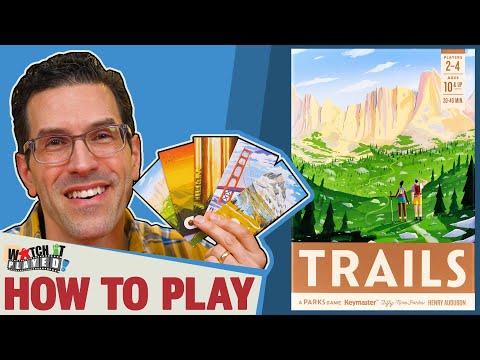
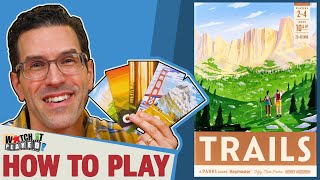
"There are very few things that are as relaxing as going for a long walk on a nature trail, and that's what you're going to be doing here, collecting some items along the way, taking pictures, encountering wildlife, and perhaps some other hikers."
— Watch It Played
"This one really kind of is Parks Light. It takes the game Parks and kind of scrunches it down into a streamlined version of basically the same game with some slight differences. It's a lot easier to take pictures in this one, and the canteens allow you to move as far as you want in the direction that you're facing with one action."
— The Dice Tower
"It kind of takes the leapfrogging onto spaces to collect resources from Parks, and that's there. A couple things I like better about Trails are that as the game progresses, the various spaces will start to flip over to their nighttime side where they are generally more powerful, and I really enjoy that kind of ramping aspect."
— The Brothers Murph