/pic5373953.jpg)
You are an adept of the mysterious art of alchemy, seeking a way to become the successor of the greatest alchemist ever living — Hermes Trismegistus. In order to do so you will be transmuting mere metals into pure gold, performing experiments, and inventing artifacts to finally achieve everlasting greatness.
Trismegistus: The Ultimate Formula is played over three rounds during which you will draft exactly three dice. By expertly utilizing the potency of your drafted die, you will be able to transmute precious materials, collect alchemical essences, purchase and activate artifacts, and perform experiments that will progress you along four mastery tracks. You will also build a secret hand of publication cards which — together with the value of your experiments, the completed formulas of your Philosopher's Stone, and your collected gold — will determine your final score in victory points and, perhaps, make you the greatest alchemist, someone able to rival Hermes Trismegistus himself!
The game features custom dice, the sides of which represent alchemical materials. At the beginning of each round, the dice are rolled and grouped by their respective types. On your turn, you must either draft a new die or utilize the untapped potency of a previously drafted die. Based on the material associated with your chosen die, you will be able to collect certain essences in addition to the material to which the die is keyed. Additionally, the color of the die will determine which types of transmutations you can perform, refining raw materials and increasing your mastery of the elements.
Acquire precious artifacts in order to maximize the effects of your transmutations. Conduct experiments. Increase your knowledge and expertise and discover the ultimate formula!
The game includes a solo mode by Dávid Turczi and Nick Shaw.
—description from the publisher

New Edition of Trismegistus!
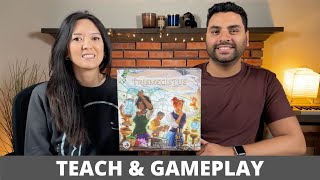
Trismegistus New Edition: Teach & Playthrough

Mechanics (from transcript analysis)
Video topics + discussion points
Quotes (from this video)
- I finally decided that it's something that I should try to see how much money I'll actually make
- it's something I've been putting off for years like literally since I very first started this channel
- 80% is still well and good enough for me to go ahead with this
- sound is a bit magical in my old career that I've been doing for like 12 years
- I am planning on leaving them on as they are right now for the foreseeable future
- I don't want to flood people's timelines with all these little five to ten minute videos
References (from this video)

Mechanics (from transcript analysis)
Video topics + discussion points
Quotes (from this video)
- board games make me so happy
- I try to be happiness focused
- I don't speed up my playthroughs
References (from this video)

Mechanics (from transcript analysis)
Video topics + discussion points
Quotes (from this video)
- I went 17 days without turning on my video camera
- the patreon support is also super important to keep all of this stuff going
References (from this video)

- incredibly satisfying when engine combos come together
- dynamic layering of combinations creates rewarding payoffs
- tight integration of workflows (transmutations, elements, artifacts)
- extremely brain-intensive and prone to analysis paralysis
- heavy rules and long teaching time; three-hour games are common
- alchemy-inspired engine-building of combos and resource flow
- alchemical workshop with philosopher's stone goal
Mechanics (from transcript analysis)
- dice drafting and potency tracks — Draft dice of various types; potency determines how powerful actions are on a turn; dice are placed on tracks.
- endgame publications and conditional points — Publications grant conditional endgame victory points; spending elements unlocks these points.
- experiments and artifacts — Complete experiments to gain bonuses; artifacts slot under transmutation paths to grant bonuses and additional resources.
- free actions and chained turns — Turns can be tiny (one action) or massive (a long cascade of actions), enabling micro and macro engine-building.
- mastery tracks and resources — Advancing mastery on element tracks enables more potent actions; resources (goods, essences, artifacts) feed combos.
- transmutation and elemental mastery — Transmutation chains move resources along color-specific tracks; essences and elements drive progress toward experiments.
Video topics + discussion points
Quotes (from this video)
- this game has a lot of really cool ideas
- I might give it a shot again at lower player counts
- it's all about tiny little setup turns and then explosive massive turns
- the top is activated if the queen is alive
- monarch is dying
- three hours
- I am awful at word games
- the combos when you pull them off are incredibly satisfying
References (from this video)

Mechanics (from transcript analysis)
Video topics + discussion points
Quotes (from this video)
- I have a really big problem with the status quo.
- I'm desperately looking for more colonialism themed games at least from the Western colonial eyes.
- Don't ruin the magic if you prefer not to but do you preset the first few turns of a playthrough so that you could better show the rules or is it all standard setup and you show the rules as they come?
- I pre stack cards like in terraforming Mars I made sure that there were cards in people's hands so that a greenery tile would go down a Sydney tile would go down an ocean would go down that every single little button could be pressed in that first generation.
References (from this video)

- enjoyed the different parts of the game
- too complicated; not likely to be played again; hard to teach every single time
Mechanics (from transcript analysis)
Video topics + discussion points
Quotes (from this video)
- I'm not happy right now
- I'm seriously considering some small to significant changes
- I wish I had something concrete to tell you but I didn't really want to sit here and say everything is fine when everything isn't fine
References (from this video)
- Complex and involved
- Ambitious dice-driven Euro
- Requires careful strategizing and planning
- Fantastic core game
- Potential for improvement with streamlining
- Not easy to get into due to symbology and terminology
- Could benefit from streamlining for accessibility
- Alchemy
- T-series games
Mechanics (from transcript analysis)
- action selection — Players have a limited number of actions per turn and try to maximize potency.
- contract fulfillment — Players aim to complete contracts.
- Dice Drafting — Players draft dice, with considerations for color, symbol, and pool size.
- Engine Building — Players build an engine to increase their efficiency.
- Resource Management — Players manage and transmute resources into different elements.
- Take That (indirect) — Players can piggyback off other players' actions by collecting additional tokens.
Video topics + discussion points
Quotes (from this video)
- hey everybody and welcome back to my top 100 board games of all time today I'll be continuing the series with games 90 through 81
- one of the simplest area control games that I've played yet still one of the best
- if you want a a dice driven game with tons to M over really carefully strategize about what you want to do planning to the nth degree um it doesn't really get much better than trist ma Justice
- hopefully you have enoyed enjoyed it if you have please be sure to hit like And subscribe to the channel and check out my other content too
- for everybody else I'll see you next time on chairman of the board bye-bye
References (from this video)

Mechanics (from transcript analysis)
Video topics + discussion points
Quotes (from this video)
- There's no way to be I I can't I can't even get people to tell me their schedule two weeks in advance so it's very much a week to week thing
- I hold it to a higher level than that and so on the downside it doesn't allow us to stream games as quickly as I would like sometimes
- if if if the expansion for oath were included in that I would I would put that above arcs okay wow okay
- universally okay
- don't I think it's great the way it is just get more maps which they're doing so honestly that's my answer
- a reprint of ground floor would be great so I can get a copy of it
References (from this video)
- Significantly improved artwork and visual appeal.
- Higher quality and more aesthetically pleasing components.
- More elegant and organized board design.
- New mechanics like batteries and familiars add depth.
- The new version addresses issues with the original's symbols and components.
- Rulebook is still dense and text-heavy.
- Some component dials are a bit loose.
- No insert included, requiring custom storage solutions.
- Alchemy, transmuting materials, making potions
- Alchemists
- Wrath of Ashardalon
- Lords of Waterdeep
- Galactic Cruise
Mechanics (from transcript analysis)
- action selection — Players choose from a set of main actions.
- Area Control — Controlling areas on the board might be a factor.
- Card Drafting — Players may draft cards to gain advantages.
- dice manipulation — Dice are used and their faces can be changed.
- Engine Building — Players build up their capabilities through various means.
- Resource Management — Players manage various metals and essences.
- Set Collection — Players collect sets of metals and essences.
- Variable player powers — Players have unique abilities or starting conditions.
- Worker Placement — Players place workers on action spaces.
Video topics + discussion points
Quotes (from this video)
- The new Trismegistus, everybody's sexy.
- This looks like unfinished art right here. That looks really rough.
- Everything looks rough and unfinished and this just looks polished and pretty.
- This has way more shelf appeal.
References (from this video)
Mechanics (from transcript analysis)
Video topics + discussion points
Quotes (from this video)
- This is my worst pick. This is actually the pick my lowest pick on this whole list.
- I feel like this one's going to be pretty good.
- That dropping down to your eighth pick is wild.
- Oh my god, that's not good.
- Again, that is what I expected. That is your lowest pick of your draft.
- For a nine pick, that's a gift.
- That's a solid score for a nine.
- Wow, that's low for your nine.
- That's a really great Your nine and 10 were really solid.
- For a total of 54,000.
- Helge, if you're watching this, you screwed me over, damn it.
- Multiple in the top 100, yeah.
- It came down to three.
- The worst designer? Yeah, who's got the worst bottom seven?
References (from this video)
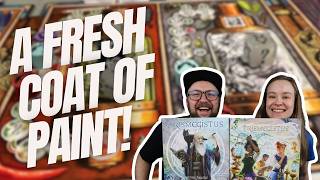
- One of the best art styles
- Upgraded looks and feel from the original
- More intuitive and visually appealing than the original
- Tight action selection
- Brain-working, strategic gameplay
- Solid and tight design
- Enjoyable end-game scoring
- Favors certain types of experiments and artifacts, giving focus
- Efficient use of resources
- Every action feels important
- Good balance of choices
- Looks much better and feels more intuitive
- Text on the player aids is helpful
- Bad rulebook in the original version
- Player aids needed knowledge of all rules and symbols
- Heavy game with a high hurdle
- Rules were overwhelming in the original
- Artwork in the previous version not very helpful
- Some player powers feel weaker than others
- Potential for high AP play
- Can be long
- Interaction is limited (classic Euro style)
- Some elements like the Pikachu tail are unexplained
- Alchemy
- Trisagistas (original version)
Mechanics (from transcript analysis)
- action selection — And then it's basically an action selection game. So with that potency, you can do different things.
- Area Majority — If I fill out all the spaces on it, I will score three times whatever is on this tile at the end of the game.
- contract fulfillment — It is in its core essence a contract fulfillment game. There are other things to do as well, but the main part of the game is going to be trying to fulfill these cards.
- Dice Drafting — You are basically drafting some dice. Depending on the dice you draft, you're going to depending on the number of dice of that type, you're going to get that amount of potency.
- player powers — There is like this player powers. Totally forgot to talk about that.
- Set Collection — You will score points for the books. You will score points with these nice point trackers throughout the game.
Video topics + discussion points
Quotes (from this video)
- It had one of the best art styles in a board game ever.
- The game also had a kind of bad rule book.
- It's heavy in the fact that it's pretty tight. Yes. And hard to achieve what you want to do.
- There is not a lot of interaction in the game. I feel like the interaction there is is like the classic Euro interaction of oh, I hope you don't take that card.
- It's not that hard to understand it, but it's hard to to get your mind around what to do and how to do it.
- I think it's a great game.
- I'm going to end up on an 8.5 for Chris Mistas.
References (from this video)

- Absolutely beautiful new art
- Deeply puzzly and engaging gameplay
- Satisfying progression and engine building
- Fantastic dice drafting mechanism
- Potentially hard to acquire if not available in retail
- Alchemy / Transmutation
- Grand Austria Hotel
Mechanics (from transcript analysis)
- contract fulfillment — Fulfilling contracts using dice actions.
- Dice Drafting — Players draft dice, with the power of the drafted die influenced by the number of dice available at the time of drafting.
- Engine Building — Unlocking ongoing abilities through filling bookshelves and using drawers.
- Objective Fulfillment — Players have personal objectives that must be met through contract fulfillment to score.
- Resource Management — Managing different types of resources (metal, magic) and upgrading them.
Video topics + discussion points
Quotes (from this video)
- May was a very solo gaming-heavy month, which made me really happy.
- I really do want to start doing solo gaming more because I just love it so much.
- So, yes, definitely recommend if you want a little day-to-day fun puzzle.
- This is definitely a game that broke my brain.
- The new version, the art is just absolutely stunning. I cannot get over it.
- The game that we had the most laughs with in the month of May is a game called Cats Pushing Things Off Shelves or something like that.
- I think the folding of the pastry in this game and the placing of the polyomino tiles freaking breaks my brain every time that I have played this, and it is just such a fun satisfying puzzle that has a lot of challenge to it.
- If
- this game is so relaxing to me.
- you are trying to create kind of empty spots in between your polyomino shapes.
- absolutely gorgeous game, very satisfying.
- All of the different like flowers and stuff on the tiles have this beautiful holographic foil on them that just like makes them shine.
- this game is from a smaller indie publisher and this is a game that more people need to experience, more people need to play.
- it is a hand management game where you're going to have specific customers that are going to need specific numbers uh and also specific kind of suits and you're going to be playing cards from your hand as well as from this table in front of you in order to serve those customers
- this game comes with like unlockable boxes, which I haven't even unlocked all of the ones that came in this prototype.
- I think this game is absolutely fantastic and definitely needs all the love.
References (from this video)

- so fun
- unique dice drafting
- art is great
- very challenging
- magic
Mechanics (from transcript analysis)
- custom dice — Uses custom dice with different symbols for actions.
- Dice Drafting — Features a unique dice drafting system where custom dice with different symbols are used.
Video topics + discussion points
Quotes (from this video)
- I named it the cream of the crop and yes, we are doing that again this year.
- I can already see they would probably get into my top 100 games of all time and it makes me so sad because when I was prepping for this video, I actually went back and watched the video that I did back in 2024.
- that does show just how hard it is to get games back to the table, especially being a like board game content creator.
- I desperately need to make a video of games with mini games because that is just one of like my favorite things in a board game.
- I have not been able to stop thinking about this game ever since we played it at the cottage.
- Holy crap. I'm looking at it in the camera, and it's really hard to hold it up and show you guys it because it is very reflective.
- And the part of the game that I just fell in love with with this game is the fact that each player has a hidden kind of endgame scoring.
- It makes me really sad cuz I do believe that Osprey Games is no longer going to be publishing games.
- It is so fun. Again, it has dice drafting but the dice drafting is very unique in its own way.
- It is the type of puzzly game that makes my brain very happy.
- I love themes of Japan. Francis and I went to Japan. We are going back to Japan this year, which we're very excited for and officially we have booked the flights for Japan, so we are very excited.
- Stefan Feld just he knows how to make games that make my brain happy.
- I feel like there needs to be more games that are druid themed.
- Remember, you are somebody's reason to smile.
References (from this video)

- Gorgeous art and graphic design
- Strong thematic integration
- Satisfying puzzliness
- Revamped second edition is much improved
- Very heavy and complex
- Alchemy, transmuting metals
- Trismegistus (first edition)
Mechanics (from transcript analysis)
- Action Point Allowance — I'll have five kind of Grand Austria Hotel style action points kind of Grand Austria Hotel style.
- contract fulfillment — ultimately to complete contract cards. That's what you want to be doing is completing these kind of experiment cards.
- Dice Drafting — You are drafting dice.
- Engine Building — Producing resources and on and on and on.
- Resource Management — You can use your the your kind of value your strength to transmute stuff to take things from an unrefined or to a refined or.
- Tableau Building — There's pathways from to go from this metal to this metal.
Video topics + discussion points
Quotes (from this video)
- This is our mid-year Oscars.
- This is really like the pre-Gen Con the pre-convention season list.
- So, number 10 is going to be a game that I didn't uh know anything about until I saw it pop up on Board Game Arena.
- Cascadia: Alpine Lakes. This should be delivering very very soon.
- This is a standalone version of Cascadia, where not only are you building out, you're now also building up.
- I really enjoyed the 3D aspect of it. But then you still have that kind of Cascadia goodness.
- This is Lord of the Rings: The Two Towers trick-taking game.
- This is probably truly my favorite.
- It's a cooperative trick-taking game uh that is set in the Lord of the Rings story.
- In this one there's three storylines going.
- simple polyomino game.
- cozy game for the moment for us.
- It messes with my head in a good way that I really like where it's still super super simple, super easy.
- Trismegistus second edition, baby.
- This game is really, really heavy in general. Like it's just It's one of their heavier games.
- your head will be thumping after this one.
- And now it's all reinforcing stuff. So I can I'm like oh, I know how this works. This is all this is all intuitive and makes sense.
- I think it's awesome. Like I'm so glad this was like I did never expect them to do a redo of this.
- So it's our favorite of the year so far.
- Our July is jam-packed. It's ridiculous. Absolutely jam-packed with playthroughs many of which are going to be games that are releasing at Gen Con.
- Get your favorite picks in the comments below for what you've enjoyed this year so far.
References (from this video)
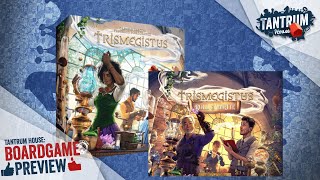
- New artwork is great.
- New edition is laid out better and more pleasing to the eye.
- Feels way more streamlined than the former edition.
- Artifacts are more prominent and give cool powers.
- Deep strategic puzzle with crunchy decisions.
- Not for the faint of heart.
- Researchers transmuting metals, performing experiments, and inventing artifacts to achieve greatness.
- 19th century
- Tris Majestice (original)
Mechanics (from transcript analysis)
- Dice Drafting — At the heart of Tris Majestice is the dice drafting. Each round, players will draft three dice, one at a time, from the shared pool. Each die determines the type of element and the strength of the potency, the number of actions you're going to be able to take with that dice.
- Engine Building — Books give you discounts, mastery boosts, and huge endgame points. The more you place in your study, the more exponential your victory point rewards are going to be.
- Goal Achievement — You also gain theories assigned them to the publication sideboard. These titles give you goals like collecting certain artifacts or refining specific metals.
- Resource conversion — Use essences to move metal markers along the path to higher value metals.
- Set Collection — Gain experiment cards. In addition to giving you cool benefits, these can help you gain bookmarkers, which will help you fill rows and columns on your bookshelf for even more rewards.
- Worker Placement — Players take turns drafting dice and performing actions.
Video topics + discussion points
Quotes (from this video)
- Tris Majestice is a deep strategic puzzle where timing, planning, and a flare is going to set you apart.
- It's not for the faint of heart, but for those who love those crunchy decisions and thematic euro games, it's really, really an interesting board game.
- I personally like the main board game just a little bit better, but you might like the streamlined roll and write version better.
References (from this video)
- Streamlined roll and write version.
- Personally like the main board game just a little bit better.
- Distills the original/new addition into a compact diced driven experience.
Mechanics (from transcript analysis)
- Card activation — Each die is also tied to an artifact card which grants progress on element masteries and becomes available for future activation or experimentation.
- Dice Rolling — This one distills the original or this new addition into a compact diced driven experience played over five rounds.
- Set Collection — Players can perform experiments if they meet the metal and mastery requirements based on the current round number and choose one of the two possible elements to gain victory points.
- track movement — Transmutations allow you to move from one metal to the next in a specific sequence.
Video topics + discussion points
Quotes (from this video)
- Tris Majestice is a deep strategic puzzle where timing, planning, and a flare is going to set you apart.
- It's not for the faint of heart, but for those who love those crunchy decisions and thematic euro games, it's really, really an interesting board game.
- I personally like the main board game just a little bit better, but you might like the streamlined roll and write version better.
References (from this video)

- Absolutely stunning game
- Cannot get over the art
Mechanics (from transcript analysis)
Video topics + discussion points
Quotes (from this video)
- This is a tag made by the wonderful Rolling Reggie.
- It is a series of, I believe, eight questions that we are going to answer midway through the year.
- What is a game that you've played in 2026 that you want to take on a second date?
- Druids of Adora is the most recent title from the wonderful Stefan Feld, and I am a huge fan of Stefan Feld games.
- This game makes me so happy.
- What is your biggest surprise so far this year? And then also, you can, if you would like, answer what is your biggest disappointment so far this year.
- Fyfe is a Sudoku-esque puzzle of taking these chips out of a bag and they all have different colors, icons, and numbers and you're placing them into this 5x5 grid of tokens that then each row and column is progressively going to have a different kind of objective added to it and you're trying to achieve as many of these objectives as possible.
- I think I'm just obsessed with Sudoku. Am I okay? I don't know.
- Postcards. So, I was so excited for Postcards.
- Kokeshi, which in this, if you guys do have this game, this game is full of chunky acrylic tokens that are so incredibly satisfying and I have absolutely loved playing this game with those tokens.
- Trismegistus, um by the wonderful Board & Dice. This game is absolutely stunning.
- Todoku. Apologies if you can hear someone mowing their lawn in the background.
- Onirim. This is a I I don't actually think it's solo only, but a lot of people just play this one solo.
- Crits and Tricks from Inside Up Games.
- Flip Voyage, which is another game from the same publisher that did Flip Town.
- Iris from Crimson Board Games. Honestly, her content I feel like is most aligned with the type of content that I really enjoy that is still within the board game space.
- Kimothy Reads and I have been loving her content recently over on TikTok.
- J&J's Cards and Collectibles in uh Waterloo, Ontario. It is the best friendly local game store.
- the video where I was showing you guys the expansion that I designed with my friend Daryl for Mythic Visions. So we designed the Herbalist, and I did a video kind of showcasing my journey with that.
- tags were all the rage, favorites videos, which I kind of do here on the channel with my monthly wrap-up videos, but yeah, just like olden days YouTube just makes me really happy.
References (from this video)
- Mystical
Mechanics (from transcript analysis)
- Roll and Write — A roll and write version of the game is being added.
Video topics + discussion points
Quotes (from this video)
- Gordon Dice is bringing a new version of Tris Majestice to crowdfunding.
- They're also adding a roll and write version.
- Ooh, we have mystical objects.
- These are going to help us with the rolling right version of the game.
References (from this video)
- Visual upgrade in the second edition.
- Familiar gameplay for those who played the original.
- Artifacts provide interesting bonuses and trigger actions.
- Books in the library make future experiments easier.
- Aqua regia provides flexibility in action selection.
- Can be overwhelming with many options.
- The game requires careful planning and resource management.
- Alchemy
Mechanics (from transcript analysis)
- action selection — Players choose actions based on available dice and spent potency.
- Card Drafting — Players can draft experiment cards from a central offer.
- Dice Drafting — Players draft dice showing alchemical symbols which determine available actions and resources.
- Resource conversion — The core mechanic involves transmuting one type of metal into another.
- Set Collection — Players collect sets of metals, essences, and experiment cards to complete objectives.
- Track Advancement — Players advance on mastery tracks for the four elements to unlock bonuses and scoring opportunities.
- Worker Placement — Players use dice to activate actions on their player board and the central board.
Video topics + discussion points
Quotes (from this video)
- The thing is it's nice cuz it rolls right off the tongue.
- It does. That's the best part about it.
- You fool.
- So much of it is just based around like just getting as much potency as you possibly can.
- We're out here flying by the seat of our pantaloons.
- Man, I just feel like you did so much this first round. I just didn't do anything and so trying to think I think I'll just do this get one more mercury and I think that's going to be it. I just don't think I don't think there's anything else I can do that's useful.
- Ooh, hold on. Calculating.
- Man, not having this extra potency is starting to hurt.
- Mercury's in high demand, man.
- Wowzers.
- It's going to work out perfectly.
- Man, you came roaring back.
References (from this video)
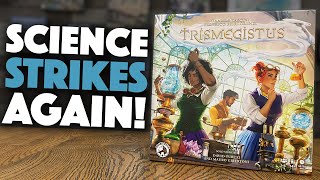
- Quality of life improvements make it a better version of the original.
- Smoother gameplay experience due to modernization.
- Improved board design for better information flow and clarity.
- Consolidated information on player and main boards.
- Streamlined gameplay by removing the 'follow' action.
- New variable player powers add flavor and strategic direction.
- Higher quality production with nice aesthetic touches like built-in score dials.
- Removal of 'fat' from the game, reducing complexity and game time.
- Alchemy, turning lead into gold, chasing the philosopher's stone
Mechanics (from transcript analysis)
- action selection — Players use dice potency to take specific actions, such as completing experiments, acquiring artifacts, transmuting elements, or obtaining essences. The game involves a main action and potential free actions.
- Dice Drafting — Players draft dice from different areas, with the number of dice in an area determining the 'potency' of the die drafted. The color and symbol of the die are also important.
- Resource Management — Players collect and transmute various elements and essences required for experiments and other actions. Different types of essences (e.g., salt, mercury) are used for progression on tracks.
- Set Collection — Players complete experiment cards by fulfilling requirements, which can lead to scoring points and unlocking bonuses. The new edition uses a publication board for scoring elements.
- Track Advancement — Essences are used to advance on various tracks, which can score points, trigger bonuses, or provide one-time benefits.
- Variable player powers — New for this edition, players draft double-sided powers at the start of the game, which provide unique abilities and add flavor and guidance to gameplay.
- Worker placement (implied) — While not explicitly stated as worker placement, the drafting of dice from specific areas and the potency associated with those areas share similarities.
Video topics + discussion points
Quotes (from this video)
- they have instituted a lot of what I would call 2025 quality of life improvements to make it a better version of that game.
- it's not a like a lighter game by any this is a heavy game still. There's a lot going on.
- I can't imagine anyone playing this game and not thinking it's a better version of the original.
- This consolidates all the information related to one aspect in one area.
- It all the ready kind of like helps the flow in people's minds of what you're doing because you can look at each of these sections.
- This game is about finding the most actions you can do in one action.
- It streamlines the game in a positive way.
- They just basically approached the game and went, 'Okay, here's an area we can adjust. Here's an area.' You could take 20 minutes off the game time by taking out the follow actions.
- Variable player powers. You're going to get to draft these at the start of the game.
- this is just a higher quality product in general.
- Having this like built into the playerboard is really cool.
References (from this video)
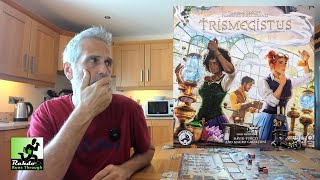
- Jaw-droppingly beautiful presentation, a huge improvement visually.
- Usability improvements, such as player boards going left-to-right.
- Streamlined gameplay that speeds up the game.
- Every die draft provides a free medal, increasing income.
- The battery mechanic offers significant strategic options.
- The game flows better and is more exciting for players who found the original too slow.
- Fewer obscure rules, making it easier to learn and teach.
- The modular objective system offers a push-your-luck element.
- Artifacts are more flexible and likely to be used.
- The changes generally increase player control and speed.
- The new edition is a better overall experience than the original.
- The 'reaction system' (piggybacking off other players' turns) is gone, removing a key source of player interaction.
- Silver no longer has a special property, making it feel less significant.
- Wild dice (that can represent any metal) no longer have a downside of not providing a free metal, making them overly powerful.
- The removal of silver's special property is the only change that slows the game down, as it previously helped complete higher-level experiments faster.
- Alchemy
- 19th century
- Original Tris Magistas
Mechanics (from transcript analysis)
- Action Point Allowance System — Dice potency is spent to perform actions, allowing for multiple actions within a turn.
- Dice Drafting — Players draft dice that have color, symbol, and potency. Drafting a die also provides a free medal.
- Engine Building — Players improve their capabilities by increasing mastery levels, acquiring artifacts, and completing experiments, leading to more powerful turns.
- Hand Management — Players manage experiments and artifacts in hand, deciding which ones to pursue and when to complete them.
- Modular Board — The game features modular elements, such as the placement of experiments on the player board, affecting rewards.
- Press Your Luck — The objective system has a push-your-luck element, with players deciding how to weight their objectives for scoring.
- Resource Management — Players manage various metals (lead, tin, iron, copper, mercury, silver, gold) and essences (salt, ether, sulfur) to perform actions.
- Set Collection — Collecting specific artifacts (e.g., yellow ones) or completing sets of experiments can score points.
- Variable player powers — Each player chooses a unique special power at the start of the game, influencing their strategy.
- Worker Placement — Artifacts and experiments are placed into specific slots on the player board, influencing activation and scoring.
Video topics + discussion points
Quotes (from this video)
- This game is just drop dead gorgeous now, a huge improvement over the original's stark utilitarian presentation.
- Smart move turning things around so player boards go from left to right instead of right to left, improving usability.
- The reaction system has been replaced by a bunch of little things... It's not you being subject to the whims of what your opponent chooses and deciding when to use them.
- My wife felt that the original Tris Majestice was too slow. She really enjoys it now.
References (from this video)
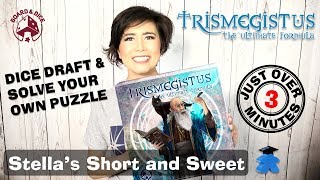
- Unique mechanics
- Competitive interactions (not overly harsh)
- Could be overwhelming at first
- alchemy and the pursuit of the philosopher's stone
- an alchemy-themed setting with alchemists and the philosopher's stone
Mechanics (from transcript analysis)
- Action Points — Action points are spent to perform actions on the board and on your player board.
- Drafting — Draft dice from a common pool; the number of action points available depends on how many dice of the same type are drafted, and the dice symbols/colors drive other actions.
- end-of-round/game progression — Three rounds determine the end of the game, with the round ending after all players collect three dice per round.
- following actions — Follow actions allow you to perform actions by following other players, starting with a pool called Parral to do most actions.
- philosopher's stone bonus — Completing a requirement on an experiment card can immediately grant the philosopher's stone bonus and points.
- Set Collection — Collect materials and essence to complete experiments and gain points.
- transmitting/upgrading materials — Transmit materials up value tracks one step at a time to reach higher values.
Video topics + discussion points
Quotes (from this video)
- philosopher's stone immediately take the bonus
- the uniqueness in mechanics make this game is worth playing again and again
- drafting action points allowance order fulfillment and set collection
- there are a lot of going on and various things you can do it could be a little overwhelming at first but once you down a few rounds you'll become easier
- follow action you start with to allocated Parral which you can use to do most actions by following other players
- the gameplays wonderful players with mechanics such as - drafting action points allowance order fulfillment and set collection
- the game is off heavy complexity
References (from this video)

- Deep thematic engine with alchemy progression
- varied paths to victory
- Complex rules and long playtime
- alchemy, discovery, mastery
- Alchemy academy, Hermes Trismegistus as inspiration
- mythic laboratory atmosphere
Mechanics (from transcript analysis)
- Card Drafting — build a hand of publication cards and artifacts
- card drafting / artifact acquisition — build a hand of publication cards and artifacts
- Dice Drafting — players draft three dice each round to perform actions
- Set Collection — collect materials and artifacts to progress on mastery tracks
Video topics + discussion points
Quotes (from this video)
- Castle muthoni has a fantastic table presence and the way the township and castles will grow and morph over time as the game progresses
- The Chronicles of Run ... the world of Run hangs in the balance
- word on the street is that Chart a is designed to offer players almost all the information that they need in order to develop a strategy
- to win you must have the highest difference in points between these two suits
- the ultimate formula is played over three rounds
References (from this video)
- Deep, crunchy engine-building with meaningful choices
- Excellent replayability due to multiple strategic paths
- Tight balance and rewarding payoff when your plan lines up
- Strong components, clean UI, and thematic fit
- Some perceived complexity; many players find it heavy but manageable with time
- Minor aesthetic/slot color mismatch between components and cards
- alchemy, potion crafting, formula discovery
- alchemical laboratories and workshops; mythic alchemy setting
- engine-building through potion synthesis and philosopher's stone progression
Mechanics (from transcript analysis)
- Dice Drafting — players draft dice from a shared pool with color, symbol, and number to perform actions.
- Engine Building — unlock blocks on the philosopher's stone and activate abilities that chain to other actions.
- Positive Player Interaction — flip reaction tokens to piggyback on other players' actions.
- reaction tokens / player interaction — flip reaction tokens to piggyback on other players' actions.
- Resource Management — ingredients are manipulated, transformed, and upgraded via transmutation and essences.
- resource management and transmutation — ingredients are manipulated, transformed, and upgraded via transmutation and essences.
- set collection / endgame scoring via artifacts and publications — collect artifacts and publications that contribute endgame points based on symbols.
- Track Advancement — advance on four tracks representing elements by transmuting and trading essences to unlock benefits.
- track mastery across four elemental tracks — advance on four tracks representing elements by transmuting and trading essences to unlock benefits.
Video topics + discussion points
Quotes (from this video)
- nine out of ten — this gets a phenomenal rating for me which is about a nine out of ten
- I could see this maybe slot into my top ten games of all time
- it's a masterpiece
- it's absolutely crunchy crunchy game
- this game is brain burning but in the most satisfying way
References (from this video)

- A deep, brain-burning euro with lots of interaction and chain reactions
- Very cohesive design; multiple routes to victory
- Rich theme integration with complex yet elegant mechanics
- Regarded as very heavy and possibly intimidating for new players
- A longer playtime that requires commitment
- dice-crafting with mystic elements
- Alchemy and potion brewing in a mythic laboratory
Mechanics (from transcript analysis)
- Dice Drafting — Draft dice with magical values to drive actions and potions.
- resource/potion crafting — Use dice values and colors to craft potions with varying effects.
- upgrades and dice pool management — Pay gold to upgrade dice and unlock new abilities.
Video topics + discussion points
Quotes (from this video)
- I thought 2019 was a really strong year for board gaming.
- it's just a nice, pleasant game there and I really hope this one gets some wind behind it sails because it's a really nice game.
- an absolute masterpiece in my opinion.
- Trismegistus the ultimate formula definitely my top game of 2019.
- this is undoubtedly the best deduction game out there.
- Museum is as you can see it has to be wonderful to look at artwork by vintage rate, who is undoubtedly probably the best artist in the business.
References (from this video)
- Engaging core loop combining dice drafting and alchemical transmutation with meaningful asymmetry.
- New edition adds a publication board and book-based endgame scoring that deepens strategy.
- Rich thematic presentation with clear, memorable components and updated art/graphic design.
- Asymmetric researchers create varied paths and tactical decisions each game.
- Endgame scoring via artifacts, books, and mastery tracks offers multiple win conditions and planning depth.
- Rules and interactions are dense; new players may require a dedicated teach.
- Prototype components and balance may shift before final production; some rules are nuanced.
- Game length and action economy can feel punishing if dice rolls are unfavorable.
- alchemy, transmutation, and scholarly pursuit for the philosopher's stone
- 19th-century laboratory environment focused on alchemy and experiments
- asymmetric, narrative-driven researcher roles with campaign-like scoring through artifacts and publications
- Tris Majestice (original edition)
Mechanics (from transcript analysis)
- artifact_tiles — Artifacts provide ongoing benefits when transmuting and can be exhausted to gain tracks or bonuses; they interact with the publication and mastery systems.
- dice_drafting — Players draft six-sided dice organized by symbol and assign potency to determine the number of actions available on a turn.
- essences_and_mercury — Three essences (blue salt, yellow aether, red sulfur) fuel transmutations; mercury is a special metal used for mastery tracking and certain upgrades.
- experiment_cards — Experiment cards specify requirements (metals and mastery levels) to gain points and progress on tracks.
- free_actions — Before or after main actions, players may perform free actions such as extra potency, aqua regia changes, and battery-based boosts.
- mastery_tracks — Four mastery tracks advance with transmutations; advancing yields points and enables meeting certain experiments.
- publication_board_and_bookshelf — Publications and books on the bookshelf provide endgame multipliers; completing rows/columns grants bonuses and book-based discounts.
- transmutation — Metals move along color-coded arrows to become refined or transmute into other metals, consuming potency and essences or mercury.
Video topics + discussion points
Quotes (from this video)
- This game is designed by Danielle Tashini as well as Federico Pierre Lorenzi and published by Board and Dice.
- This is a dice drafting and experiment fulfillment game for one to four players that is also Euro style.
- We are going to be working on creating experiments by transmuting different types of metals and working on publications in order to try to work on the philosopher stone.
- Mercury is sort of a special metal in the sense that when we perform transmutations you can spend mercury instead of these essences.