/pic6107847.jpg)
Steeped in epic Nordic and Celtic myths and sagas, Trudvang Legends places players in the roles of legendary heroes who make their mark on a dynamic, everchanging fantasy world.
The game — based on the Swedish RPG, Trudvang Chronicles — thrusts players into a cycle of epic sagas in which their achievements change not only the world itself, but the very rules by which gods, peoples and nature interact. They will quest through an interwoven series of adventure books, and the results of their choices will echo through history: changing the relationships between sovereign nations, usurping kings, creating new waygates, or even locking and unlocking parts of the map.
Change in Trudvang Legends manifests physically as parts of the board actually change, making the actions of previous hero generations affect future sagas. However, the changes are only as permanent as long as history remembers them, which makes the game endlessly replayable, and even playing the same adventure book repeatedly will have a completely different feeling because the world itself has changed. Heroes, following a path of destiny, will even become historical fixtures as they become kings, guildmasters, or even gods!
—description from the publisher
- Interesting legacy mechanic with card sleeves
- Cool advent calendar-like window system
- Did not care for it at all
- Frustrating mechanical part with token drawing and card deck building
- Combat is too gamey and breaks immersion
- Missed icons for tests are frustrating
- Basic plot that is not special
- Legacy style game with a different take on legacy mechanics
- Choose your own adventure style elements
- Baldur's Gate
- Civilization
- Gen Con demo
Mechanics (from transcript analysis)
- Bag Building — Players draw tokens out of a bag for attributes.
- Choose Your Own Adventure — Uses a punch-out window system revealing different interactions or objectives.
- Deck Building — Players have a deck of abilities and draw cards.
- legacy — Features sleeves on different boards where cards are slid in and out as the world changes.
Video topics + discussion points
Quotes (from this video)
- it's just a silly fun little game
- really really fun definitely recommend it
- it's fun all the way around pretty much until the very end
- the production is lavish and great and lots of fun
- just that last end game thing which I don't think will happen every time but I think it will happen frequently
- it just sours me a little bit I wish there was kind of a different way
- I would definitely recommend folks take a look at it pick it up
- it's a lot of fun just the end game can be a little bit dissatisfying
- Dune Imperium was my favorite game of 2021
- I feel like the rise of IX is a is a required expansion to me
- This one I could kind of take or leave and I think especially for a first play I would never add in the Immortality expansion
- it's almost like the card pool is almost too watered down now at this point
- the expansion is funky it just adds some funky stuff and I don't know if it improves or worsenses the gameplay I really can't tell you
References (from this video)
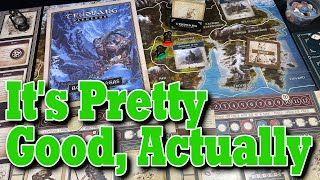
- Affordable price, especially for the amount of content.
- Light legacy elements that change the game world.
- Engaging and entertaining writing with choices that have impact.
- The quest structure allows for relatively short play sessions.
- The modular board and integrated component storage make setup and teardown easy.
- The 'mist track' pressure luck mechanic is well-liked.
- The game offers good replay value through branching paths and unlocked missions.
- Combat system is convoluted and time-consuming.
- Character upgrades feel insignificant.
- Items can only be used once and are stacked, limiting strategic use.
- Skill checks are often too difficult, hindering progression.
- The chronicle point system feels underutilized.
- The game takes up a significant amount of table space.
- The included miniatures are unnecessary, add bulk, and are poorly implemented for gameplay.
- Open world adventure sandbox
- Norse and Celtic mythology
- Story book entries revealed through progression
- Gloomhaven
Mechanics (from transcript analysis)
- Bag Building — This game does have some bag building mechanisms and when you are performing a skill test or you are in combat, you will draw a certain number of uh rune tokens from your bag and then that will dictate how well you do.
- Chronicle Points — Chronicle points are a thing that you keep track of on your health track and those can be spent as a currency to trigger different powers.
- Deck Building (Feats) — The characters will have a deck of feats and these are things that they can do during combat. When you go into combat, you will draw four cards from your deck. This deck is upgradable.
- Event deck — As you are traveling around the world, you will draw a random event... This event deck will grow and change as you play the game.
- legacy elements — There are light legacy elements to this game... The game world kind of changes as you play, as you meet new NPCs, as you discover new things, as you discover new quests and things. You will slot those into the board.
- Mist Track (Press Your Luck) — The mist track is something that I do like because this is a pressure luck element and I like pressure luck things in game.
- Modular Board — The board does change... You will slot those into the board and this sideboard over here... which also has pockets. And these are where you're going to slot all of the kind of ongoing things that are changing your world.
- Story Book / Scenario Book — You have a book of sagas and these sagas are all the stories. Uh there are 20 different missions, 20 different scenarios in the game.
Video topics + discussion points
Quotes (from this video)
- I think it's actually pretty good. It's pretty good, actually. I've had a lot of fun playing it.
- This game is really affordable right now.
- The combat system is very convoluted in this game and it takes quite a bit of time to get through.
- The minis in this game. They just they are absolutely unnecessary and they just take up a lot of space.
- I do recommend this game. I I'm having a lot of fun with it and I know this game took a beating.
References (from this video)
- Rich lore, thematic art
- Very heavy rules for many players
- Hard to teach
- Mythic storytelling with tactical combat
- Norwegian-inspired fantasy world with legendary lore
- Campaign-like with scenario-based play
- Tales of the North Sea
- Gloomhaven: Jaws of the Lion
Mechanics (from transcript analysis)
- dice_placement — Roll-and-place dice for outcomes and actions
- scenario_mechanics — Story-driven scenarios guide play
Video topics + discussion points
Quotes (from this video)
- it's gonna be a very short one
- we have two more videos we're gonna have keeper curl
- this is gonna be the year that we actually meet you
- they tend to play with the same group
- for me those would be the heaviest
References (from this video)
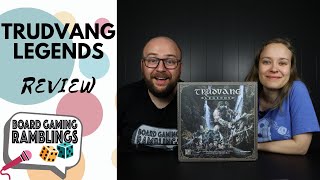
- Memory of player choices across scenarios can add continuity
- World can change based on sleeve-managed locations, creating a sense of evolving state
- Miniatures are of nice quality
- Cooperative storytelling potential when mechanics align
- Extremely boring gameplay loop in early scenarios
- Combat system is horrible and lacks meaningful decisions
- No way to lose or fail reliably in combat; very forgiving to the point of removing risk
- Rulebook is lacking; unclear card interactions and keywords not well explained
- Story is generic and unengaging; not hooking; is not as epic as expected
- Pacing and decision-making are weak; many scenarios feel rinse-and-repeat
- Story-driven adventure, exploration, and cooperative play
- Fantasy Nordic-inspired world with a connected world map and campaign arcs
- Campaign-based with storybook elements and side quests
- Journeys in Middle Earth
- Sleeping Gods
- Role Player Adventures
- Gloomhaven
- Descent
Mechanics (from transcript analysis)
- Card Crafting — upgrading cards often yields same base effects, offering limited strategic gain
- card upgrades with little mechanical change — upgrading cards often yields same base effects, offering limited strategic gain
- combat resolution based on rune draws — simultaneous activation of abilities by drawing runes; combats involve blocking, taking damage, and possible death and respawn
- Cooperative Game — players work together to complete scenarios and progress the story
- cooperative play — players work together to complete scenarios and progress the story
- event/skill tests — random skill tests using a rune bag to meet requirements; failures yield penalties
- Narrative Choice — reading from a book to progress, with points of interest unlocking story elements
- rune bag/resource management — draw three runes at a time; some runes unusable; choices driven by cards you attempt to activate
- storybook/narrative progression — reading from a book to progress, with points of interest unlocking story elements
- world map exploration — move around a world map to reach points of interest, with some Adventure maps
Video topics + discussion points
Quotes (from this video)
- talk about this fantastic piece of garbage
- the gameplay loop is extremely boring
- it's probably the worst system I have ever seen
- there's really no thinking
- I would rather mow the lawn
- do not play this game
- the story in gloomhaven looks like the most fantastic book ever made
- I don't recommend it
References (from this video)
- cooperative adventure vibe
Mechanics (from transcript analysis)
Video topics + discussion points
Quotes (from this video)
- it's CMon, it's IDW and it's a miniatures game
- I really appreciate daniel and Nicolas taking the time to talk with me
- remember you're playing Flugelschlagen
References (from this video)
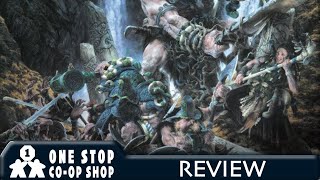
- Dynamic board evolution via sleeve mechanism creates a living, evolving play space
- Item deck system encourages diverse builds and forced usage of items rather than hoarding
- Combat is a tense, push-your-luck system with rewarding interactions
- Strong world-building and branching narrative provide flavor and replay potential
- Light, accessible narrative focus suitable for a quick, story-driven session
- Leveling yields small stat increases, which can feel underwhelming
- Acquiring more items can clog the deck and feel punitive rather than empowering
- Death mechanics lose meaningful tension after the first death due to minimal penalties
- World-building terms can be opaque and proofreading is imperfect
- Overall polish is rough; development cycle cited as difficult.
- adventure, exploration, mythic quest, with a light legacy-like progression
- Fantasy Norse-inspired world with cooperative exploration and branching story elements
- branching, choose-your-own-adventure style storytelling with side quests
- Quacks of Quedlinburg
Mechanics (from transcript analysis)
- Board/Location evolution with sleeves — Locations on the board have sleeves and are modified by sliding in new elements to unlock bonuses, penalties, or new phases.
- Death and Darkness mechanic — Death unlocks Darkness cards that can increase enemy toughness and add cards to the player's deck; after the first death, penalties are minimal, reducing tension over time.
- Deck upgrading and item management — Starting with a small deck (eight cards), players upgrade to higher level versions and legendary cards; using items places the used item at the bottom of the stack, bringing a new item to the top.
- Narrative Choice — The game emphasizes reading through scenarios with branching outcomes that affect future play and world state.
- Narrative selection and branching — The game emphasizes reading through scenarios with branching outcomes that affect future play and world state.
- Push-your-luck combat with token track — Combat uses a four-card hand to place tokens on abilities; tokens come from a bag and must be allocated to open spots; fill five on a track to avoid drawing, with blue giving basic rewards and red imposing penalties.
Video topics + discussion points
Quotes (from this video)
- the combat is basically a varied push your luck mechanic
- you draw four cards from your unique deck ... place tokens on the indicated abilities
- this forces players to use their items consistently
- death ... has pretty much no meaning except for some annoyance and some grind
- the writing is pretty good ... branching so like your choices do have some impact on the game
- if you're looking for a game that's super polished this one has a lot of rough edges
- it's a light but fairly interesting narrative Adventure
- the board evolves with sleeves ... unlocking special bonuses or penalties for certain locations