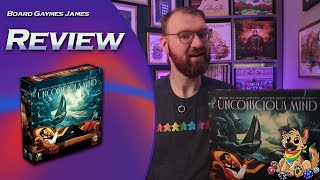
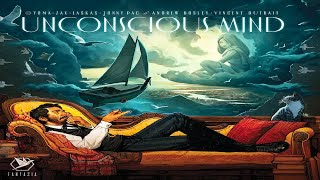






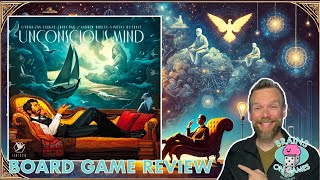












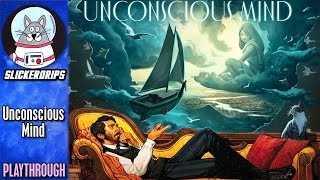


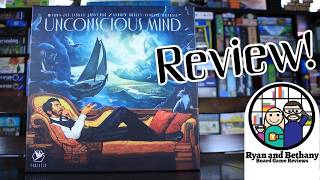
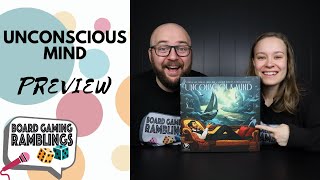

In the early 1900s, the Austrian neurologist Sigmund Freud established a revolutionary theory called psychoanalysis, related to the study of the unconscious mind. As his work took hold, supporters met at Freud's apartment every Wednesday to discuss psychology and dream symbolism. This group—the Wednesday Psychological Society—marked the beginning of the worldwide psychoanalytic movement. As a member of this society, you aim to formulate new therapeutic techniques, establish a practice, grow your clientele, and become Freud’s most distinguished contemporary. To best accomplish this, you’ll need to share insights, discuss ideas with peers, and publish theories. And to stay invigorated, you’ll likely need some coffee—lots of coffee.
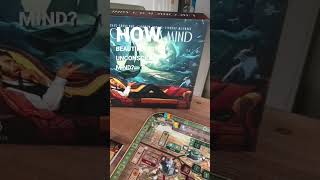
Unconscious Mind is a euro-style game featuring worker placement, engine building, multiple rondels, and cascading effects. On your turn, you may place one or two Ideas (workers) on a central Meeting Table to access a variety of actions, such as adding tiles to your player board, drafting and playing cards, and moving around the city of Vienna. Where you place your Ideas also determines how far to advance your rondel’s inkpot, activating a row or column of tile effects on your player board.
To treat your clients and interpret their dreams, you must work with a supply of Insight resources, which you’ll manage on a multi-level dial. As you work through surface-level Manifest dreams into deep-seated Latent dreams, these Insights will help your clients reach catharsis. This is represented by lifting transparent layers from the client cards—unlocking their ongoing special abilities and end-game scoring opportunities.
Once the group has solidified its reputation, the end of the game is signaled, and the member with the most points wins.
—description from the publisher
- Strong thematic integration with psychoanalysis and dreams
- Good scaling for 2-4 players
- Satisfying ramp-up and cascading effects
- Beautiful artwork and components
- Rulebook is organized and helpful despite complexity
- Very heavy rules teach; long setup and learning curve
- Busy table with many components; potential for information overload
- First plays may miss interactions; requires multiple plays to master
- psychoanalysis, dream interpretation, client therapy
- Freud-era Vienna, early 20th century psychoanalytic clinical setting
- client-led dream sessions and progressive therapeutic breakthroughs
Mechanics (from transcript analysis)
- Drafting ideas via speech-bubble tokens — Ideas are drafted on speech-bubble tokens that determine available actions on the board.
- Dream cards and client interactions — Drew clients with dreams; completing clients yields new dreams and endgame bonuses.
- end game bonuses — When Freud's reputation maxes out, the game ends and scoring resolves.
- Endgame trigger via Freud reputation — When Freud's reputation maxes out, the game ends and scoring resolves.
- Insight dial and dream interpretation — A central Insight dial is manipulated to gain insights that affect client outcomes.
- tableau building — Players build a personal action board and move an ink-pot track to gain end-of-turn bonuses.
- Tableau building and production tracking — Players build a personal action board and move an ink-pot track to gain end-of-turn bonuses.
- worker placement — Players place a single idea token to perform actions each round; affected actions are limited per round.
- Worker placement with one-use-per-round actions — Players place a single idea token to perform actions each round; affected actions are limited per round.
Video topics + discussion points
Quotes (from this video)
- I really like the action selection board using those little speech bubbles that draw your ideas and kind of aiming them what actions you're going to take
- there's a lot of different actions you can take and you can only take one each
- this game has a pretty significant ramp up as the game goes on
- the artwork was awesome
- the rulebook was organized actually very very well in a way that was extremely helpful
References (from this video)
- strong, cohesive theme integration
- atmospheric production and flavor
- high potential for meaningful, reflective play
- very heavy for casual players
- complex setup and rule understanding may require time
- Freud-inspired mental health and dream-work
- psychoanalytic society focusing on dream analysis and grief processing
- weaved mechanisms tied directly to the theme; heavy, thought-provoking design
- Haunted Land
- Endless Winter
Mechanics (from transcript analysis)
- Dense, thematic interdependencies — All components interlock to reinforce the central theme.
- Integrated thematic mechanisms — Mechanisms are purposefully linked to psychoanalytic concepts.
- Narrative choice — Player choices influence outcomes and therapeutic arcs.
- Narrative-driven decisions — Player choices influence outcomes and therapeutic arcs.
Video topics + discussion points
Quotes (from this video)
- this thing is a beautiful Beast
- production is insanely good
- it's a corker
- dripping with atmosphere dripping with theme
- everything is linked to the theme of the game which is amazing
- the central board is 100% the unique premise of this game
- the setup and gameplay are very fast
References (from this video)
- strong thematic flavor grounded in Freud-inspired psychology
- two-core actions per turn that feel approachable yet offer depth
- engine-building through tile activation and ink pot movement is satisfying
- coffee as a flavorful, thematic resource with tangible payoff
- clear path to end-game scoring via reputation, location tags, and Treatises
- acknowledged solo variant and ongoing prototype refinement suggest active development
- prototype status implies potential rule tweaks and balance changes
- Vienna board complexity can be intimidating until players familiarize themselves
- tag collection and recall mechanics require careful tracking and planning
- psychoanalysis, treatment of clients, exploration of the unconscious mind
- Vienna, early 1900s; Wednesday Psychological Society; Freud-era psychoanalysis
- historical thematic framework integrated with eurogame-style engine-building
Mechanics (from transcript analysis)
- card drafting and publishing Treatises via newspaper cards — collect and publish newspaper cards to gain victory points, location tags, and unlock future effects; top-level treats require more resources
- client treatment and catharsis rewards — treating clients advances the patient track (latent/manifest), triggering rewards and contributing to end-game calculations
- engine-building via ink pot and technique tiles — your ink pot moves along a track and activates rows of technique tiles, enabling multi-step actions and the potential to chain activations
- latent vs manifest dreams and Rorschach ink-blot mechanics — clients have latent and manifest dream components; grief layers represented by transparent cards evoke Rorschach-blot-like imagery and affect scoring dynamics
- Resource management — coffee fuels tile acquisition, bright ideas act as additional workers, and insight tokens drive patient treatment and card interactions
- resource management (coffee, bright ideas, insights) — coffee fuels tile acquisition, bright ideas act as additional workers, and insight tokens drive patient treatment and card interactions
- set collection and location tags for scoring — accumulate location tags from various sources (clients, newspapers, Treatises, and recall rewards) to unlock recall bonuses and end-game scoring
- Vienna board recall and reputation track — recall bonuses and movement on the Vienna board influence end-game timing, reputation points, and Freud advancement
- worker placement — on your turn you place one or more idea workers to perform actions; the number of actions you can take scales with workers and limited lightning bolts per space
- worker placement on meeting board — on your turn you place one or more idea workers to perform actions; the number of actions you can take scales with workers and limited lightning bolts per space
Video topics + discussion points
Quotes (from this video)
- I freaking love that there's coffee in this game
- it's actually not as difficult as it looks
- this is a prototype
- the gameplay is pretty simple
- I love board games so much and I can't hide that
- hopefully this overview makes it a little bit more approachable
References (from this video)
- strong thematic integration with medicine and psychology
- streamlined mechanisms for a heavier theme
- complexity may require learning and orientation
- psychology and treatment history
- psychiatric/mental health themes explored via patient care
- clinical and thematic with patient-focused decisions
- Wingspan
- Pax Pamir
Mechanics (from transcript analysis)
- cascading U tiles — tiles activate in rows/columns to create combos
- resource gathering and treatment actions — manage resources to treat patients and progress on a central board
- Resource management — manage resources to treat patients and progress on a central board
- tableau building — you assemble actions to help patients, balancing resources
- tableau-building with patient treatment actions — you assemble actions to help patients, balancing resources
Video topics + discussion points
Quotes (from this video)
- Newford is my favorite game from 2024.
- I genuinely like this game more than Black Forest.
- Castle Combo is a really quick and short Tableau building game.
- 21 actions to seemingly do the impossible.
References (from this video)
Mechanics (from transcript analysis)
Video topics + discussion points
Quotes (from this video)
- you are somebody's reason to smile
- we are so close to 30,000 Garden members
- thank you all so much for watching and for your support
- I am leaving for Japan and I cannot wait to document it
References (from this video)
- strong thematic integration with psychoanalytic concepts
- Tableau engine feels thematic and engaging
- a mash of Euro mechanisms may feel busy
- treatment of patients and dream exploration
- psychotherapy/dream-analysis theme inspired by Freudian practice
- thematic, with a Tableau-like setup
- Wingspan
- Agricola
Mechanics (from transcript analysis)
- asymmetric specialty tracking — different specializations affect treatment and benefits
- tableau building — build and activate a Tableau to trigger abilities and effects
- Tableau-building and activation — build and activate a Tableau to trigger abilities and effects
Video topics + discussion points
Quotes (from this video)
- I really like that aspect of keeping track of resources with dice
- I thought it was really clever how it was handled in this game
- this game is highly interactive it's hard to appreciate it based off of what you see here
- I would love to see this game get that support and can be more widely available soon
- I really enjoyed it I like the concept of it and I would want to return to it to see if it still holds up mechanically
- this game has a lot of hand management and deck management as well you go through pretty much your entire deck
References (from this video)
- Celebrates playful, collectible components and their charm
- Encourages audience participation through a 'Show me your bling' prompt
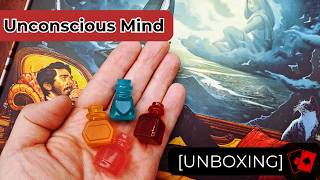
- Anchors discussion with concrete examples (ink bottle) from the real world
- Focus on components can sidestep gameplay depth
- No explicit gameplay impact described for the featured item
- Deluxe components and their impact on aesthetics
- Unknown
- informal, anecdotal
- Luier
Mechanics (from transcript analysis)
- deluxe component interaction — Discussion of oversized, visually striking components that exist primarily for joy, display, and thematic flavor rather than affecting core gameplay.
Video topics + discussion points
Quotes (from this video)
- It's nuts and stupid and just roams around your board, which is a pretty fun mechanic.
- ridiculous component. Glass uh frosted glass of some sort, all different colors for your player and a literally a real cork lid.
- "Show me your bling."
- post the most ridiculous component you own that literally all it does is bring you joy. It has no effect whatsoever on the game
References (from this video)
- Anticipated as a 2024 release
- Not released at the time of recording
Mechanics (from transcript analysis)
Video topics + discussion points
Quotes (from this video)
- I still absolutely love this design
- the AI system is so smart
- it's on the totally table Todo list
- Frost Punk is incredible
- I absolutely plan to get to the table this year
- the slide puzzle mechanism I love
- Weather Machine remains one of my favorites
- Sleeping Gods no reason to believe that I won't love this one as well
References (from this video)
- great theme
- rewarding interwoven mechanisms
- approachable
- large/ intimidating setup
- psychoanalytic therapy and dream-work
- therapy/psychological exploration
- thematic storytelling within a therapeutic setting
Mechanics (from transcript analysis)
- resource/task interweaving — interwoven actions and patient treatment paths that create interdependencies
- worker placement — placing workers to treat patients and progress through therapy rounds
Video topics + discussion points
Quotes (from this video)
- Itto is one of the best party games ever made. It is a Dice Tower essential.
- Message from the Stars is such a great deduction game. I got a chance to teach it again recently and it just blows people's minds every time.
- I love this theme of the psychotherapists... it's so good, so rewarding.
- Rainbow has this fantastic mix of For Sale where you're trying to win different trenches of cards in the middle of the table—the depth is remarkable for such a tiny box.
References (from this video)
- Deep, intricate engine-building with multiple viable paths to victory
- Dynamic worker placement that rewards planning and timing
- Stellar production values and standout artwork (Dutrait/ Bosley)
- Well-structured rulebook with solid tutorials and helpful reference sheets
- Strong table presence and theming that ties real-world and dream-world imagery together
- Very long play sessions, especially with 3-4 players
- Steep learning curve and AP-prone nature may deter newcomers
- Limited variability in some components (clients, location goals) reduces replay variability
- Significant table space required and potential downtime between turns
- psychoanalysis, dream vs. reality, therapeutic processes
- Vienna, Freud era, clinical psychotherapy practice
- dual-reality framing with real-world and dream-world imagery
- Mind Clash games
- SITI (MindClash-level complexity)
Mechanics (from transcript analysis)
- Client office and dream system — Each client has latent and manifest dreams; treatment requires matching dream criteria and culminates in catharsis to unlock scoring and bonuses.
- Dynamic worker placement — Players place or recall ideas to trigger actions; action economy depends on how many ideas are committed to a spot.
- Ink pot movement and spatial triggers — The ink pot crawls around the board, triggering rows/columns on the notebook tiles and affecting the action economy and available bonuses.
- Insights as the core currency — Treating clients requires spending Insight markers (Freedom, Passion, Growth) with major and minor levels driving efficacy.
- Notebook tiles engine-building — Notebook tiles slot into a personal board and, via an ink pot mechanic, create engine-like bonuses across rows/columns.
- Reputation track and Freud marker — Advancing Freud's marker increases bonuses and potential end-game points; dropping the marker ends the round and tallies victory points.
Video topics + discussion points
Quotes (from this video)
- this is the most thinky game that Fantasia has ever put out
- it's a heavy game through and through
- I would actually dare say I could compare this to Mind Clash games
- the ink pot mechanic is a really clever engine-building element
- the rulebook is good and tutorials exist, which helps the learning curve
- two players is never going to hit 60 minutes; this is a long game
References (from this video)
- expanded retail version
- opportunity for new players to try
- unclear exact mechanics from transcript
- mind-bending, introspective play
- retail edition discussion
Mechanics (from transcript analysis)
- cooperative/assembly with app — Retail edition with specific components and potential app-driven play.
Video topics + discussion points
Quotes (from this video)
- It's almost Christmas time
- Monkey Palace is off the chain
- Babylon is wild
- Wednesday is our new game day
- We are going to play the hamster roll
References (from this video)
- Adds thematic variety and some interesting strategic choices for vivid, heavier players
- Mirror clients and Rendezvous objectives introduce new tactical options
- Public goals can enhance map movement and map-driven decisions
- Many modules increase downtime and add layers of complexity
- Some expansions feel unneeded or overpowered (e.g., certain dream cards)
- The gramophone and madness-focused components can overextend playtime without commensurate reward
- Mental health, dreams, nightmares, and metamorphosis under stress
- Horror/psychological nightmare milieu; therapy and dreamlike exploration of traumatic imagery
- Dreamlike, psychological horror with clinical undertones and surreal imagery
- Limbo (video game)
Mechanics (from transcript analysis)
- Card-based dream, grief, and uncanny client events — A deck of cards that introduces dreams, grief layers, and uncanny clients with transformative effects and potential vetoes.
- Ink pot track and action pacing — A movement-based mechanic where players manage an ink pot on a track, creating tension through positioning and timing.
- Insight and Dark Insight resources — Multiple beads/beads-like tokens (insights) used on a dial with pathways to gain additional bonuses; includes Dark Insight via grave volumes and dream-related cards.
- Journal/Book publishing system — Mechanics around producing journals or treaties that interact with publishing actions and point generation.
- Madness tokens and dial — A core resource system that escalates via tokens and a dial, triggering penalties (VP loss) and offering strategic bonuses.
- Public Rendezvous Objectives — Public goals layered with a card-driven mechanism that influences map movement and bonuses.
- reputation track — A track-based scoring mechanic that provides bonuses and interacts with various events and dreams.
Video topics + discussion points
Quotes (from this video)
- it's a five out of 10 for me
- the illusion dream cards are far too powerful
- the gramophone I will never use
- these modules are not necessary
- the base game as complex as it is you don't need this
- mirror clients are pretty neat and worth considering
- these two modules being actually half decent
- public goals add a nice little cool element to the map thing
References (from this video)
- Creative theme
- Unique action selection
- Interesting resource management
- Psychotherapy
- Psychological research
Mechanics (from transcript analysis)
- action selection — Players choose actions with unique ink bottle mechanic
Video topics + discussion points
Quotes (from this video)
- It's been a year of heavy games, it's been a year of light games
- Always try before you buy, be smart with your money
References (from this video)
- Gorgeous dual artwork by Vincent D Trait and Andrew Bosley
- Large scope and epic gameplay
- Great theme with psychological elements
- Brain-burning heavy Euro mechanics
- Excellent visual presentation
- Cool solo mode
- Very long play time with four players
- Most complicated Euro on the list
- Fiddly mechanics despite improvements from playtesting
- Bloated with expansion content
- Map-based location actions are weak element
- Psychology and mental health
- Psychologist's office treating patients
- Dual artwork with real world and dream sequences
Mechanics (from transcript analysis)
- dice manipulation — Customize board with notebook tiles to create mini engine
- Map-based location actions — Additional actions based on location movement
- solo mode — Includes solo mode though requires significant piloting
- worker placement — Place workers in action spaces to determine frequency of actions
Video topics + discussion points
Quotes (from this video)
- 2024 was not my favorite year ever not just in board gaming but kind of just in life in general
- it's nice that there's actually a game that says no how about we stop War for a change
- you want to stick Miyazaki from studio Ghibli and shove it into a board game it's just like that
- silky smooth silky smooth like the river itself
- I suspect this list is going to be very different to a few of yours
- this is the ultimate balance like you need a balance of complexity versus depth
References (from this video)
- strong thematic hook
- art and components described as impressive
- weighty topic; potentially heavy for casual play
- psychoanalytic exploration and therapy-mechanisms
- Freud-inspired dream theory
- card-driven with thematic depth
Mechanics (from transcript analysis)
- action programming — players program actions ahead of executing sequences
- Card drafting / set collection — draft and use cards to influence dream therapy outcomes
Video topics + discussion points
Quotes (from this video)
- it's a no-brainer right
- insta buy
- this is definitely something I want to check out
- I would definitely want to check that out
- I love art-themed games
- the art by Vincent de Trey is great
- insta buy for me as well
- this looks amazing
References (from this video)
- Gorgeous artwork by Andrew Bosley and Vincent Dutrait
- Beautiful surreal dream cards like Dixit
- Clever worker placement with directional tail mechanic
- Excellent thematic implementation
- Same team as Endless Winter (positive pedigree)
- Psychoanalysis
- Dream interpretation
- Sigmund Freud era
- Vienna setting
- Surreal imagery
- Endless Winter
- Dixit
Mechanics (from transcript analysis)
Video topics + discussion points
Quotes (from this video)
- you don't take my word for it folks I was watching the uh Dice Tower Essen excitement list
- I vouch for each of these quite highly
- so much game play depth in less than 15 minutes
- one of the prettiest games you will ever see
- a good tile layer needs to be so kind of connected together
- I want a statue to myself
- it just really seems like a very exciting modern trick-taking game
- beautiful and then you see the completed thing that's one of my favorite things
References (from this video)
- gorgeous art book and deluxe components
- strong solo options
- table hog; large footprint
- steep learning curve for first-timers
- surreal exploration of the subconscious
- dream/dreamscape
- art-forward, dreamlike
- Mage Knight
- Ark Nova
Mechanics (from transcript analysis)
- cooperative_puzzle — players collaborate to achieve dream goals
- set_collection/pattern_building — assemble dream scenes with collected cards
Video topics + discussion points
Quotes (from this video)
- it's huge this unconscious mind box
- we're going to be at BGg con in Dallas
- pineapple on pizza is delicious
- the shelf of shame... we need an intervention
References (from this video)
Mechanics (from transcript analysis)
Video topics + discussion points
Quotes (from this video)
- The two by the way was Kingdoms for Lauren which is actually I think liked by others but I felt that you had to break your teeth on the rules to get to a game that was a whole lot of messiness.
- I really did not love Kingdoms for Lauren but I respect that it's a game that will work for others.
- The highest the highest individual score given out in 2022. So that's the 3.5 is the most common rating given.
References (from this video)
- engaging theming
- interesting procedural decisions
- not fully disclosed in transcript; potential complexity
- mind exploration and patient treatment tasks
- psychological exploration and decision-making
- thematic, board-game-influenced psychology theme
- Mind Clash other titles
Mechanics (from transcript analysis)
- thematic/subject-driven mechanisms — mechanics linked to narrative mental tasks and patient cases
Video topics + discussion points
Quotes (from this video)
- I want to show you how the game plays and not to sell you the game.
- I’m one of the more genuine content creators.
- Mage Knight is the best game ever.
- Gaia Project beats Age of Innovation for me.
- I don’t like the idea of being a used car salesman.
- Star Trek: Captain’s Chair is an exciting licensed approach with lots of thematic promise.