













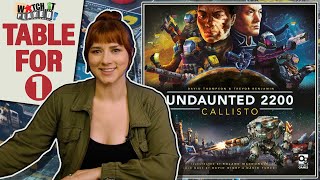



















Undaunted 2200: Callisto Deep Dive
What the Community Thinks About Undaunted 2200: Callisto
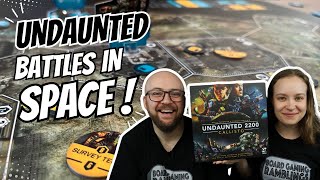
Undaunted 2200: Callisto stands out as a strong entry in the acclaimed Undaunted series, bringing the deck-building tactical system to a science-fiction setting on Jupiter's moon. Reviewers consistently praise the game for successfully translating the mechanics into a fresh, thematic package. Foster the Meeple welcomes the sci-fi reskin as a way into the system for players wary of war themes, while Board Games for One admires how self-contained the box feels. The skirmish gameplay resonates with both newcomers to the series and veterans, and many celebrate how Callisto maintains the series' elegant design philosophy while adding new depth through mechs and asymmetrical factions.
Core Mechanics That Define Undaunted 2200: Callisto
Deck-Building Unit Control and Hand Management
At the heart of Undaunted 2200: Callisto lies a card-driven system where players command units through carefully managed decks. Each faction has unique cards representing different unit types, from basic troops to specialized personnel. Players draw a hand each round and select a card for the initiative bid, then play the remaining cards to activate units on the board. The genius of the system is that cards serve double duty: they activate units while also tracking unit health, so when a unit takes a casualty, a corresponding card is removed from your deck. This creates meaningful tension between short-term tactical needs and long-term deck composition. Published by Osprey Games, it carries forward the series' signature card economy.
Dice Combat with Fog-of-War and Elevation
Combat resolution combines dice rolls with terrain advantage. When attacking, players roll different dice depending on elevation, with stronger dice when firing from the high ground and weaker dice when shooting upward, and each successful attack can inflict a casualty if it meets the target's defense. The fog-of-war mechanic, enabled through scouting markers, forces careful movement: scouts move into unscouted areas, placing markers that unlock movement for other units while adding interference cards to the deck as a penalty. This constant pressure to balance reconnaissance against offense is what makes the tactical puzzle sing.
The Undaunted 2200: Callisto Experience
Confrontational, Asymmetric Conflict
The two competing sides on Callisto embody distinct identities: an entrenched corporate authority fielding powerful mechs, and a worker rebellion of nimbler ground forces. This asymmetry runs deep into faction composition and starting position, with the corporate side beginning with territorial control already established while the rebels must fight to establish presence. Each side plays differently, making the head-to-head conflict feel fresh and forcing players to learn both perspectives. The simultaneous initiative system ensures neither player can fully predict the other's move, keeping every exchange tense.
Narrative-Driven Scenarios
Undaunted 2200: Callisto weaves narrative depth through its scenario system. A series of scenarios present branching conflict, each with unique objectives reflecting the larger territorial struggle, from controlling objective points to neutralizing enemy units. The scenario book provides context that transforms mechanical victory conditions into thematic beats, and maps with varied elevation, bridges, and equipment tell environmental stories. The result is games where tactical improvisation matters more than memorization, and where each match tells its own story of conquest or uprising.
What Makes Undaunted 2200: Callisto Stand Out
Science-Fiction Mechs and a Fresh Setting
While earlier Undaunted titles ground themselves in historical World War II theaters, Callisto trades them for speculative conflict. The shift from realistic equipment to mechs and corporate mining operations removes the moral weight of historical warfare, which several reviewers note makes the game more comfortable for players hesitant about war themes while preserving all the tactical depth. Foster the Meeple specifically recommended it as a way to enjoy the Undaunted system without the war framing, and the lunar setting provides visual and thematic freshness absent from the historical entries.
Solo and Multiplayer Flexibility
Undaunted 2200: Callisto supports an impressive range of player counts with solo and four-player team variants alongside the core two-player game. The solo mode pits a single player against automated opponent rules with adjustable challenge, and the team mode introduces cooperative dynamics with restricted communication that forces lateral thinking. This multiplicity ensures the game never feels like a one-trick duel, expanding its appeal across different groups and session styles.
Potential Drawbacks
Steep Learning Curve and Rules Density
New players face substantial mechanical overhead. The rules cover scouting, control-state transitions, movement and pathing, equipment interactions, and specialized unit behavior. While experienced wargamers adapt quickly, casual gamers may find the initial teach lengthy. Several reviewers frame this as necessary complexity for depth rather than poor design, noting that once the system clicks, play flows smoothly. Still, the barrier to entry is higher than lighter two-player games, and some players need a few scenarios to internalize all the interactions.
Lengthy Play and Thin World-Building
Scenario playtime regularly stretches toward an hour, with longer scenarios or newer players reaching ninety minutes, so casual sessions may struggle to fit a complete scenario. The simultaneous reveal eliminates true downtime, but the total commitment remains substantial. Board Games for One also felt the world-building was a little thin and uninspired, suggesting the sci-fi setting serves the system more than it builds a memorable fiction. The investment pays dividends in engagement, but it reduces accessibility for drop-in play.
If You Enjoy Undaunted 2200: Callisto
Fans should explore other entries in the series, particularly Undaunted: Normandy and Undaunted: Stalingrad, which offer the same tactical system in historical settings. Those drawn to accessible tactical wargaming might appreciate Memoir '44 for its card-driven combat, and players who love the deck-as-unit-roster concept will find related satisfaction in Warfighter and other modern card-driven skirmish games.
What Reviewers Are Saying
"This is a fantastic skirmish system that incorporates a ton of lessons learned from euro games into a very modern take on a skirmish wargame. I really like how the card system means you simply won't get the perfect combination of units acting each turn. That makes it a game where you have to adapt."
— Watch Review
"The best thing about this game is how self-contained it is. I've gotten so used to sprawling miniature-based skirmish games that I forgot they could just be in one box. If I have one big critique, it's that the world building feels a little thin and uninspired."
— Board Games for One
"In Callisto it's a made-up sci-fi setting, two factions fighting over territory. It takes out the war theme, so if you've been interested in trying it but shying away from the war theme, I definitely recommend you try 2200 Callisto, because it gives you the system without the war."
— Foster the Meeple