
























Unmatched Game System Deep Dive
What the Community Thinks About Unmatched Game System
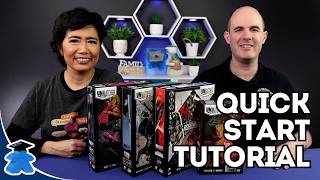
Reviewers describe Unmatched Game System as a modular, card-driven tactical battle game in which legendary heroes, villains, and other characters fight across asymmetrical battlefields. The core format is a head-to-head duel for two players, with modes for three and four. A match is intentionally short, lasting up to about 30 cards of play, and the first player to eliminate the opposing hero wins. The Meeple University quick-start makes the case that the rules can be learned in around fifteen minutes, and that the depth comes from the individual character decks and the way they are managed over a match.
Across the reviews, the most repeated praise is for the system's ability to hold together as the roster grows. Board Game Animal rates the system a perfect score and singles out how it keeps balancing an expanding cast of playable characters. Board Game Critique places it high on a list of two-player favorites. The most common caveat concerns licensing: the individual releases are licensed properties, so some sets come and go from print and may be found mainly on the secondary market.
Core Mechanics That Define Unmatched Game System
Combat Deck and Hand
Combat is the centre of play. On a turn, a player takes two actions from maneuver, scheme, and attack, and attacks are resolved by playing cards face down. The attacking player commits one attack or versatile card that shows the active fighter, the defending player may commit one defense card in response, and then both are revealed. The defender resolves first when timing conflicts arise, and damage equals the attack value less the defense value, plus any effects. Because each deck is finite and the discard pile never reshuffles, the Meeple University quick-start explains that running out of cards forces each remaining fighter to lose health. Reviewers treat this as the strategic layer: remembering which cards have been spent, pacing strong plays, and deciding when to bluff with a weaker card.
Asymmetric Player Powers
Every hero follows the same action menu and the same core rules, but each character brings its own abilities, special powers, and a deck tailored to its play style. Board Game Critique describes the result as a roster where every character plays like a different game, and The Brothers Murf frame the combination of unique character identities with a shared rule set as the reason the system "has it all." The asymmetry is what keeps a familiar ruleset from feeling repetitive from one fighter to the next.
The Unmatched Game System Experience
Tactical Head-to-Head Intensity
The clearest vibe across the reviews is a tense, one-on-one duel. Board Game Critique ranks Unmatched first for pure head-to-head energy and says it is a game they keep returning to for that reason. The simultaneous reveal, the threat of a fighter being eliminated, and the constant pressure of a shrinking hand make each exchange feel consequential. The short match length keeps that intensity from wearing thin.
Replayability Through Character Variety
The second vibe is that each new character changes the feel of the game. Because the heroes differ in movement, attack range, and deck construction, a player can return to the same system and find a different experience. Board Game Critique uses this variety as a central reason for placing Unmatched high on its list, and the expanding catalogue of sets means new fighters arrive regularly for players who want more of the same feel.
What Makes Unmatched Game System Stand Out
Cross-Set Compatibility
Each standalone release has its own characters and boards, but the rule set is shared, so fighters and boards from different sets can be combined. Meeple University describes this as complete cross-compatibility under a standard rule set. Collectors benefit most from this design, because a single box does not define the whole experience. The Brothers Murf collection tour shows how many releases a single household can accumulate on the same shelves.
Thematic Crossovers and Licensed Matchups
The system is built around recognizable properties, and the pairings are part of the appeal. The Meeple University quick-start uses a Buffy the Vampire Slayer fighter facing Medusa in a London street as its example of why the format is fun. Board Game Animal makes the same point about a Teenage Mutant Ninja Turtles release, saying a player does not have to be a fan of the franchise to get into it. These crossovers give the system a broad audience beyond traditional miniature gamers.
Potential Drawbacks
Licensing, Out-of-Print Releases, and Secondary-Market Prices
The licensed nature of the releases is the most frequently raised concern. Meeple University warns that the different releases are licensed and will come in and out of print at different times, so some of the sets shown in their demonstration may now be available only on the second-hand market. For a new player who wants a specific roster, that can make building a collection harder and more expensive than the base experience suggests.
Strongest at Two Players and Varying Rules per Set
The system's best-known format is the two-player duel. The three-player variant is one versus two, with one player controlling two heroes, and the four-player variant uses two teams of two with open communication allowed. Meeple University also notes that some game boards introduce special rules explained in each set's rulebook. Reviewers who want a large-group experience may find the multiplayer modes secondary to the core duel, and the learning load grows as a player adds sets with their own board rules.
If You Enjoy Unmatched Game System
- Super Smash Bros.: Board Game Animal describes Unmatched as a Super Smash Bros.-style situation, a fit for players who enjoy fast, character-driven fights with distinct fighters.
- Sky Team: Board Game Critique lists Sky Team as a two-player heavy hitter, a cooperative pilot and co-pilot game. It suits players who want a two-player game with a different, shared-goal tension.
- The Crew: The Brothers Murf recommend The Crew for cooperative trick-taking with missions, and note that its missions can be replayed many times, a quality that fits players who enjoy repeated play.
- Unmatched Adventures: Board Game Animal describes the first Unmatched Adventures release as a successful jump from the competitive system to co-op play. It is a good next step for players who want the same characters in a shared-goal format.
What Reviewers Are Saying
"Unmatched never ceases to amaze me at its incredible ability to continually balance an ever growing cast of playable characters."
— Board Game Animal
"One of the first two-player games I ever played. This one is pure head-to-head energy, and I keep coming back to it for that reason."
— Board Game Critique
"any unmatched game might be someone's first game."
— Going Analog