/pic73982.jpg)
Warmaster is a set of fantasy miniatures wargame rules developed by the same company as produced Warhammer, Warhammer 40,000 and Lord of the Rings miniatures rules. This is not a complete game; players are required to independantly purchase miniatures and construct a playing surface (wargames terrain). The game is scaled for 10mm miniatures (1:144, N Scale), and is designed to represent combat at the regiment and brigade level set in a fantasy/renaissance techology world.
In Warmaster, combat and casualty calculations occur at the stand level. That is, for every stand in a unit, a number of dice are rolled in combat. As whole stands are removed by sustaining casualties, the number of dice similalry decreases.
The command mechanism in Warmaster is simple but evocative. Each leader model has a Command factor. To issue a command, such as 'move forward' to a unit, two dice must be rolled against that target command factor. For every subsequent order attempted the target number becomes more difficult to achieve. As a consequence, despite being on the surface a move-counter move system, the turns are variable length and each player may not have the full opportunity to achieve everything they may want to. This simple mechanism introduces enjoyable tension into what is otherwise a largely conventional set of wargame rules.
Expanded by:
Warmaster Annual 2002
Warmaster Annual 2003
Warmaster Armies
Re-implemented by:
Warmaster Ancients
The Battle of Five Armies
Supported by the Warmaster magazine.
- campaign
Mechanics (from transcript analysis)
Video topics + discussion points
Quotes (from this video)
- the more expensive a game is the more I feel I need to play it in order to justify its cost likewise the cheaper something is I don't feel like I have to play it as often
- it's not quantity it's quality
- you kind of forget when you're a member of The Cult of the new as I sometimes tend to be just what it's like to sit down and not have to teach the game again not have to try to remember the rules for other people and everyone can just sit down and just focus on playing the game rather than learning to play the game
- the game that I really want to try and exhaust for me is Star Trek Fleet captains because it's the only one I know of that includes all three of these elements but I can also use it for the fourth one as a Sandbox to explore and experiment with
- you know you might think well 10 plays of a game that's not so much well it's 10 by 10 so you're looking at 100 plays of your year
- it's possible as you play a game more often as Sarah comments you'll find things in it you don't like and as you play it more that could get accentuated
- the biggest thing that really brought me back into the same game like Warhammer or 40K all the time was creating these campaign Maps
- I can forgive a game several perceived design flaws if out of the experience it creates a memorable moment that makes me smile to think about or makes me want to retell it
- it just depends on how you look at it you can justify anything the important thing is that you enjoy the game you're playing if you don't enjoy then you certainly have not gotten your money's worth out of it
- I don't often consider how much gaming time do I really have to work with here
References (from this video)
- Gorgeous components
- Beautiful pawns
- Interesting tiebreaker mechanic
- Rumors of additional things in the box could not be confirmed.
- Clandestine spy agencies completing missions
- A dangerous world where governments need clandestine operations
Mechanics (from transcript analysis)
- Area Movement — Players move agents around the board.
- Card Drafting — One player splits cards into piles, and others choose piles. The splitter picks last.
- Set Collection — Players collect intelligence to solve missions for points.
- Take That — The spymaster card can steal a tie, affecting the outcome of the game.
Video topics + discussion points
Quotes (from this video)
- I'm here at Calliope Games booth and I'm here with Ken
- This first one I have for you is already sold out
- Gameplay 15 to 20 minutes
- Gen Con award for a top game trend of 2019
- Spymaster by Saif Johnson another great game designer
- Gorgeous components
- Everybody loves a parade
- there's a lot of strategy
- Saros Phoenix Rising
- very visually beautiful
- raised over 300 over three hundred thousand dollars
References (from this video)
- Wargaming
- Frostgrave
Mechanics (from transcript analysis)
Video topics + discussion points
Quotes (from this video)
- collectible card games like magic and pokemon they pulled in 745 million dollars of revenue
- board games pulled in 495 so almost 500 million
- mini war games he had down as 355 million
- role playing games was only 80 million
- the critical role has like 1.7 million subscribers and it's probably like the biggest sort of table tabletop you know analog gaming channel out there
- board games i think for the most part don't seem to be played like at a location as part of a community like a healthy shop won't really necessarily have like a big board game club kind of thing
- is magic really that much bigger than the board games and miniature games and rpgs
- the only thing you can really look at here is the money spent
- everybody's always talking about how board games are you know they're becoming part of the mainstream
- isn't i mean magic is part is the mainstream i think you know
References (from this video)
- Orcs
Mechanics (from transcript analysis)
Video topics + discussion points
Quotes (from this video)
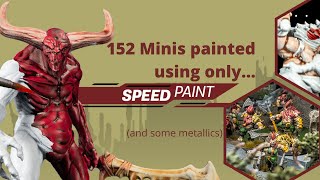
- it's kind of the cheaper alternative to contrast paints from games workshops
- I painted 152 miniatures it took me about two weeks
- it's almost entirely speed paints with some metallics kind of splashed in there
- this was like the main culprit to me and I used I think just about every color in here
- water actually worked pretty well as a mixer whereas with contrast the water to me didn't really work quite as well
- these were a little bit more opaque than the contrast
- the mixing of colors there's a couple other models I'll show you where I did a lot of mixing that works 100 better than the contrast
- if I were to try a technique which is what I've been doing of laying contrast paints down and then I usually just let it dry and I go back in with like an oil washer thinned down oil paint in certain areas and then rub that off that contrast paint's not going to come off but in the case of the army painters speed paints that's definitely going to come off
- my favorite models the fellowship of the ring by far my least favorite models to paint it has nothing to do with the paints just I don't like those models
- this paint is going to reactivate if you hit it with anything wet
- I really enjoyed these
References (from this video)
- dwarven civilization management
Mechanics (from transcript analysis)
- Engine Building — Creating synergistic combinations of abilities and resources.
- Resource Management — Managing various resources for building and development.
- Worker Placement — Players place workers to take actions.
Video topics + discussion points
Quotes (from this video)
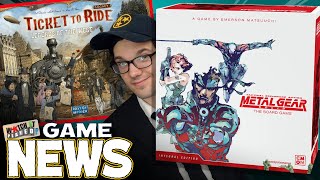
- hello I'm Matthew and welcome to your board game news
- Metal Gear Solid the board game is back
- I'm really happy to see this game come to light
- this sounds Ace
- honestly there's just something about the art style and the theme that really drew me in
- I love Star Trek so I'm always happy to see the IP being used to support great games
- Arc Nova is now available on Broadway Arena where players design a modern scientifically managed Zoo
- The Game of the Year Award nominees are dwarf romantic the board game fun facts and next station London
- I love Ticket to Ride I'm very excited and I'm immediately giving in to the hive I'm doing it
References (from this video)

- Massive scale and immersive gameplay (played all day)
- Painted miniatures made for great gaming
- Fun and strategic army compositions
- Exciting moments like a Doom Wheel destroying a dragon
- Some armies were massively overpowered (Salamanders)
- Some armies were underpowered (Dwarves)
- Unfair scenarios could lead to quick losses
- Potential for 'cheesing' with invulnerable characters
- Age of Sigmar Skirmish
Mechanics (from transcript analysis)
- Army building — Discussed playing with 3 to 5000 points each, and the composition of armies like skeletons, Lizardmen, and Undead.
- Dice Rolling — Described rolling dice for combat, movement, and scenario decisions.
- Invulnerable characters — Talked about a special Skaven character that was essentially invulnerable.
- Overpowered units — Discussed the Salamander army being overpowered and certain Dwarven units being underpowered.
- Painting miniatures — Mentioned that everyone's stuff was painted, making it great gaming.
- Unit Abilities — Mentioned Doom Wheels warping and destroying units, and pterodactyl units having high movement.
Video topics + discussion points
Quotes (from this video)
- we would play Warhammer I think I said it last time we would start Warhammer at like 9 A.M on a Saturday and like not until 9 p.m one combat we would play one massive three on three four on four yeah three to five thousand points each which is oh dude I wish I had photos oh my God and everybody's stuff was painted it was so great that was so great gaming yeah it was a great game
- that's when I remember the stupid toads plan the slam the salon of course you know since it was the newest army at the time was so massively overpowered because that sells armies yeah powerful Army so minis yeah and we were all like dwarfs were screwed
- I remember playing one time and I'm like I don't really know how this works but let's just see and I put it out there and this guy runs across with his General on a dragon and he got warped and destroyed in a second and it was like turn one and I'm like oh no what are you gonna do for the because that was like half his points right
- we were playing a blood Bowl league and I had like a chaos team for my blood Bowl team and so my my star player was a Minotaur and and then you have lineman and then like and that's basically your proper League of that the blood bowl like so the blood Bowl chaos team your whole thing is is that you're not fast but everybody is super strong and so you just you just March you just slowly March down and you injure every single one of them can't play around yeah yeah you just you just Smash and you basically you score a touchdown as fat like you knock somebody down you score a touchdown you spend the rest of the game not even worried about the ball you just sit there and just pound people that's what they do
- it was like the second turn of the game and like his star like Blitzer guy on like his elf team and at least like he he was just within range I could do my double Blitz with my with my Minotaur zip zip roll it was like and I got it all higher no it was like it was like boom injured roll again 12. dead
- Games Workshop all the time for their prices and this to anything but you know man there they have some solid solid games and blood bowl is an extremely solid game however it it desperately needs an updated computer game of it because the computer game the blood Bowl has is like it's from like seven eight years ago but it's it's fun to play and you can play it online with people me and Rob Oren used to play it a lot
References (from this video)

- The game has a cool concept of claiming spots.
- The reviewer wants to give it another try.
- Complex rules require careful study.
- The group got stuck in a game loop where winning was impossible.
- The game seems to have an issue with its mechanics or rules.
Mechanics (from transcript analysis)
- Area Control — Claiming spots with flags is a key mechanic.
- token matching — Players match tokens to locations to claim them.
Video topics + discussion points
Quotes (from this video)
- if you missed out on the world of midgard Kickstarter the patch manager at late pledge pledge manager is live
- last Light is currently live on game found
- almost 2700 backers in the last flight 312 Grand go check that out
- the jetbridge pledge manager is like a is is a program that is in our Shopify that allows us to make a pledge manager within our Stone
- Gathering of Vikings February 23rd through the 25th at the Romantic Moon Event Center in lovely Morehead Minnesota
- apparently the Carin estate's not too happy with this oh I can't imagine why yeah like they gave no permission sh you know they just took it and rain with
References (from this video)
- has amazing miniatures and terrain available
- can be expensive
Mechanics (from transcript analysis)
Video topics + discussion points
Quotes (from this video)
- this Channel's purpose is to help get people into the wargaming and Miniatures hobby
- the following things are what I'd be doing if I was just starting now in 2024 with the benefit of knowledge that I've gained over the last 20 years
- in my opinion my minifactory is the best Marketplace to find stls for wargaming models
- files like that are committing intellectual property theft
- as a Creator myself I'm completely against that kind of thing
- the absolutely amazing amount of choice that's available and the fact that the models even when you factor in the STL cost and like the printing resin cost and all that kind of stuff they are wildly cheaper than the models on offer from the biggest companies in the industry like Games Workshop for example
- so that's Miniatures but what about the games that you play with these Miniatures
- OnePage Rules is probably your smartest move
- they have arguably the best army building website in the entire industry
- War Cry is probably the best rule set that Game Workshop currently makes in my opinion and in other people's opinions as well
- if I was getting into wargaming today in 2024 and I decided that I had to get into Warhammer and Games Workshop related stuff what would I do
- if they don't turn those like $140 Vanguard boxes that they currently have for Age of Sigmar if they don't turn those into basically combat patrols for ages Sigmar then I think they're kind of Dum
- that covers everything doesn't it it does not actually
References (from this video)

- Good for kitbashing
- Model price has significantly increased
- Model name has been changed to something 'dumb'
Mechanics (from transcript analysis)
Video topics + discussion points
Quotes (from this video)
- Friends don't let friends Buy HP printers
- Wizards of the Coast would really rather that you just buy Magic by the case directly from them it seems
- They've been making a lot of really bad decisions in my opinion and if they go to business I will laugh and point
- I just don't understand why they don't want to do that
- I mean the machines that do the saddle stitching are a real pain to maintain they have a tendency to break down a lot
- The print books like the vast majority of people are buying the printed versions as opposed to just PDF only
- I don't know what the fourth dimension is
- I don't really pay attention to that stuff too much
- Most new Morheim players I talk to seem happy to download the PDFs for free from broheim these days and when I mention paper Printing and hard copies they think I'm crazy
- One odd thing about cyber punk red starter doesn't come with with gonks which I feel is like an essential mechanic
- Monac is a great game and the minis for the main monsters are beautiful and fun as heck to pain
- I attended a one-day charity Horus heresy event yesterday called Pride of the Legion a good day for a great cause but now I'm horse and this can be and need at least a day to recover
- If you want some great plastic modern soldiers look at the April issue of War Games Illustrated with the free sprew of warlord games special ops Troopers
- what's your favorite Warhammer mini does that mean which one that I own the most of because it's probably then going to be I don't know what they call them anymore they used to call them nurgle chaos Lord but nowadays he's that guy
- I think I have like six or seven of them it's great for kid bashing
- Does snarl not have a physical book to buy it doesn't
- the machines that do the saddle stitching are a real pain to maintain they have a tendency to break down a lot so some years ago they got rid of Saddle Stitch
- The newest Kill Team box set, 'Germination', is discussed.
- It's been a minute since I've liked both sets of models in a kill Team box.
- Kill team germination is coming this week can't wait
References (from this video)
- Morheim
Mechanics (from transcript analysis)
Video topics + discussion points
Quotes (from this video)
- Friends don't let friends Buy HP printers
- Wizards of the Coast would really rather that you just buy Magic by the case directly from them it seems
- They've been making a lot of really bad decisions in my opinion and if they go to business I will laugh and point
- I just don't understand why they don't want to do that
- I mean the machines that do the saddle stitching are a real pain to maintain they have a tendency to break down a lot
- The print books like the vast majority of people are buying the printed versions as opposed to just PDF only
- I don't know what the fourth dimension is
- I don't really pay attention to that stuff too much
- Most new Morheim players I talk to seem happy to download the PDFs for free from broheim these days and when I mention paper Printing and hard copies they think I'm crazy
- One odd thing about cyber punk red starter doesn't come with with gonks which I feel is like an essential mechanic
- Monac is a great game and the minis for the main monsters are beautiful and fun as heck to pain
- I attended a one-day charity Horus heresy event yesterday called Pride of the Legion a good day for a great cause but now I'm horse and this can be and need at least a day to recover
- If you want some great plastic modern soldiers look at the April issue of War Games Illustrated with the free sprew of warlord games special ops Troopers
- what's your favorite Warhammer mini does that mean which one that I own the most of because it's probably then going to be I don't know what they call them anymore they used to call them nurgle chaos Lord but nowadays he's that guy
- I think I have like six or seven of them it's great for kid bashing
- Does snarl not have a physical book to buy it doesn't
- the machines that do the saddle stitching are a real pain to maintain they have a tendency to break down a lot so some years ago they got rid of Saddle Stitch
- The newest Kill Team box set, 'Germination', is discussed.
- It's been a minute since I've liked both sets of models in a kill Team box.
- Kill team germination is coming this week can't wait
References (from this video)
- Lore is a strong selling point.
- Encourages a dedicated player base.
- Promotes a consumerist model with constant releases.
- Extensive lore can be a barrier to entry or hold back design.
- Encourages players to focus on only one game.
- Constant warfare and expansion
- Warhammer Universe
- Lore-heavy
Mechanics (from transcript analysis)
- Constant Releases — Encourages frequent purchases of new models, rulebooks, and expansions.
- lore integration — Extensive lore and background stories are integral to the game's universe and marketing.
- Model-Based Combat — Gameplay revolves around collecting and painting miniatures for tabletop battles.
Video topics + discussion points
Quotes (from this video)
- The idea behind 3D printing is that I can go onto my minifactory and find a really weird specific interesting to me type of model that probably wouldn't sell well out in the real world if it was made in plastic
- We're not constantly line goes up up because not only do we have no shareholders we have to make happy we also don't have to do this this isn't our day job
- it's the more Choice um I don't really think it's actually about saving money
- the point of the game is to try and crawl to the highest spot so there's a lot of rules for pushing people off of things and falling off of things and stuff like that and climbing and things like that
- but they were a lot of fun to paint and they were very interesting and whatnot
References (from this video)
- People talking about fracturing
- Hard to find people if everyone is playing different games
- GW website design
- GW constantly having to fight with their reps
- GW not having an easy way to order online
Mechanics (from transcript analysis)
Video topics + discussion points
Quotes (from this video)
- please explain painting Optical camouflage on spaceships I know rule of cool I don't know it just looked neat I guess that's the same thing
- all the stls that you buy or whether you buy the stuff through uh only games like if you get them printed like if you don't have a printer yourself they can do print on demand as well with those with those same six figures basically it's a 50/50 split
- it's literally you take off the little silicone kind of cover that goes over the whole nozzle thing so you don't burn yourself on it I guess you take that off you pop off the plastic thing there's a little clip little metal clip you uncp it and then you pull the nozzle out and the nozzle is magnetized so it doesn't like fall out as soon as you uncp it
- I saw a thing on Facebook about a machine that you just dump all your old pla into and it'll melt it all down and then create a new pla spool which I'm like well that sounds like an awesome idea
- I think they're that scared of 3D printing I think they don't want to do it
- I don't think that's really that's not the point is to to beat Games Workshop
- you create a game like Vince and I do or like fat dragon games does or like lots of different companies you create a game because you want to do it you're not out there to be like the best you're out there to put out a game that you enjoy and then hopefully people will pick up and enjoy as well
References (from this video)

- Can be scaled down to fit in a fanny pack
- fantasy
Mechanics (from transcript analysis)
Video topics + discussion points
Quotes (from this video)
- it's so over complicated a lot of good ideas but terrible to play
- the models look really good but um it's also not cheap I swear to God I saw the retail on it for that starter box was like 150 bucks
- because you can now get a pretty decent looking print we can make more stuff like that
- I used to play silent death back in the day which was a game made by a company called iron Crown Enterprises we used to play the heck out of that
- it was definitely very kind of complicated as well but at the time being a younger person I enjoyed it quite a bit
- I don't know if I'm not sure if Vince has played ship combat games I have
- I use an iada uh Eclipse uh iada hpcs I think is the technical uh model name or whatever and I've always loved that thing it works great
- why you wouldn't have Federation versus Klingon AR Romulan as the starter factions in any Star Trek game it makes no logical sense to me
- so I was really hoping they were going to do something different with um with the new version and when they sent me like the copy and I was started reading the rules and stuff I was just like oh this is pretty much just the same
- there's a zillion charts in that game
- it was a little fiddly but not too fiddly
- I do wonder if making Star Trek games fairly complicated is part of knowing Their audience as a trekky I can safely say we tend to like that kind of crunch and the complexity
- I don't want to play too much crunch these days you know what I mean
- CPS speed paint through the airbrush on the bottom terrain is the goat indeed
- I made a video about how to make it so your airbrush never clogs again and I'm 98% sure I made that video
- I have never had a clog in my airbrush in a decade at this point
- hard to believe silent death was from the same company I mean probably different people obviously you know but yeah silent death sheets a bit like hero clicks whereas you take damage
- the tabletop minions Awards will be coming out on Friday so less than a week away tabletop minions awards for 2024
References (from this video)
- More fun to play with painted miniatures
- Good detail on miniatures
- Painting half armor doesn't feel right
- Finecast material had quality issues ('fail cast')
- Warfare
- Science Fiction
Mechanics (from transcript analysis)
- Army building — Discussion of 'thousand point Warhammer army' and unit point values points to building armies within a point system.
- Horde Armies — Mention of playing 'horde armies' like 'goblins' suggests a mechanic or playstyle focused on large numbers of units.
- miniature painting — The core of the discussion revolves around painting miniatures for the game.
Video topics + discussion points
Quotes (from this video)
- Nemesis is not a stealth game.
- I'm just in sheer panic mode.
- This is just crap. You can just bring whatever you want. This is stupid.
- The map is already out where in this one you don't know where the map is.
- It's like four games in one. And it's out of control.
- It was a ton of fun until we fought the labyrinth dude for the first time because we had no idea how to deal with the labyrinth tiles I was putting on.
- It's hard. That's a hard game.
- I'm still paying painting my chronicle of Dungore.
- We have shareholders. You must buy more stuff.
- The first rule was assemble your army. pick some models you want to play with and put them on the board.
- Finecast. Yeah, that was that a lot of people called that fail cast. Yeah, that did not go. That did not go so well.
- Slap and drop, and let them flop.
- My backpack's done. I didn't have to do any special nine shades of mixing and all this stuff.
- I'm going to use some bronze here. Not that one.
- It's about it. Unless you do adept as custodians like I did. I only had to buy one battle battle box and it was 100,000 points where like most armies in a battle box you get like three to 500 points.
- It's amazing how much more feeling or ambiance I guess you get playing playing with painted miniatures than just gray.
- We have shareholders. You must buy more.
- Welcome to Games Workshop.
- The queue never ends. It just keeps on growing.
- I was playing Warhammer the other day with my son and only half my armor is painted. I'm like just doesn't feel right seeing like a group of great into the battlefields like oh I want those guys to die.
- It's really good detail for for that plastic.
- Slop, drop, and let them flop.
- I had so many night goblins, it was out of control, dude.
- We are currently unsettled. We're not unsettled on unsettled.
References (from this video)

- Fantasy
Mechanics (from transcript analysis)
Video topics + discussion points
Quotes (from this video)
- Go look up Europa. You're talking almost $400, $500 a game.
- my first edition Blood Bowl is rare.
- My Warhammer is worth a ton.
- First edition of Space Hulk is worth a lot.
- It's It's literally tasteless [ __ ]
- Tastes like the color white. If white paste had a flavor, like white diarrhea [ __ ]
- I will cut you out of my life without even thinking without even thinking if that's what you want to do
- You either figure it out and see that these people aren't here for you. You're just entertainment for them. Or I'll just take you from this world.
- You get it out of your system or I'm not gonna let you kill your mother, I'm gonna kill you.
- I think the most important thing is is that you never give up on your family, on your children, on your grandchildren, and you give everything that you got.
- All I want written on my damn gravestone is I wish I was up there reading this.
- If in all these years I helped somebody, you want to know something? That's worth more than all the subscriptions, all the views, and all the [ __ ] YouTube YouTuber influencer [ __ ] that you can have.
References (from this video)

Mechanics (from transcript analysis)
Video topics + discussion points
Quotes (from this video)
References (from this video)
- Cool terrain models available, like the 'walking building'.
- Potential for sold-out items and uncertainty about restocks.
- null
- null
- null
Mechanics (from transcript analysis)
Video topics + discussion points
Quotes (from this video)
- I
- I was never super into the video game, frankly. So, I'm not I don't have the nostalgia for it.
- I'm also not really into army games, so like the scale of it, not the physical scale of the models, but how many models there are is also not really my thing.
- I always love making lore for my miniatures in Trench Crusade. It's just so interesting making backstory for each of them.
- I love the new GW Cog fort model, but is anyone going to make a squadron and buy four of them at $210 a piece?
- The white ones are definitely the type that don't take rattle can.
- Shatterpoint biggest problem wasn't really the game. I think it was the feeling of the neglect.
- That walking building sure is cool. Assume I can buy it and it's not totally sold out already.
- Metal minis, that's a tough one. I'm not good at those.
- Sets one and two are grim dark, but three and four lean into the Wim dark. Oh, I like the word whim dark. That's fun.
- I'm going to be working on these guys, which are um the naval raiders from uh Trench Crusade.
- It's such a fun world to build inside.
- I'm probably going to paint these guys up and then when the plastics come out, I'll probably just redo them.
References (from this video)

- quite expensive
- rules and point costs change constantly
- three-year edition churn
- new products have a tendency to be underproduced and then frequently sold out
Mechanics (from transcript analysis)
Video topics + discussion points
Quotes (from this video)
- Truth is sometimes a difficult thing. It's frequently not fun.
- But if you don't already have those folks in your area doing the work, then it will be up to you to try and start something if you want that kind of scene.
- A lot of people complain online about Games Workshop, but a lot of those same people still buy the products that Games Workshop sells.
- completely balanced war games aren't really possible. And I'd even say that chasing balance makes a war game less fun to play.
- indie war games and 3D prints are good for the hobby.
- clickbait and drama get views because people click on them.
- It's a hard truth, but doing that actually seems to help the channel. It's some sort of weird YouTube thing.
References (from this video)
- miniatures combat and army-scale warfare
- fantasy/grim dark battles
- thematic skirmish wargaming
- Dungeons & Dragons
Mechanics (from transcript analysis)
- Miniatures combat — large-scale tabletop battles with unit-based rules and dice.
Video topics + discussion points
Quotes (from this video)
- i'm going to tell you how the board game industry works and how much money you can expect to make
- a physical presence on the high street is expensive and footfall is decreasing as shoppers move online
- youtube influencers play a big role in shifting toys and games
- board game geek was founded at the turn of the century and quickly became a central hub for all things related to tabletop gaming
- it's a sphere almost as saturated as the board game market itself so it's not easy
- i'm a dentist
References (from this video)
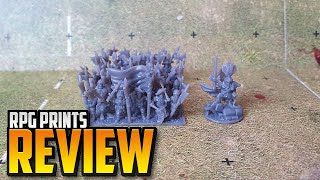
- Small-scale (10mm) battles fit in limited space and allow dense tabletop action
- High-quality STL prints with varied poses
- Good detailing on faces, armor, and clothing
- Easy cleanup of supports after printing
- Active community and ongoing support for the scale
- Requires access to a 3D printer or printed STL purchases
- Post-processing and assembly can be time-consuming
- Quality and consistency depend on the printer and resin/filament quality
- Official support for 10mm scale may be less comprehensive than mainstream scales
- Empire and Chaos clashing in epic fantasy warfare
- Fantasy battlefield settings across multiple realms, massed 10mm scale battles
- epic, strategic mass-battle warfare with focus on formations and large-scale engagements
Mechanics (from transcript analysis)
- Command and activation system — Players use a token/command mechanism to activate units and coordinate orders across the field.
- Formation-based combat and resolution — Combat outcomes depend on unit formations and morale in a large-scale engagement.
- Massed unit deployment and movement — Players maneuver large blocks of miniatures to form lines and engage in scaled battles.
Video topics + discussion points
Quotes (from this video)
- warmaster seemed like a pretty safe bit
- the details on these are absolutely sensational
- i'm super impressed with his 3d printer
- the supports came off easy
- i honestly thought i'd just get a front rank of individual minis and then five ranks all the same
References (from this video)
- tactical depth and aspirational hobby status
- strong community and ongoing expansion content
- complexity and time commitment
- cost barrier for new players
- Dungeons & Dragons
- Risk
Mechanics (from transcript analysis)
- miniatures-based tactical combat — Players field miniature units and execute strategic maneuvers
Video topics + discussion points
Quotes (from this video)
- the rules are defined cheating is universally considered wrong
- interaction in board games is about more than just the gameplay
- the hobby is broader now and it's more visible but it still has community at its heart
- gamers gather in groups in an evening or at the weekend in cafes church halls game stores
References (from this video)

- Immersive and highly customizable for hobbyists who enjoy painting and modeling.
- Can be expensive and complex, with a steep time commitment.
- Miniatures-based tactical skirmishes and large-scale battles.
- Warhammer fantasy battles universe, grimdark fantasy.
- Thematic, narrative-rich miniature combat with customization and campaign options.
Mechanics (from transcript analysis)
- Miniatures-based skirmish — Physical miniatures on a tabletop with dice-driven combat.
- Pattern Movement — Strategic positioning and unit abilities drive outcomes.
- Tactical movement and formation — Strategic positioning and unit abilities drive outcomes.
Video topics + discussion points
Quotes (from this video)
- never socializing outside the hobby
- this isn't about him anymore this is about one day waking up to a world where board gamers are accepted by society
- remember just don't be yourself tell him how fun it is to play as a 17th century farmer in agricola
- let's play star wars rebellion with him
- for Risk Legacy
- remember that guy we invited round to play Game of Thrones after five hours he started crying
- i play a lot of warhammer