/pic4552862.png)






























Wavelength Deep Dive
What the Community Thinks About Wavelength
Wavelength occupies a fascinating space in the board game hobby: a party game that earns enthusiastic praise from serious gamers and total newcomers alike. Reviewers across the community have placed it on Christmas gift lists, best-of-year roundups, and go-to party game recommendations, describing it as something genuinely hard to dislike once you sit down with the right group. The Board Game Hangover crew ranked it among the all-time best party games, and Our Family Plays Games gave it a nine out of ten, calling it a "great discussion game." The game hit big at family gatherings, work parties, and game nights of ten or twelve players, with reviewers consistently noting that it scales up without losing steam. The BigPasti channel used Wavelength as a prime example of a game that achieves high asymmetry through elegant informational design, placing it in the same breath as Codenames as a defining achievement in the party game space.
The consensus from across the community is clear: Wavelength works best when you play it with people who bring genuine personality to the table. The Before You Play channel described it as "one of those games that your enjoyment is probably really dependent on who you're playing with," and noted that playing with fun friends made it a genuine highlight. That honest caveat reflects how seriously reviewers think about Wavelength rather than dismissing it as a casual throwaway.
Core Mechanics That Define Wavelength
The Dial and the Spectrum Card
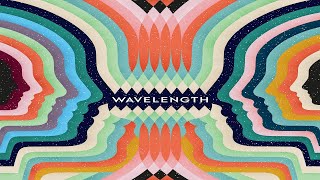
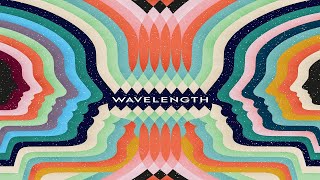
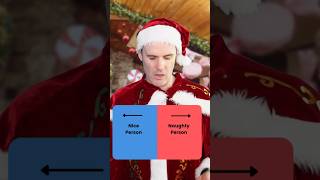
Wavelength is built around a physical device: a spinning dial inside a clamshell contraption that hides a target zone on a semicircular arc. One player, the clue giver, secretly sees where on the arc the bullseye falls and draws a spectrum card showing two opposing concepts at either end. Their entire job is to communicate where between those extremes the target sits using only a single word or phrase as a clue. The Our Family Plays Games channel described the core loop simply: "you give a spectrum of like cool to uncool, you give a clue, and they try to figure out where in the spectrum it is." The Board Game Hangover hosts illustrated what a round actually feels like by noting that once you set the dial and the team lands their guess, the reveal of whether you nailed it or missed creates a shared moment of tension and release that drives the whole experience.
Informational Asymmetry as the Engine
BigPasti offered one of the sharpest mechanical analyses, framing Wavelength as a masterclass in informational asymmetry. The clue giver holds complete knowledge of the target but faces a severe restriction: only one clue, no elaboration. The rest of the team holds almost no information but must collaborate as a collective brain to translate that clue into a position on a spectrum. As the channel put it, "a game like Wavelength has a player know exactly where the bullseye is but needs to translate that location of the bullseye through this opposing concept card." This asymmetry, paradoxically, produces one of the most accessible game experiences in the hobby. You do not need to be an expert in board game mechanics to feel what the game is asking of you.
The Wavelength Experience
Conversations That Go Places
The most consistent praise across all the reviews focuses on the quality of discussion Wavelength generates. Our Family Plays Games made this the centerpiece of their recommendation: "this game is great at bringing discussions" and noted that in larger group games "you have to have a game that brings discussions that lets people talk." The host recounted playing at their wife's work party where they brought up politics as a clue immediately, calling it "a mistake" while laughing, and described a round where someone used a tuna to represent attractiveness on the spectrum and got it exactly right. These are the moments that reviewers keep referencing: the hilarious, revealing, sometimes awkward exchanges that emerge when a clue forces people to negotiate their perception of where something sits on a scale. The Dice Tower hosts echoed this, calling it "just a great discussion game" and highlighting the tension when the team tries to reach consensus before the big reveal.
Flexible Player Counts and Social Flow
Multiple reviewers highlighted Wavelength's practical social strengths. The Dice Tower noted that you can "play with three on three or 30 on 30" and praised how players can "come and go" during a session without disrupting the game. This makes it ideal for parties where people drift between conversations and activities. The Board Game Spotlight channel's best-of-year discussion mentioned it alongside only the most celebrated party games, and the Dice Tower hosts specifically contrasted it with games that lock you into a commitment. One host said he prefers being the clue giver role in games like Wavelength, grouping it with games like Deception: Murder in Hong Kong for the particular satisfaction of being the one who holds the secret and has to communicate it under constraints.
What Makes Wavelength Stand Out
Revealing How Friends Think
The BigPasti channel, in a broader essay on game design, singled out Wavelength for doing something unique within party games: it transforms what could be a mechanical guessing exercise into a window into other people's minds. As the reviewer noted, this is "a social game done right. You're talking about perception. You're making connections. You're having revelations about how your friends think, but it's all channeled through the game structure." That observation captures why Wavelength generates the specific kind of conversation it does. Arguments over where something falls on a spectrum reveal assumptions, values, and mental models that would rarely surface in ordinary conversation. The game serves as a structured vehicle for genuine human revelation.
Accessibility at Scale
One recurring theme is how well Wavelength performs with non-gamers. The Dice Tower placed Wavelength in a tier of games appropriate for Christmas gifts precisely because it opens up and plays immediately with almost no barrier. The Board Game Hangover gave it their second-highest recommendation on a party game ranked list, noting that they recently played it at Christmas with the whole family across all ages and it was "a party hit for sure." Unlike many party games that require everyone to already share the same cultural references or comfort with performance, Wavelength asks only that you have an opinion about where something falls on a scale, which turns out to be something almost everyone can engage with confidently.
Potential Drawbacks
The Pressure on the Clue Giver
The Dice Tower offered the most direct critique of a structural tension within the game. One host observed that Wavelength shares a particular stress point with Codenames: "one person has the stress on them to set the dial" and "a lot of people don't like getting put into that position." When you are the clue giver, the entire outcome of the round rests on your single word. In social contexts with mixed comfort levels, some players will enjoy that responsibility while others will feel exposed or anxious. This is not a fatal flaw, but it is worth knowing before pulling the game out with people who are shy or conflict-averse about being in the spotlight.
Group Dependency
Before You Play named this directly: the experience is "really dependent on who you're playing with." Unlike a puzzle game where the challenge is inherent in the design, Wavelength's fun is generated almost entirely by the people in the room. With a lively group that commits to the debate and genuinely engages with the spectrum cards, the game soars. With a quieter or less expressive group, the discussions that give Wavelength its energy may not materialize. The game's low complexity means there is little mechanical scaffolding to carry the experience if the social chemistry is not there. It is worth treating Wavelength as a social catalyst first and a game second.
If You Enjoy Wavelength
Reviewers consistently pointed to a cluster of games that share Wavelength's spirit or scratch a similar itch. Codenames appears most often as a natural companion, built on the same core idea of a single clue giver with restricted communication trying to guide a team, though with a word-grid format rather than a spectrum dial. The Dice Tower mentioned Itto (sometimes called Eto) as "very similar to Wavelength, with training wheels on," a card-only version that travels more easily. Monikers came up in multiple reviews as another party game that generates inside jokes and memorable group moments, leaning into physical performance rather than conceptual placement. For groups that love the discussion format but want more structure, Just One appeared repeatedly as a gentler cooperative option where everyone writes clues for a single guesser. The Board Game Hangover also placed Wavelength in the same neighborhood as Skull for its reliance on reading people and making social bets. If Wavelength works for your group, any of these titles are worth exploring at your next game night.
What Reviewers Are Saying
"This game is great at bringing discussions. I think that's what makes it. In larger group games you have to have a game that brings discussions that lets people talk as the game goes on. It leads to hilarious discussions."
— Our Family Plays Games
"Wavelength has a player know exactly where the bullseye is but needs to translate that location of the bullseye through this opposing concept card. This is a social game done right. You're talking about perception. You're making connections. You're having revelations about how your friends think, but it's all channeled through the game structure."
— BigPasti
"Wavelength is a team versus team or a fully cooperative game. I recently played at Christmas with my whole family, all ages, and it was a party hit for sure."
— Board Game Hangover