/pic6106524.png)
WILD: Serengeti is a board game inspired by the endless plains of the Serengeti. This game combines the joy of puzzle-solving with elements of set-collection and engine-building to create a deep and unique strategic experience. The mesmerizing artwork, 3D components and detailed animeeples will guide you straight into the vivid and breathtaking wilds of the Serengeti.
In order to gain victory points, the player must complete Scene Cards by placing the animals on the Main Board in the same pattern as shown on the cards.
To achieve the pattern shown on the Scene Cards, players perform actions to either place or move animals on the Main Board. When animals are placed on the Main Board in the same pattern as displayed on the Scene Card, the scene can be completed. When completing Scene Cards the player receives ‘Icons’ or ‘Rewards’. With Rewards, players can earn points or different resources, and with Icons, gain continuous benefits throughout the game.
-description from designer


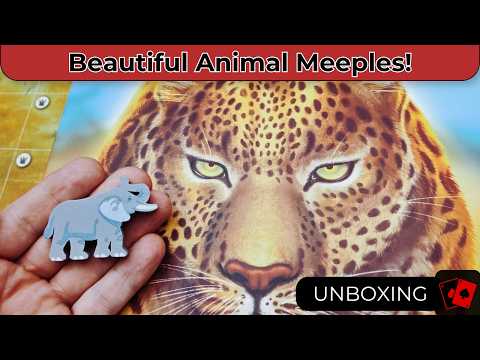
- Amazing production quality on the animal meeples.
- Visually appealing components that look and feel great.
- Screen-printed meeples are a cool feature.
- Thematic incorporation of elements like 'play, pause, stop' buttons and documentary awards.
- Nice artwork on the board.
- Cards have a linen finish and feel good.
- Language neutral cards with fun facts.
- Large rulebook.
- Concerns about multiplayer issues and downtime.
- The 3D rock centerpiece might be difficult to assemble or not fit.
- The insert is functional but could be better for sleeving cards.
- Some animal meeples (rhinoceros, lion) look sad or derpy.
- The game is described as a 'puzzy game' (puzzle game) and the host already owns many.
- Photographers/film crew taking pictures of animals in the Serengeti to make the best documentary.
- Serengeti
Mechanics (from transcript analysis)
- Objective Fulfillment — The game's goal is described as fulfilling goals on cards.
- Set Collection — The core gameplay involves arranging animals in specific positions to fulfill goals on cards.
- Worker Placement — The host mentions 'actions like where you can like swap animals around' which implies action selection or placement.
Video topics + discussion points
Quotes (from this video)
- The production quality on these animals is amazing. They look and feel so great.
- I've heard like a lot of the time that this game does it is pretty and it has a nice mechanism, but it does have its share of problems, especially for multiplayer games.
- So like the production quality on these animals is amazing. They look and feel so great.
- These are like these are some sad animals, but they look really great.
References (from this video)
- wildlife; life on the Serengeti
- Serengeti plains
- narrative
Mechanics (from transcript analysis)
- Card Drafting — draft cards representing wildlife actions to influence gameplay.
Video topics + discussion points
Quotes (from this video)
- Parks by Key Master Games is probably my favorite nature themed game and highlights the US National Parks
- a tile placement game about biodiversity in the oceans
- card drafting game about the plains of the Serengetti
- Amazonia is a bag Builder game of the Amazon rainforest
- first is Arboretum
- Arboretum is a set collection card drafting game about different species of trees
References (from this video)
- beautiful wooden components
- two-piece set of workers/animals with thematic bonuses
- board space can be large; setup feels busy
- set collection / engine building with wildlife cards
- Serengeti wildlife
Mechanics (from transcript analysis)
- Card-driven bonuses — special scene bonuses give ongoing advantages
- Pattern Building — complete scenes by placing animals in patterns shown on scene cards
- pattern completion — complete scenes by placing animals in patterns shown on scene cards
- Worker Placement — place a single type of worker to perform actions; multiple spots exist with bonuses
Video topics + discussion points
Quotes (from this video)
- the box cover is awesome
- I love the bumping mechanism
- this game is going to last you a long time
References (from this video)
- great solo and multiplayer experiences
- fun orientation/placement interactions
- some players find solo scenarios interesting but variable
- capture animals in correct orientations
- wildlife photography safari in Serengeti
- light, action-management
Mechanics (from transcript analysis)
- Action Drafting — place a worker to perform actions; basic engine-building via cards and orientations
- action drafting / single worker placement — place a worker to perform actions; basic engine-building via cards and orientations
- card collection / orientation requirements — fulfill card requirements by arranging animals in required orientations
Video topics + discussion points
Quotes (from this video)
- In Power Plants, you draw tiles from a bag and place them into the flower patch.
- it's kind of like an adult game of tic-tac-toe
- The origami art on Sea Salt and Paper is just absolutely gorgeous.
- Isle of Cats Explore and Draw is the travel-friendly version of Isle of Cats.
- I love everything about this game. The learning aspect is great.
- The solo has really interesting scenarios.
References (from this video)
- Beautiful artwork and thematic presentation
- Engaging solo mode and available co-op/scenario options
- Dense strategic decisions with meaningful player interaction
- Some players dislike the restricted movement that can limit options
- Can be punishing if you fall behind early due to competition
- Wildlife management, predation dynamics, and safari-like exploration with animal placement challenges.
- Serengeti ecosystem with predators and prey interacting as players position and move animals to fulfill scenario goals.
- Competitive and tactical, with moments of tension and interaction that can feel punitive.
- Explorers of Neoria
- Creature Comforts
Mechanics (from transcript analysis)
- High interaction and competition — Blocking spots and competing for predators or prey creates meaningful player interaction.
- Orderly movement across a board — Movement constraints and slot availability influence planning and momentum.
- Positive Player Interaction — Blocking spots and competing for predators or prey creates meaningful player interaction.
- Scenario-driven objectives — Each game uses a predetermined scenario card that sets goals and conditions for scoring.
- Worker Placement — Players place animal tokens on action spaces to trigger effects and scoring opportunities.
- Worker placement / action placement with animal tokens — Players place animal tokens on action spaces to trigger effects and scoring opportunities.
Video topics + discussion points
Quotes (from this video)
- And I love the artwork.
- I roll my family dice, then I place my workers, then the village dice come out, so I may not get anything.
- the dummy player that basically just blocks spots in a two-player game.
- The solo mode in this one too. I like the scenarios that we can also play co-op.
- Creature Comforts has been one of my favorite games since we got it.
- Everything about this game except for not being able to stay in the same spot twice. That drives me nuts.
References (from this video)
- Offers a cooperative mode that changes how the game feels
- Scenario variety provides replayability
- Cooperative mode untested by the players in this session
- wildlife observation and ecosystem dynamics
- Serengeti wildlife-themed environment
- puzzle-like, family-friendly strategy
- Santorini
Mechanics (from transcript analysis)
- competitive and cooperative modes — Switch between competitive head-to-head and cooperative play styles
- Scenario / Mission / Campaign Game — Pre-defined scenarios with variations and challenge
- scenario-based play — Pre-defined scenarios with variations and challenge
Video topics + discussion points
Quotes (from this video)
- this month we are exploring old games in a new way.
- Every game that we're putting on our wall is going to be played on our table.
- Pergola is a tile laying game kind of set collection, different things.
- Pergola is absolutely gorgeous and the components are really pretty.
- Tokaido is a nice chill game.
- The playmat is very large.
References (from this video)
- Set collection is the fundamental aspect.
- Engine building is present, with cards generating resources.
- Solo mode offers six scenarios with different challenges.
- Specialists can be used to alter gameplay.
- Likes are worth a lot of points and encourage collection.
- Migration cards can clear the board, helping with placement.
- The second time an action is taken in a row it costs double, which should be avoided.
- If the board gets too crowded, it's hard to create adjacencies and move things around.
- Migration cards can remove animals that players are trying to position.
- Making a film about the wildlife of the Serengeti
- The Serengeti
Mechanics (from transcript analysis)
- action selection — Players choose actions from a board, with actions costing coins, and the second time an action is taken in a row it costs double.
- Area Placement — Placing animal miniatures on the board to fulfill scene requirements.
- Engine Building — Some cards generate resources (coins, special effects, food) or icons that can drive other cards to score more highly.
- Pattern Building — Making patterns on a grid to match requirements of scene cards.
- Resource Management — Coins are used to pay for actions, food and FX tokens can be spent to move animals or ignore terrain requirements.
- scenario play — The solo game includes six scenarios offering different challenges and scoring conditions.
- Set Collection — Collecting scene cards to create sets that score points, often by matching icons or animals in specific locations.
- Variable player powers — The game can be played with specialists that bring their own special abilities or limitations.
Video topics + discussion points
Quotes (from this video)
- This is a set collecting game fundamentally where you're going to be making patterns on this grid that represents the Serengeti to match requirements of these scene cards.
- There's a certain level of engine building in here as well because some cards will generate resources.
- Likes are worth a lot of points.
- Coins basically means how many actions do I get to take.
- It's very much geared towards your specialists as well.
- Migration cards will remove animals from the grid.
- If things get too crowded then you're going to struggle to create adjacencies and move things around because animals are blocking each other.
References (from this video)
- High-quality animal meeples and components
- Dynamic board changes between turns create tension and strategy
- Engaging mix of strategic planning and adaptability
- Clear and varied scoring influenced by completed scene cards
- Specialist cards add variety and player-specific paths
- Game length can exceed expectations and feel lengthy at times
- Board-driven flow can slow pacing for some groups
- Setup and pool management require organization and focus
- wildlife pattern-building and placement
- Serengeti ecosystem, Africa
- docu-series vibe
- Life of the Amazonia
Mechanics (from transcript analysis)
- action selection via worker-like spaces — Eight action spaces per round; players place markers and interact with others; blocked spaces can force shifts in options.
- area/board placement and movement — Players place and move animal meeples on the board within terrain spaces to meet card requirements.
- Card Drafting — Each player starts with eight scene cards, keeps four, discards four, and draws new cards as the pool replenishes.
- Card drafting and pool management — Each player starts with eight scene cards, keeps four, discards four, and draws new cards as the pool replenishes.
- Resource Management — Coins and food tokens are used to perform actions, move animals, or ignore terrain constraints.
- scene card fulfillment — Players aim to fulfill their three types of scene cards (terrain-based, straight-line, and adjacency) by placing animals on the board.
- scoring and end-game events — Six rounds with a Great Migration and awards ceremonies affecting scoring; completed cards yield point bonuses through icons.
Video topics + discussion points
Quotes (from this video)
- the main thing that you will be doing in this game is fulfilling your scene cards
- there are three main different types of cards
- terrain scene which lists specific animals that need to be in specific terrain types out on the board
- the board changes as players are trying to place out animals in specific spots to fulfill their own cards
- you never know when someone is going to move one of the animals that you need just to mess everything up
- the components are the biggest draw towards this game
References (from this video)

- beautiful production and art
- striking physical components
- overly long with repetitive rounds
- some strategies feel underpowered or imbalanced
- patterned scoring through animal placements
- wildlife photography in Africa
- photography-themed pattern scoring
- Life of the Amazonia
- Everdell (visual/style influence)
Mechanics (from transcript analysis)
- Area Control — block opponents and optimize shots
- area control / placement blocks — block opponents and optimize shots
- Pattern scoring — achieve scoring patterns via animal placements
Video topics + discussion points
Quotes (from this video)
- Andromeda's caveat. Um it's it's if a game is that disappointing and boring and unfun and exhausting, I don't want it to go for four hours.
- I rarely will complain about the time that a game takes to play, but this was so exhausting and so disappointing for me.
- This is my number four of all time.
References (from this video)
- Beautiful components
- Educational and thematic to a family audience
- Money balance may be tight in play sessions
- Wildlife documentary narrative and observation
- Documentary-style board game about Serengeti wildlife
- Educational, nature-focused with thematic storytelling
- Pax Porfiriana
- Documentary-style tableau games
Mechanics (from transcript analysis)
- Narrative scene sequencing — Players piece together scenes to achieve goals
- Resource management / scene-based progression — Players manage resources and scenes to tell a documentary story
Video topics + discussion points
Quotes (from this video)
- "it's a documentary kind of not geo wild style crap"
- "the heart of the episode"
- "the grandfather of all platform fighters"
- "two answers okay two answers"
- "you love XCOM"