/pic5188761.jpg)













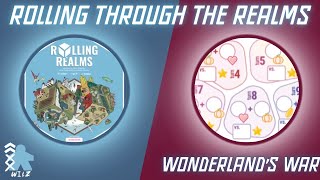












Wonderland's War Deep Dive
What the Community Thinks About Wonderland's War
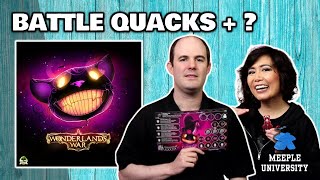
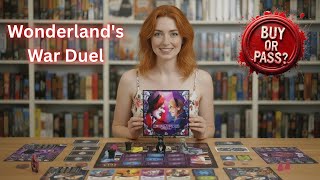
Wonderland's War, designed by Ben Eisner, Tim Eisner, and Ian Moss and published by Skybound Tabletop, occupies an unusual and beloved niche in the hobby: a game that feels immediately familiar yet delivers something genuinely its own. The dominant framing reviewers reach for is "battle Quacks" or "head-to-head Quacks of Quedlinburg with a war game wrapped around it," and that comparison is meant as enthusiastic praise rather than dismissal. Board Game Hangover placed Wonderland's War at the top of their best games of 2022 list (then listed it as an honorable mention due to a development conflict), calling it "phenomenal" and describing how its bag building, area control, card drafting, and asymmetric powers mesh together in ways that feel completely coherent.
Meeple University found the game "really nice" and "very well thought and put together," praising its strategic depth while acknowledging the rules overhead on first plays. Rolls in the Family described a play session where things went badly wrong and still ranked it a top play of the month: "that's a testament to the game that it was fun enough to overcome your poor performance." 3 Minute Board Games awarded it a gold medal, describing the bag-building-meets-war-game combination as "a core mechanic I find absolutely fantastic." Board Game Hangover summed up the consensus: "feel so good mashed together, it's super fun."
Where reviewers converge is on the game's whimsical atmosphere, the quality of its decisions, and the satisfying way luck and strategy intertwine. The one consistent caveat is learning curve: the card and chip ecosystem is rich enough that first plays can feel overwhelming, particularly the special character cards that each carry unique rules. But the near-universal verdict is that the complexity pays off quickly across subsequent plays.
Core Mechanics That Define Wonderland's War
Bag Building
The bag building in Wonderland's War functions as the engine underneath everything else. Each player starts with a small pool of tokens in a personal bag and expands that pool across three rounds by drafting cards that award new chips: strength tokens, special faction chips, forge tokens, and the dreaded madness tokens that threaten to unravel your battle plans. Meeple University described the strategic texture this creates with a memorable example: one player went "heavily into the forge upgrades and got all these extra chips" but in doing so "diluted what was left in his bag" so badly that madness tokens overwhelmed him in the final round, costing battles everywhere. That fragility and the decisions it forces are central to the experience.
Where Wonderland's War departs from Quacks of Quedlinburg, the game it most resembles, is in the victory condition during combat. Meeple University highlighted that "it's a first to 25 wins the battle" rather than filling a bowl, which encourages assembling a bag that can reach the target quickly rather than simply maximizing the total. Rolls in the Family noted that chip combinations can create cascading effects: holding Tweedles Bow Tie chips that, when both appear in the same draw phase, immediately add two supporters to the region. The forging mechanic, triggered by drawing forge tokens or landing on hammer spaces on the battle track, lets players move chips onto their player board to unlock upgrades or earn extra points, giving every combat a secondary layer of decisions beyond simply winning or stopping. 3 Minute Board Games called the overall system "very much aided by an excellent rulebook and oodles of player aids."
Card Drafting
The Mad Tea Party phase that opens each of the three rounds is where Wonderland's War earns much of its reputation for delivering a sequence of genuinely good choices. Players move clockwise around a circular table of cards, stopping at whichever card they want and claiming it along with its benefits: supporter meeples to deploy across the five battle regions, new chips for the bag, quest cards, upgrades to the player board, and access to Wonderlandian characters. The rondelle structure means the further you travel around the table, the more powerful the cards you can reach, but passing the head of the table forces you to roll the shard die and collect negative-point shards.
Rolls in the Family captured what makes the drafting feel so alive: "every card is good, and so it's a little bit of this like, oh, but I want this, but I want this, I have to kind of decide what to go for." 3 Minute Board Games noted that the drafting "is smooth and simple and lets people experiment with a wide variety of powers," while Meeple University compared the circular structure to similar rondelles in Lignum and Heaven and Ale, placing Wonderland's War in good company for card-drafting design. The asymmetric leader powers interact with the drafting directly: the Mad Hatter can take a card without moving (his Tea Party ability), while the Jabberwock can place poison tokens on cards to discourage opponents from claiming them. These small asymmetric touches make every draft feel different depending on which factions are at the table.
The Wonderland's War Experience
Whimsical and Thematic Immersion
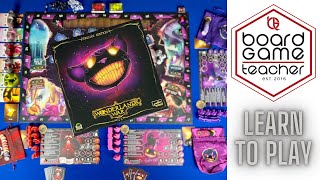
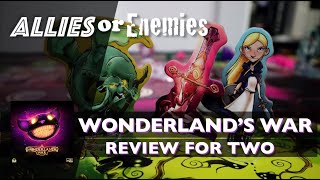
Wonderland's War commits fully to its Alice in Wonderland setting, and reviewers consistently respond to that commitment with warmth. Meeple University noted how the Queen of Hearts's power, which causes opponents to lose meeples when her leader arrives at a location, "feels very very thematic" and likened it to shouting "off with their heads." Allies or Enemies described how "artist Manny Trombley brings the wonderful madness of Wonderland to every corner of the game" with art that is "all bright and fantastical but with just enough of a dark edge in all of the right places." The board itself is described as huge and visually striking, and Board Game Spotlight's livestream noted how even the standard retail edition delivers meaningful visual impact, while the deluxe version with its unpainted miniatures of every character, including Humpty Dumpty and the Tweedles, is described as "amazing."
Foster the Meeple, ranking Wonderland's War third on their list of favorite cat games specifically because the Cheshire Cat faction is so well realized, noted that the cat is on the cover and "somebody's always got to play the Cheshire Cat." The Wonderlandian characters players can recruit during the tea party phase, figures like the Walrus, the Caterpillar, the Knave of Hearts, and the White Rabbit, each carry thematic abilities that reinforce the source material. This is not just flavor; Rolls in the Family described the Duchess character (who earns you a victory point every time a chosen opponent loses a supporter during a battle) as "a fun one" that generates genuine strategic decisions around who to target.
Tense Push-Your-Luck Combat
The battle phase is where Wonderland's War generates its most memorable moments, and those moments are almost always described in terms of tension and dramatic swings. Rolls in the Family described the specific anguish of drawing a madness token at exactly the wrong moment: having only two supporters left in a region, holding a token worth two, being in a mindset of "I'm still safe" and then "looking at it for like five seconds processing what has just happened." The push-your-luck structure means every chip drawn from the bag is a decision point: stop and secure your current position, or keep drawing and risk busting out entirely and losing all supporters in that region.
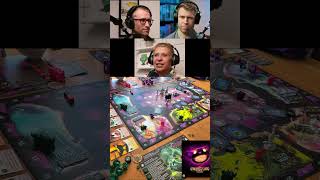
Board Game Spotlight's livestream captured the table energy this generates, with players leaning in, cheering and groaning at every draw, and the betting mechanic, where players not involved in a battle can wager chips on the outcome, keeping everyone engaged even when it is not their fight. 3 Minute Board Games called the betting "the best thing about this game," describing it as "brilliant" for keeping neutral players involved. Allies or Enemies noted that "the combat is tense and exciting as each bag pull becomes another point where the result could pivot suddenly," and observed that the shield token, usable once per round to cancel a madness token and immediately redraw, adds a critical decision layer: use it now, or save it for when things get worse.
What Makes Wonderland's War Stand Out
Asymmetric Leaders with Genuinely Different Feels
Each of the five factions (Alice, the Mad Hatter, the Queen of Hearts, the Cheshire Cat, and the Jabberwock) plays in a meaningfully different way, and reviewers treat this as one of the game's strongest assets for replayability. Allies or Enemies explained: "playing as the Cheshire Cat does not feel the same as playing as the Jabberwock." The Queen of Hearts punishes opponents when her leader enters a location. The Mad Hatter can use madness to his advantage and take free cards at the tea party. Alice is oriented toward cooperation with Wonderlandian characters and has artifact chips that let her teleport between regions after battles.
Rolls in the Family played Alice and described leaning into a specific combo: one artifact chip that refreshes the shield (comparable to "the flask in Quacks where you can cancel something") and another that allowed Alice to move to a new region after a battle, potentially contesting multiple locations in a single round. When that strategy collapsed because of a single misread draw, the game still held up. Beyond the leader abilities, each faction also draws from one of four ally power sets (comparable to the recipe books in Quacks), meaning the combination space for any given game is large enough that no two sessions feel the same.
Multiple Viable Paths to Victory
Wonderland's War avoids the problem of games where one dominant strategy emerges and squashes variety. Meeple University described a memorable session where one player focused almost entirely on quest cards: "I had six quests and I was trying to get them all done for what would have been 54 points." That player ignored most of the battles, entering only when a quest required a specific finishing position on the battle track, and came very close to winning despite rarely contesting regions directly. Castles (earned by winning battles) scale in value based on how far players have advanced the forge track, meaning someone who invests heavily in forging upgrades can turn a modest castle haul into a substantial points swing.
Ally characters like the Walrus (worth three bonus victory points if you win the battle he is placed in) and the Tweedles (who provide starting strength in whatever regions they occupy) create targeted advantages that interact differently with every player's bag composition. 3 Minute Board Games noted that "being able to customize what each of the tokens does means you can create a lot of varied powers," while Allies or Enemies observed that quest cards "give you incentive to maybe quit a battle or go to a location you might not want to," creating genuine tension between pursuing quests and contesting the regions everyone else is fighting over.
Potential Drawbacks
Rules Overhead on First Plays
The most consistent criticism reviewers raise is that Wonderland's War asks a lot of new players, particularly the special character cards (the Wonderlandians and the unique faction chips) that each carry their own individual rules. Meeple University was direct: at a five-player game where almost everyone had these cards, "you have to keep track of all of these even like the player themselves." The reviewer admitted to ignoring the character cards entirely on a first play and focusing only on quests just to manage the cognitive load. The suggestion that emerged was treating those cards as an expansion rule for the first session rather than introducing everything at once.
Allies or Enemies acknowledged "a decent amount to remember" while noting it is well supported by player aids and flowcharts. The roundness of the system is not in question: the rules themselves hang together logically, and repeated plays bring the complexity down quickly. But Wonderland's War is not a game to drop on a table of total newcomers and expect to run smoothly in the first 20 minutes. The investment is real, and the payoff requires at least one session of fumbling through it.
Downtime and Player Count Scaling
At higher player counts, Wonderland's War introduces meaningful downtime during the battle phase. Allies or Enemies noted plainly that "there will be some downtime during the battles you're not part of," even with the betting mechanic in place. Rolls in the Family put the three-player time at around two hours, with four players pushing into two and a half, and noted that almost every session involves players who have not played it before, which adds further overhead. Allies or Enemies put the increase at roughly 25 minutes per additional player beyond two, quoting the box's own estimate as accurate, and added that at five players "you should pack a lunch."
At two players the game runs lean: Allies or Enemies described the two-player mode as "solid" with specific board adjustments including two-player sides on all faction boards, removal of one battle region, and an NPC cube that sets a minimum bar for points in each fight. "So far every game has been super close," they noted. The game's ideal seems to be three or four players for most groups, where the board fills out enough to create genuine area control tension without the five-player downtime becoming a drag. The betting mechanic helps, but reviewers are candid that it only partially addresses the problem.
If You Enjoy Wonderland's War
The most direct comparison reviewers offer is Quacks of Quedlinburg, which shares the bag-building and push-your-luck structure. If Wonderland's War sounds appealing but the area control and asymmetric complexity feel like too much, Quacks is the natural entry point into the same mechanical space. For a different take on area control that strips out the luck element entirely, Root (mentioned by Foster the Meeple in the same breath as Wonderland's War) delivers deeply asymmetric factions fighting over territory, though its weight and learning curve are steeper in different ways.
Calico appears in the comparison games list alongside Wonderland's War and shares the colorful, whimsical production values and the appeal to players who want something visually striking and thematically warm on the table. For players who respond specifically to the card drafting at the tea party, the rondelle structure is comparable to Lignum and Heaven and Ale, both mentioned by Meeple University as touchstones for that specific mechanic. And for players who want the epic thematic scope of a world where every faction tells a different story, Elders Scrolls: Betrayal of the Second Era delivers that in a much heavier cooperative format, as described by Rolls in the Family.
What Reviewers Are Saying
"This is just an example of a game where every decision you get to make in the game is just like a fun decision of good options. Every card is good. And so it's a little bit of this like, oh, but I want this, but I want this. I have to kind of decide what to go for. I had a pretty bad game of it, honestly, but that's a testament to the game that it was fun enough to overcome your poor performance."
— Rolls in the Family
"Wonderland's War takes the bag building of Quacks of Quedlinburg and makes it into a war game and that's a core mechanic I find absolutely fantastic. The drafting part of the game is smooth and simple and lets people experiment with a wide variety of powers. And the combat is tense and exciting as each bag pull becomes another point where the result could pivot suddenly."
— 3 Minute Board Games
"I legitimately think the game is phenomenal. The bag builder which I love and the chips, oh my goodness, if you did not get the upgrade of the chips, total game changers. It's so fantastic. It is a game changer just like feel the tactical experience."
— Board Game Spotlight