/pic6940296.jpg)






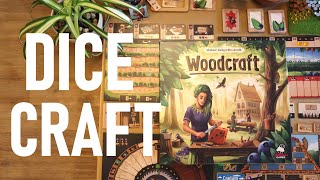
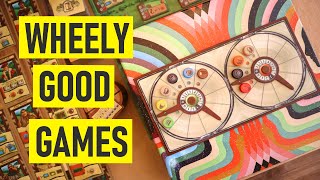





























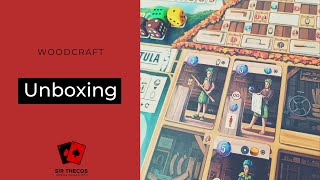


Woodcraft Deep Dive
What the Community Thinks About Woodcraft
Woodcraft has earned respect among experienced board gamers as a thoughtfully designed economic strategy game that respects player agency while demanding careful resource management. Reviewers consistently praise the game as a designer's piece from Vladimir Suchy, noting it represents medium-weight European design done well. Though Woodcraft carries a deceptively cozy woodland aesthetic with its charming artwork and wooden components, the actual experience is notably demanding. Players describe it as "hard," "unforgiving," and requiring all available bandwidth, yet those who embrace the challenge find it deeply rewarding.
Core Mechanics That Define Woodcraft
Dice Manipulation and Wood Crafting
The heart of Woodcraft revolves around a unique dice-as-resources system that weaves seamlessly with the game's theme. Players acquire wooden dice in different colors and values, then transform them through saw blades, glue, and scrap wood to fulfill contracts. Cutting a six into two threes, gluing two pieces together to increase their combined value, or splicing smaller pieces with scrap wood creates a deeply satisfying spatial puzzle. Reviewers highlight how this mechanic generates "mega turns," where a series of cascading actions creates compound solutions. Totally Tabled described the appeal directly: cutting dice physically makes sense because you are using saw blades to cut them, gluing two pieces together represents actual woodworking, and using scrap wood to increase pips by one or two feels intuitive. This tight thematic integration means players can grasp the logic immediately even as they discover new strategic depths.
The Rotating Action Wheel and Bonus Economy
Woodcraft's central action selection board functions as a constantly shifting economy of opportunity. Seven action wedges arranged around a circular wheel advance through quadrants as players take their turns, with neglected actions accumulating increasingly valuable bonuses. This rondel-style mechanism forces meaningful tempo decisions: do you take an action now for modest rewards, or leave it for others to activate so you can claim it later when bonuses have grown substantial? The wheel's design creates natural momentum, with opportunities shifting from scarce to abundant as the game progresses. Players report that early games involve simply taking actions to feed strategy, while later plays reward those who study the board and time their selections to harvest high-bonus tiles.
The Woodcraft Experience
Intense Puzzle Solving Under Pressure
With only 14 rounds to accomplish everything, Woodcraft creates relentless tension between ambition and constraint. Contracts arrive with timers that decrease each round, eventually becoming negative scoring unless completed. No player can accomplish everything, forcing constant prioritization. Allies or Enemies noted this intensity directly, describing the game as "stinky and unforgiving" where you need to maximize every one of those 14 turns. Reviewers note this intensity transforms from frustrating to exhilarating once players internalize the systems. The tightness is intentional, separating players who adapt their plans on the fly from those who cling to initial strategies.
Satisfying Engine Building Through Character Helpers
Alongside the core dice and action systems sit character helpers who provide ongoing and triggered abilities, and an income track where players develop production bonuses. Layering these creates genuine engine moments. Landing helpers adjacent to one another unlocks bonus tracks. Upgrading workshop stations generates recurring income. Progressing reputation unlocks multiplier tiers that compound final scoring. Players describe the joy of watching their infrastructure click into place, especially when careful helper placement creates cascading triggers. The solo mode highlights this appeal through its best-score design, where players can focus purely on maximizing engine efficiency without direct player conflict, making repeated plays feel like attempts to solve an ever-deepening puzzle.
What Makes Woodcraft Stand Out
Thematic Brilliance Through Component Design
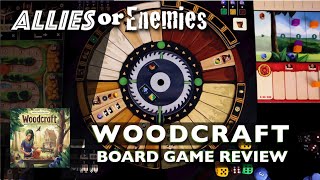
Woodcraft succeeds because its mechanical systems and theme reinforce each other rather than merely decorating one another. The action wheel physically resembles a saw blade with a protective guard covering bonuses in the first quadrant. Wooden dice naturally invite manipulation and transformation. Contracts depict actual wooden crafts and furniture. The color-coded wood types correspond to increasing scarcity and value. The Board Game Garden praised the "cool dice manipulation mechanic" and "innovative center-wheel action system" as key reasons the game stands apart from other economic Euros. The game teaches itself through its physicality.
Emergent Problem-Solving and Replayability
Because Woodcraft presents layered, interconnected systems with limited actions, players encounter novel puzzle configurations each game. The setup deck determines which helpers and contracts appear, how the wheel rotates, and which public objectives reward racing behavior. One contract might make collecting specific dice colors worthwhile, while a different setup might reward aggressive helper acquisition instead. Board Game Dad noted the "creative use of raw materials" and "rotating action board that adds strategic depth by rewarding neglected actions" as sources of ongoing discovery. Later plays reveal strategies entirely invisible to newcomers, encouraging return visits specifically to test theories about tool building, income generation, or contract sequencing.
Potential Drawbacks
Complexity and Learning Curve
Woodcraft is categorically not a gateway game despite its charming presentation. Multiple interlocking systems, a non-standard action wheel, contracts with timer mechanics, income tracks, reputation scoring, and tool bonuses create significant cognitive load. First plays often feel chaotic as players struggle to parse available actions and their consequences. Allies or Enemies noted the "steep learning curve due to the number of interacting rules and upgrade options" as a genuine barrier. This learning curve separates players who enjoy puzzling through systems from those who prefer games with more intuitive frameworks.
Analysis Paralysis and Downtime
Because decisions compound and mistakes amplify under the tight timeframe, analysis paralysis becomes a genuine concern at the table. With four players, downtime between turns can extend significantly while someone weighs whether to take an action now or wait. Reviewers suggest the game plays best at two players, and while solo is excellent, higher player counts dilute the experience. Board Game Dad observed that "the complexity can lead to analysis paralysis for some players" and "the depth may feel overbearing or overly intricate for lighter gamers." The game design creates this tension intentionally by making information public and decisions consequential.
If You Enjoy Woodcraft
Players who appreciate Woodcraft tend to enjoy medium-weight Euros with strong mechanical integration. Underwater Cities and Shipyard, from designer Vladimir Suchy, share the same design philosophy of interlocking systems with satisfying engine payoffs. Macau offers similar dice-driven resource management with cascading decisions. Pax Pamir delivers comparable strategic depth through different mechanical frameworks. Rajas of the Ganges resonates with the dice-as-resource approach. For those seeking complex economic systems without the dice element, Barrage offers tight resource management with high player interaction.
What Reviewers Are Saying
"Woodcraft is as stinky and unforgiving as they come. You need to do the most you can with every one of those 14 turns, and the system can feel rewarding if you get things going the right way, but if you mess up a turn or two it can get downright frustrating."
— Allies or Enemies
"One of the things I really love about Woodcraft is that it uses dice as resources. All those dice manipulations are so puzzly and so satisfying, and they make a lot of thematic sense because you can cut the dice with saw blades, glue two pieces together, or increase them with scrap wood."
— Totally Tabled
"There are just so many games that use dice in cool ways that I love. The dice mechanism in Woodcraft is so satisfying to me, and recently playing it just hit different. It made me really want to seek out a copy of this one because I absolutely love it."
— The Board Game Garden