/pic8831798.jpg)








Wordsy Deep Dive
What the Community Thinks About Wordsy
Across the channels that cover it, Wordsy reads as a fast, approachable word game built for casual and family play. The Cardboard Herald frames it as short, sweet, simple, and fun, a deliberate and straightforward alternative to Scrabble that does not require an immense vocabulary to enjoy. Banter and Boards ranked it among their favorite games of the year, describing it as a fun, simple word game with an approachable core concept that is fast moving, highly portable, and easy to teach to players of any age. Good Time Society devoted a full episode to playing Wordsy live, with hosts Ruel Gaviola and Becca Scott praising the real-time pressure of the timer and the flexibility of building any word from the available letters.
Not every channel frames Wordsy the same way. Grant Lyon opens by admitting a general dislike of word games, describing getting crushed at Scrabble and Boggle, then singles out Wordsy as an exception that made spelling feel open-ended rather than punishing. Mind Suggested Game takes the opposite angle, treating Wordsy as a genuine test of vocabulary depth worth a spot on a top 50 list of favorite games, and credits the original release to Formal Ferret Games. Good Time Society noted on air that Wordsy had been out of print for a while and was returning in a new edition from All Play, the same publisher The Cardboard Herald credits with sending Wordsy as part of a batch of new games for review.
Core Mechanics That Define Wordsy
Real-Time Word Building
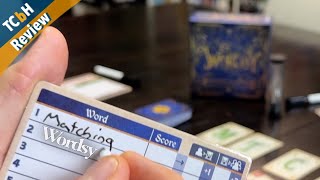
Every round starts the same way across the videos that walk through the rules: players study the letters on the table at the same time and race to be the first to write down a word. The Cardboard Herald explains that whoever settles on a word first flips a timer, and every other player then has thirty seconds of pressure to finish their own word before time runs out. Banter and Boards describes the same simultaneous structure, noting that everyone examines the letters at the start of a round and starts thinking about which word to use before anyone locks in. Good Time Society played this out live, walking through the moment a player writes a word and flips the timer, forcing the table to finish under pressure; the hosts called the timer element fun specifically because the pressure does not begin until someone commits to a word.
Column-Based Letter Scoring
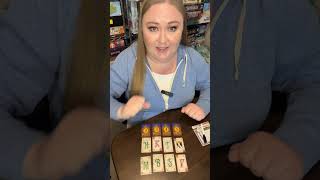
The letters themselves are not worth the same amount. Mind Suggested Game lays out the structure precisely: four columns of two consonants each, valued at five, four, three, and two points, with no vowels appearing on the board at all. Players can write down any word they want, including letters that never appeared in the tableau, but only the letters that match the columns count toward the score. Good Time Society's playthrough showed how those columns shift every round, with older letters sliding down in value as new ones are drawn in, and pointed out that a repeated letter, like a doubled P, can score twice in the same word. The Cardboard Herald describes the same loop from the outside, noting how the fastest player scores first, other players compare their words for a bonus, and the round resets by discarding the rightmost column and drawing new letters.
The Wordsy Experience
Quick and Portable
Several reviewers point to how little time and space Wordsy asks for. Banter and Boards calls it fast moving and highly portable, great for travel, and easy to teach to players of any age thanks to its clear art. Good Time Society's episode moved through all seven rounds of a full game inside a single segment, underscoring how quickly a session plays out even with two players talking through every word along the way.
A Mental Workout Wrapped in a Simple Shell
The rules stay simple, but reviewers describe real mental strain once the timer starts. Mind Suggested Game says the game always presents a challenge, adding that some days their vocabulary comes easily and other days it does not, and calls it a great mental challenge every time. Grant Lyon describes feeling competitive at Wordsy in a way Scrabble never managed, even while admitting the channel still probably will not win many games, because the open spelling kept the experience involved instead of stuck. The Cardboard Herald frames the same tension differently, noting that scoring rewards clever use of common letters over raw vocabulary size, so a player does not need to know a lot of words to keep up.
What Makes Wordsy Stand Out
Open-Ended Spelling
Grant Lyon highlights that Wordsy lets a player spell any word they want, even one that completely ignores every letter on the table, though it will not score well. That openness, rather than a fixed rack of letters, is what gave Grant Lyon a real shot at a good score by grabbing high-value letters piece by piece, calling the open-ended nature of the spelling something worth getting behind after years of feeling outmatched in other word games.
A Ceiling for Serious Wordsmiths
Mind Suggested Game pushes in the other direction, pointing out that Wordsy rewards long, consonant-heavy words like anti-disestablishmentarianism, because the longer a word is, the more consonants it tends to include, and the more likely it is to match the columns and score. That depth is part of why they rank Wordsy on a top 50 list of favorite games, adding a personal note about placing first at a regional qualifier for a national Wordsy tournament.
Potential Drawbacks
The Challenge Rule Cuts Both Ways
Banter and Boards walks through Wordsy's challenge system, in which any player at the table can call out another's word as misspelled or invalid. If the challenge is correct, the accused word scores nothing, but if the challenger is wrong, they take a two point penalty at the end of the game, a rule that adds real risk to second-guessing an opponent instead of settling arguments cleanly.
Needs the Right Group
The Cardboard Herald is direct about who Wordsy is not for: a group that is not already into this kind of game will not suddenly come around, and it is a poor fit for players who want a bunch of crazy or weird themes rather than straightforward wordplay. Mind Suggested Game adds that performance can swing wildly from session to session, describing days when their vocabulary flows easily and other days when it does not, so the mental challenge is not always a comfortable one.
If You Enjoy Wordsy
Scrabble comes up repeatedly as the natural comparison: The Cardboard Herald recommends Wordsy as an alternative to it, and Grant Lyon contrasts a usual frustration with Scrabble and Boggle against how competitive Wordsy felt instead. The Cardboard Herald also names Fiction, an earlier All Play release they liked, as another game in the same lane. Mind Suggested Game, who grew up playing Boggle and doing crosswords, suggests Wordsy specifically for anyone who finds Wordle is no longer enough of a word game fix.
What Reviewers Are Saying
"It's really low barrier to entry. It doesn't require you to have an immense vocabulary, though that can definitely be helpful. You're not scoring based off of the biggest words possible."
— The Cardboard Herald
"Wordsy is, if I was going to play a word game, it would be at the top of my list. I think it's one of the best word games I've played because there are going to be some letters out on the table and you could form any word you want."
— Grant Lyon
"I like Wordsy because I think it is a very streamlined word game that's harder than it looks at first. In the game, there's gonna be four columns of two letters each, and these letters are all going to be consonants."
— Mind Suggested Game