/pic2247621.jpg)


















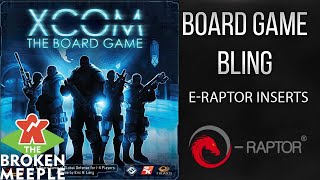



XCOM: The Board Game Deep Dive
What the Community Thinks About XCOM: The Board Game
XCOM: The Board Game stands as one of the earliest and most successful app-assisted board games ever published, earning consistent praise from board gamers who value thematic depth and cooperative gameplay. Reviewers consistently highlight its excellence at translating the X-COM video game experience into a tabletop format, though opinions diverge on whether the game captures the tactical skirmish combat that defines the digital originals. The core consensus is overwhelmingly positive: players find it remarkably thematic, intensely engaging, and genuinely fun despite its reliance on digital integration. Some consider it a favorite among app-driven games, while others rank it as a standout cooperative experience worthy of regular table time.
Core Mechanics That Define XCOM: The Board Game
Real-Time Planning and App Integration
The game's signature mechanic combines a real-time phase with structured resolution periods, creating the illusion of rapid strategic decision-making without requiring simultaneous player actions. An app guides the game flow, tracks the alien threat level, generates random events, and manages the AI deck. This integration feels seamless rather than forced. During the real-time phase, time pressure creates genuine tension as players make rapid decisions about research, base construction, soldier deployment, and crisis management. The app provides continuous feedback, escalates threats, and introduces unexpected complications. This structure brilliantly captures the chaotic energy of fighting an alien invasion while keeping the game mechanically manageable. Reviewers note that the app rarely intrudes awkwardly; instead, it enhances thematic immersion by simulating what actually feels like coordinating a global defense against an extraterrestrial threat.
Role-Based Player Specialization
Each player assumes a distinct leadership role with entirely different responsibilities: the Commander manages finances and crisis response, the Chief Scientist researches technology to equip other players, the Squad Leader deploys soldiers to key missions, and the Central Officer defends the base from direct attacks. This specialization creates meaningful interdependence where each role remains crucial to survival. The Commander must balance budget constraints against escalating needs. The Scientist must prioritize which technologies to develop, knowing that poor research choices cripple the entire team. The Squad Leader must succeed on dangerous missions with limited resources. The Central Officer must defend Earth's infrastructure while coordinating with other players. Every role has moments of genuine pressure and agency, making XCOM feel like a true ensemble cooperative game rather than one player managing multiple puppet factions.
The XCOM: The Board Game Experience
Thematic Immersion and Narrative Tension
The game excels at capturing the strategic-level management experience from the X-COM video games, where players coordinate a global response to extraterrestrial invasion. Rather than individual tactical skirmishes, the board game simulates the continental defense network, research labs, and political pressure that defines the computer game's campaign layer. Continents track panic levels, UFOs orbit cities, soldiers gain experience, and technology gradually improves the team's capabilities. The narrative progression feels organic: early rounds feel desperate as the team scrambles with limited resources, mid-game allows some momentum building, and late-game potentially delivers satisfying victories. The theme permeates every decision, from choosing which continent to focus on defending, to debating whether to pursue alien construction research versus armor upgrades. Reviewers consistently note that the game genuinely feels like managing an elite military organization under impossible circumstances, creating moments of genuine excitement when plans come together and devastating losses when they collapse.
Social Cooperation and Communication
The game requires constant communication between players, particularly during the tense real-time phases where coordination breaks down without clear communication. Unlike alpha-game problems where one player dominates decision-making, XCOM's structure forces interdependence. The Squad Leader cannot complete missions without the Scientist's technology support. The Commander cannot allocate budget without understanding each role's needs. The Central Officer cannot make smart defense decisions without knowing where other players are focusing efforts. This creates natural conversation about tactics, trade-offs, and priorities. Many reviewers highlight that playing with engaged groups produces thrilling moments where perfect coordination delivers victory, while playing with new or distracted players can feel chaotic. The game's best experiences come from groups that embrace communication and collaborative problem-solving, turning what could be a frustrated mess into exciting teamwork.
What Makes XCOM: The Board Game Stand Out
Pioneering App Integration
As one of the first mainstream board games to meaningfully integrate a digital application, XCOM remains a landmark design by Eric M. Lang that demonstrated apps could enhance rather than replace tabletop play. The app handles complexity that would make physical components unwieldy: managing threat levels, tracking multiple alien types, randomizing encounter generation, and maintaining timer pressure during real-time phases. This technical assistance keeps the physical board clean and focused while the app provides exactly the right amount of pressure and randomness. Publishers and designers learned from XCOM's success that app integration works best when it handles logistics and pacing rather than replacing core decision-making.
Replayability and Difficulty Customization
The game offers multiple difficulty settings, random scenario selection, and variable team composition that dramatically change each experience. Players can dial the challenge up or down based on their group's experience level and desired tension. Solo players or experienced groups can tackle harder difficulties that require optimal play, while casual groups or new players can adjust settings to remain challenging but winnable. Each mission drawn from the app presents different objectives, enemy composition, and map layouts. Scenario variation prevents the game from becoming predictable: defending the base plays completely differently from infiltration missions, which differ again from guerrilla warfare scenarios. Reviewers note that the game scales well from first-time play through repeated sessions, remaining fresh because no two campaigns feel identical.
Potential Drawbacks
Heavy Reliance on App Availability
The game's primary weakness is its dependency on digital infrastructure: if the app becomes unavailable on modern devices, the game becomes significantly more difficult to play. Some older Android versions no longer support the app, creating frustration for players who own physical copies but cannot run the required software. Fantasy Flight Games designed the game specifically around app integration, meaning playing without it requires significant house-ruling or player compensation. This raises legitimate questions about long-term preservation: what happens when app developers no longer support older versions or the servers hosting digital content shut down. Reviewers who invested in the game express concern about its longevity compared to purely physical board games.
Rules Complexity and Teaching Burden
New players frequently describe the game's ruleset as convoluted, with numerous exceptions, special abilities, and crisis card interactions creating confusion. Teaching the game requires explaining four distinct player roles, their responsibilities, the real-time flow, resolution mechanics, and how the app integrates with physical play. First-time players often miss subtle interactions like exhausted units not refreshing during certain phases, or how salary costs function differently from research spending. The rule book attempts to clarify these interactions but contains ambiguities that groups resolve differently. Most reviewers recommend playing a practice round before attempting serious campaign play, though even practice rounds sometimes produce rules disputes.
If You Enjoy XCOM: The Board Game
Players who love XCOM's real-time cooperative chaos might explore Kitchen Rush, which delivers similar frantic energy in a restaurant-management setting. Those who appreciate the strategic campaign layer and alien-invasion theme could enjoy Spirit Island, which offers cooperative gameplay against a rising tide of invaders with excellent scaling difficulty. The game's emphasis on role-based specialization resembles Space Hulk: Death Angel, a lean cooperative game where each player brings distinct capabilities. For those wanting similar sci-fi conflict without real-time pressure, Galaxy Defenders and Fire in the Lake offer tactical combat experiences. Players seeking the deep campaign structure might appreciate War of the Ring, which balances empire management against military conquest. Those attracted to XCOM's cooperative tension without app dependency should investigate Pandemic or Darkest Night.
What Reviewers Are Saying
"The app integration is so excellent in terms of giving you honestly a realtime strategy feel to a board game in a way that also integrates incredibly well with the theme of that board game. When the two of us play it is quite the experience, it's not kitchen rush levels of chaos but it is close and it is a very satisfying feeling when you pull it off."
— 3 Minute Board Games
"It's as enjoyable as I remember it. Yes this is a wonderfully thematic cooperative game, it's got a lot of dice rolling and luck in it. You're on the back foot, these aliens are coming down to invade earth and you've got to deal with the UFOs in space around the continents, you've got to go on missions with your soldiers, you've got to defend the base from getting attacked, you've got to stop all the continents from panicking. When you've got four of you working together it's oh it's such a good cool game."
— The Broken Meeple
"This is a real time game and normally in a group you've got four people making four different sets of decisions so you get a little bit of thinking time while the other players are acting. If you're playing this one by yourself dialed up to 11 you play all the characters at the same time and it's really intense solo board gaming just gives you that opportunity to stretch your legs and do some wacky complex things that others might not necessarily be into."
— Meet Me at the Table