













Collection Status
Your Rating
Year Published
2025
Featured Videos
Transcript Analysis
Browse transcript mentions, sentiments, pros/cons, mechanics, topics, quotes, and references.
Total mentions: 17
This page: 17
Sentiment:
pos 12 ·
mix 2 ·
neu 1 ·
neg 0
Showing 1–17 of 17
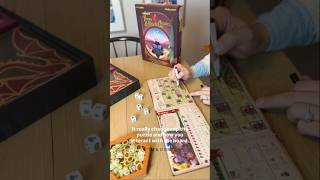
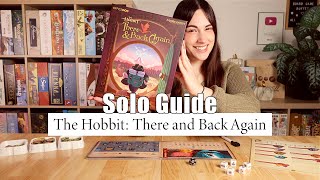
Video SDvHC6kRNfY
Unknown Channel game_review at 0:00 sentiment: positive
video_pk 62392 · mention_pk 154923
Click to watch at 0:00 · YouTube ↗
Overall sentiment (raw)
positive
Pros
- Easy to learn with deeper strategy in route planning
- Strong thematic tie to The Hobbit's journey
- Components evolve with the story creating fresh puzzles across chapters
- Cozy, accessible vibe for fans of Middle-earth
Cons
none
Thematic elements
- journeying and exploration with evolving components across chapters
- Middle-earth, Misty Mountains, Lonely Mountain
- story-driven with modular, chapter-based puzzle variation
Comparison games
none
Mechanics (from transcript analysis)
- Flip/Roll and Write — dice are rolled to determine actions and players record results on their sheets to shape route and outcomes
- Modular board — story progression changes components and token uses across chapters, altering puzzles
- modular component evolution by chapter — story progression changes components and token uses across chapters, altering puzzles
- Narrative choice — narrative obstacles (e.g., trolls) influence route and strategy
- roll-and-write — dice are rolled to determine actions and players record results on their sheets to shape route and outcomes
- Route planning — players plan their path through locations to progress the journey
- thematic obstacles interaction — narrative obstacles (e.g., trolls) influence route and strategy
- treasure/loot collection — players encounter treasures and collect resources along the journey
Video topics + discussion points
No key topics recorded for this video.
Quotes (from this video)
- Every roll feels like a new adventure
- My personal favorite aspect of the story is how the components actually change with the story.
- If you're a token nerd like us or just love cozy adventure games, this is one definitely worth the journey.
References (from this video)
No references stored for this video.
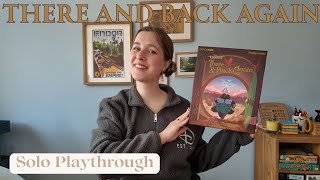
Video u3LRpD7k73Y
playthrough at 0:47
video_pk 61543 · mention_pk 154177
Click to watch at 0:47 · YouTube ↗
Pros
none
Cons
none
Thematic elements
- Array
- Array
- questing party of dwarves and Bilbo; resourceful routing and puzzle-solving tied to hobbit lore; theme is reinforced by feeding dwarves and maintaining safe routes to destinations
- Array
- Bilbo Baggins's Shire home and a journey that threads through Middle-earth environments (Bag End, Trolls, Rivendell) in a micro-campaign style, echoing Tolkien's The Hobbit and its episodic adventure structure.
- Array
- Array
- Array
- positive
Comparison games
none
Mechanics (from transcript analysis)
Mechanics unknown.
Video topics + discussion points
No key topics recorded for this video.
Quotes (from this video)
- The Hobbit there and back again.
- I'm so excited. We're going to be playing The Hobbit there and back again.
- I love this game.
- It's quick. It's easy, but still like puzzly enough that it keeps you thinking.
- Riddles in the Dark, because it uses a whole different concept of polyomino shapes.
- 63 points altogether.
- This is a very quick session; it goes by fast but remains a thoughtful puzzle.
- I really enjoy this solo mode; it stays engaging across multiple plays.
- In Part 2, we have the Troll scene.
References (from this video)
No references stored for this video.
Video 4TMFdREN6vI
general_discussion at 12:34 sentiment: neutral
video_pk 61553 · mention_pk 154185
Click to watch at 12:34 · YouTube ↗
Overall sentiment (raw)
neutral
Pros
none
Cons
none
Thematic elements
- Adventure and exploration
- Fantasy world inspired by The Hobbit
Comparison games
none
Mechanics (from transcript analysis)
Mechanics unknown.
Video topics + discussion points
No key topics recorded for this video.
Quotes (from this video)
- The decisions we have to make are so difficult.
- It is the end of day one of Spiel. Time truly flies by like crazy when you're in the spiel halls.
- This is going to be the look.
- worlds colliding. Amazing.
- I'm not going to stress about getting certain games, not getting certain games.
References (from this video)
No references stored for this video.
Video u3LRpD7k73Y
playthrough at 15:33
video_pk 61543 · mention_pk 154178
Click to watch at 15:33 · YouTube ↗
Pros
none
Cons
none
Thematic elements
- Array
- Array
- troll confrontation and strategic Rivendell pursuit; escalated difficulty with additional map regions and obstacle types
- Array
- Continuation into Part 2 with a Troll encounter, a journey toward Rivendell, and an expanded map area that introduces new spatial challenges and objectives.
- Array
- Array
- Array
- positive
Comparison games
none
Mechanics (from transcript analysis)
Mechanics unknown.
Video topics + discussion points
No key topics recorded for this video.
Quotes (from this video)
- The Hobbit there and back again.
- I'm so excited. We're going to be playing The Hobbit there and back again.
- I love this game.
- It's quick. It's easy, but still like puzzly enough that it keeps you thinking.
- Riddles in the Dark, because it uses a whole different concept of polyomino shapes.
- 63 points altogether.
- This is a very quick session; it goes by fast but remains a thoughtful puzzle.
- I really enjoy this solo mode; it stays engaging across multiple plays.
- In Part 2, we have the Troll scene.
References (from this video)
No references stored for this video.
Video Qh8ATEZ99eU
Unknown Channel rules_teach at 0:09 sentiment: positive
video_pk 30077 · mention_pk 152510
Click to watch at 0:09 · YouTube ↗
Overall sentiment (raw)
positive
Pros
- Eight distinct adventures, each with its own objective and map dynamic, offering substantial variety within a single box
- Path-drawing mechanic with rotation and mirroring increases strategic flexibility without needing a large library of shapes
- Combination of dice drafting, resource management, and magic actions creates layered decision-making and tactical depth
- Region progression and glory-based end-game incentives encourage careful planning and competition for bonuses
- Support for different play modes (including solo/epic) mentioned in the rule book, broadening appeal
Cons
- The video itself does not present explicit criticisms or drawbacks, but the described mechanics are potentially dense for new or casual players
- Multiple interacting rules (region transitions, magic actions, burglar actions, and various scoring components) could present a learning curve and bookkeeping burden
Thematic elements
- Cooperative exploration and puzzle-like path-building within a Tolkien framework. Players manage dwarves, travelers, and resources to feed guests, overcome adversaries, and race for glory points. Thematic tension arises from balancing safe progress with riskier regional moves, mirroring a quest where success depends on collective planning and timely actions.
- A Tolkien-inspired, episodic sequence of adventures that unfolds across a Middle-earth map. The narrative arc places players at Bag End and follows journeys through Rivendell, the Dell, Lonely Mountain, and other regions as eight distinct adventures, each with its own objective, unfold. The setting emphasizes a cooperative quest style with individual scoring nuances tied to dwarves, goblins, trolls, and other iconic Tolkien elements, all within a compact board-game framework designed for family and hobby gamers.
- Episodic, modular adventures that each present a unique objective and map interaction. The rule set is designed to confine each adventure’s flavor while retaining a coherent overarching Tolkien-inspired quest flavor, delivering a narrative rhythm through scoring milestones, race bonuses, and unlocking magic actions.
Comparison games
none
Mechanics (from transcript analysis)
- adventure variability — Each adventure has a distinct objective and may use different components and rules, providing variety in playstyles and strategic emphasis across the eight adventures.
- burglar actions — An alternative action track shown on the lower portion of the scoring sheet allows players to take burglar actions by choosing to ignore the die spaces and instead marking the burglar action spaces, granting different benefits.
- dice drafting — Players draft from a center pool of dice, selecting a die each turn and then rolling the group to re-enter the pool, creating a rotating decision space where timing and sequence matter.
- end game bonuses — Glory points are earned for first-to-achieve objectives and other milestones. Glory markers influence end-game scoring and can be earned multiple times when multiple players complete related tasks in the same turn.
- glory and end-game bonuses — Glory points are earned for first-to-achieve objectives and other milestones. Glory markers influence end-game scoring and can be earned multiple times when multiple players complete related tasks in the same turn.
- magic actions — Collect hats to unlock magic actions. Magic actions must be used on the turn immediately after unlocking and can only be used once, with rules about not splitting hats across multiple actions.
- path drawing on map — Chosen path dice allow players to draw whole path shapes on their map. Shapes may be rotated or mirrored, and must connect to the starting space or an existing drawn path. Shapes cannot be partial; they must be drawn in full.
- region progression and restrictions — Regions show progression boundaries; entering a new region ends any actions in the previous region, creating a strategic constraint on route planning and timing.
- resource and token management — Tokens such as bread, swords, hats (magic), and other markers are earned from dice spaces or map locations and placed near the board or marked on the adventure guide. Resource placement and usage are tied to the progress and unlocking of actions.
- Resource management — Tokens such as bread, swords, hats (magic), and other markers are earned from dice spaces or map locations and placed near the board or marked on the adventure guide. Resource placement and usage are tied to the progress and unlocking of actions.
- space interaction rules — Paths interact with map spaces via two interactions: connecting to a space (touching its edge) and entering a space (placing a path through it). Some spaces are blocked by thick borders and cannot be entered, affecting routing and planning.
Video topics + discussion points
No key topics recorded for this video.
Quotes (from this video)
- There and back again is designed by Rainor Kitia and it's published by office dog who helps sponsor this video.
- Let's go to the table and let's learn how to play.
- On your turn, you'll choose a die from the center and use it in your adventure guide.
- You must rotate or mirror any of the paths as you choose, giving you a bit more flexibility in your drawing.
- Glory. When you see the symbol, it means that the objective here is a race between all players.
- The game ends when one player has connected all 12 dwarves to Bag End.
- Eight whole adventures.
- And for our question of the day, who is your favorite The Lord of the Rings character?
References (from this video)
No references stored for this video.
Video YcLGYd4fE7I
The Board Game Garden rules teach at 0:00 sentiment: positive
video_pk 29676 · mention_pk 148412
Click to watch at 0:00 · YouTube ↗
Overall sentiment (raw)
positive
Pros
- Chapter-specific rule changes add variety and replayability
- Dedicated solo mode with distinct mechanics and progression
- Clear endgame structure with scoring and glory points
Cons
- Later chapters increase complexity with more rules (e.g., bread movement unlimited)
- Solo mode requires learning many chapter-specific rules which may be steep for new players
Thematic elements
- Adventure and journey with resource and path-building mechanics
- Middle-earth, The Hobbit universe; journey through eight chapters with varying endgame conditions
- Chapter-based progression with a storybook progression
Comparison games
none
Mechanics (from transcript analysis)
- chapter variance — eight chapters each with unique objectives and end conditions; solo mode adapts per chapter.
- dice drafting — players draft dice from a pool; in solo, dice are grouped and chosen from three groups.
- Drawing — draw paths on a grid/book pages to gain points and resources.
- end game bonuses — endgame triggered by chapter rules; glory icons grant points at specific rounds; cross-out mechanics in solo.
- endgame condition & glory points — endgame triggered by chapter rules; glory icons grant points at specific rounds; cross-out mechanics in solo.
- path drawing — draw paths on a grid/book pages to gain points and resources.
- Resource management — collect and spend swords, bread, and acorns to progress on paths and quests.
- solo round tracker — 13-round tracker used in some chapters; Bilbo token tracks progress in solo mode.
Video topics + discussion points
No key topics recorded for this video.
Quotes (from this video)
- I believe this is Bilbo. I could be wrong, but I believe it's Bilbo.
- bread movement is unlimited
- you're going to cross out one of the glory icons on the page that you haven't achieved yet.
- beat your own score
- this part is going to be played over the full 13 rounds
References (from this video)
No references stored for this video.
Video 0VS48S7l_1A
Murf Brothers top_10_list at 19:03 sentiment: positive
video_pk 29568 · mention_pk 86849
Click to watch at 19:03 · YouTube ↗
Overall sentiment (raw)
positive
Pros
- Strong IP appeal for Tolkien fans
- Simple mechanics with varied chapter design
Cons
- Some chapters feel repetitive across iterations
Thematic elements
- Chapter-by-chapter roll-and-write with story progression
- The Hobbit narrative arc
Comparison games
none
Mechanics (from transcript analysis)
- Chapter-based rolling and drafting — Roll dice by chapter; draft dice to mark spots and advance the story across the Hobbit chapters.
Video topics + discussion points
No key topics recorded for this video.
Quotes (from this video)
- 'this is a rolling right I was going to say a Rollright version of TI4'
- 'a flicking disc crokinole style is fun'
- 'it's super duper fun'
- 'we are huge Lord of the Rings fans'
- 'Draft & Write Records is my favorite roll right right now'
References (from this video)
No references stored for this video.
Video q7cBeOZO2hw
Unknown Channel general_discussion at 0:00 sentiment: positive
video_pk 28391 · mention_pk 83333
Click to watch at 0:00 · YouTube ↗
Overall sentiment (raw)
positive
Pros
- Faithful feel and thematic resonance for Tolkien fans
- Engaging cooperative pacing with a clear narrative arc
- Strong art direction and atmosphere that evoke Middle-earth
Cons
- Possible complexity for casual players
- Limited repeatability if scenarios are not varied enough
Thematic elements
- Adventure, courage, companionship, and the mythic journey
- Middle-earth journey of Bilbo Baggins, spanning the Shire, mountains, forests, and quest for treasure
- Mythic fantasy adaptation with a focus on lore and Tolkien-inspired storytelling
Comparison games
none
Mechanics (from transcript analysis)
- Cooperative Game — Players work together to overcome obstacles and progress toward shared objectives.
- cooperative_play — Players work together to overcome obstacles and progress toward shared objectives.
- hand management — Players manage action cards or tokens to optimize actions and mitigate risks.
- hand_management — Players manage action cards or tokens to optimize actions and mitigate risks.
- Modular board — Board layout changes between sessions to increase variability and replayability.
- modular_board — Board layout changes between sessions to increase variability and replayability.
- Narrative choice — Narrative choices influence outcomes, branching paths, and quest advancement.
- set collection — Players gather items or artifacts to fulfill quests and gain tactical benefits.
- set_collection — Players gather items or artifacts to fulfill quests and gain tactical benefits.
- story_driven_decisions — Narrative choices influence outcomes, branching paths, and quest advancement.
Video topics + discussion points
No key topics recorded for this video.
Quotes (from this video)
- It was really really good. Really good. I really like it.
- 8.5. It was really really good.
- really like it.
References (from this video)
No references stored for this video.
Video F1gNe7Oaq5Q
The Dice Tower top_10_list at 0:22 sentiment: positive
video_pk 12597 · mention_pk 36754
Click to watch at 0:22 · YouTube ↗
Overall sentiment (raw)
positive
Pros
- IP appeal and thematic flavor
- rolling-right core mechanic with map variability
- replayability via multiple maps
Cons
- first scenario can feel basic or underwhelming
Thematic elements
- IP-driven adventure and exploration in a Tolkien-inspired setting
- Middle-earth/Hobbiton adventure extrapolated into a board game
- thematic, IP-based adventure with rolling-right mechanics
Comparison games
none
Mechanics (from transcript analysis)
- roll-and-write / rolling right — dice rolled to generate actions on a map and fill tracks; players interact with map layouts
- variable map layouts — different maps provide distinct play experiences and pacing
Video topics + discussion points
No key topics recorded for this video.
Quotes (from this video)
- this one's a rolling right got a board
- Acquire is very neat.
- A classic for a reason from 1980.
- the best game I played today was Code Names
- my favorite game from the Saturday today is The Hobbit
- it's a really fun worker placement game with boats and colonies
References (from this video)
No references stored for this video.
Video HPQ3_KIMxAE
The Dice Tower general_discussion at 3:55 sentiment: positive
video_pk 12187 · mention_pk 35626
Click to watch at 3:55 · YouTube ↗
Overall sentiment (raw)
positive
Pros
- charming theme with recognizable Tolkien references
- thematic storytelling through dice and path drafting
Cons
- some humor and jargon in the narration; potential for confusion with the long subtitle list
Thematic elements
- Fantasy quest narrative
- Hobbit-themed adventure with dice and route/story progression
- light, humorous, nostalgic
Comparison games
none
Mechanics (from transcript analysis)
- dice_rolling_and_roll_and_write — roll dice and draft paths/chapters to advance the story
- pathway_drafting — draw paths and complete missions across chapters
Video topics + discussion points
No key topics recorded for this video.
Quotes (from this video)
- Very simple tile laying, very straightforward, but it feels like you're doing all these mini races all at once.
- It's 30 minutes, 40 minutes tops.
- I really enjoy this one. I got to teach it to some people that have never played it before.
- Really nice art, a cool theme where you are kind of getting olives and you're converting them into olive oil and there's a big card market.
- It's a deck building game. Really satisfying, pretty easy to understand.
- This had a really interesting kind of multi-use cards going on in it that was really engaging and honestly I was just charmed by the artwork.
- You draft some dice. You're going to be drawing pathways and completing different little missions.
References (from this video)
No references stored for this video.
Video Ch1oIOb3qxI
Tantrum House Studio D game_review at 0:38 sentiment: positive
video_pk 10202 · mention_pk 30086
Click to watch at 0:38 · YouTube ↗
Overall sentiment (raw)
positive
Pros
- Strong thematic integration with The Hobbit setting and Bilbo’s journey
- Eight standalone chapters provide replayability and avoid campaign lock-in
- High-quality components (thick player books, durable tokens) and dry erase surfaces with reliable markers
- Integrated rulebooks with a clear, consistent layout for each adventure part
- Flexible path-drawing mechanics and mitigation options that add strategic depth
Cons
- End conditions in many chapters create a race-like dynamic that can favor speed over broad exploration
- Drafting is uneven (five dice for four players) and can lead to confusion about who rolls next in some rounds
- Several chapters feel structurally similar, which can reduce novelty over repeated plays
- A few components bow slightly; long-term durability for dry erase elements is uncertain
- Two chapters using D12 feel distinct from the rest, which can disrupt rhythm for some players
Thematic elements
- Fantasy quest, journey, and adventure in Middle-earth with thematic nods to Bilbo's tale
- The Hobbit storyline adapted into standalone adventure maps; Dalish terrains and story milestones tie into Bilbo's journey
- Board-game chapters that echo the structure of chapters in a book, with quotes and Tolkien-inspired moments
Comparison games
- Trick Taker
- Pandemic (co-op)
Mechanics (from transcript analysis)
- black D12 hazard — A black six-sided die (D12) introduces negative effects on certain rounds or maps; effects can be mitigated by spending specific resources.
- Compound Scoring — Entering spaces yields rewards, completing tasks, or creating connections; some spaces reward the first to complete a task with extra points.
- dice drafting — Players draft dice to gain resources or movement options; the draft pool is exhausted each round before the next player rolls.
- mitigation options — Burglar wilds and wizard hats provide flexible choices and mitigation when drafting and executing paths.
- path drawing on adventure pages — When you select a path die, you must draw a connected path on an adventure page starting from an approved start space; overlapping paths are allowed.
- Resource management — Tokens such as bread, swords, wizard hats, and pine cones are collected and spent to enter spaces, activate effects, or modify paths.
- Resource tokens — Tokens such as bread, swords, wizard hats, and pine cones are collected and spent to enter spaces, activate effects, or modify paths.
- space entry and scoring — Entering spaces yields rewards, completing tasks, or creating connections; some spaces reward the first to complete a task with extra points.
- variant dice chapters — Two adventures replace the standard dice with D12-driven mechanics that determine everyone’s options, removing the drafting phase.
Video topics + discussion points
No key topics recorded for this video.
Quotes (from this video)
- One of the things that I really like about this game is that it is not a campaign.
- The theme is integrated well into what you were doing in the different chapters.
- The game is quick.
- There has eight different chapters, eight different games, but you don't have to play them in order.
- I would put this on a medium weight.
References (from this video)
No references stored for this video.
Video nH1wuD606xU
Dice Tower general_discussion at 6:33 sentiment: mixed
video_pk 9159 · mention_pk 26990
Click to watch at 6:33 · YouTube ↗
Overall sentiment (raw)
mixed
Pros
- art style is interesting
- depth through mission-based progression
Cons
- frustrating roll-to-route mechanic at times
- thematic fit is uneven with the Tolkien setting
Thematic elements
- Roll-and-route race to gather resources and deliver dwarves to Bag End
- The Hobbit’s journey; Bilbo’s hole to Bag End
- Story-driven with map-based progression
Comparison games
none
Mechanics (from transcript analysis)
- Resource Scoring — Bread and swords function as scoring resources; bread must be collected to score dwarf routes; swords are collectibles.
- roll-and-route — Roll dice, draft and navigate routes on a board to connect dwarves to Bilbo’s Hobbit hole.
Video topics + discussion points
No key topics recorded for this video.
Quotes (from this video)
- Tolken's works are massive but they're also personal
- it's one of the greatest card games of all time
- art is beautiful
- it's not Lord of the Rings, but it's a Tolkien world
- Journeys of Middle-Earth does something that I like... app-driven combat
References (from this video)
No references stored for this video.
Video Ca0BW6tYNFo
Dice Tower review at 2:58 sentiment: positive
video_pk 5535 · mention_pk 16460
Click to watch at 2:58 · YouTube ↗
Overall sentiment (raw)
positive
Pros
- Eight unique maps
- Each scenario unique and engaging
- Great production
- Solid game
- Something unique in roll-and-write genre
Cons
- With repeated plays, only four maps really shine
- Some maps too basic or lack direction
Thematic elements
- Hobbit
- fantasy
Comparison games
none
Mechanics (from transcript analysis)
Mechanics unknown.
Video topics + discussion points
No key topics recorded for this video.
Quotes (from this video)
- It's really lightning fast
- The expansion is fantastic
- Just tremendous card game
- I quite enjoyed Brink
- Real great production, very solid game
- Absolutely fabulous game
- Eight great characters
- The expansion that we always needed but didn't know we wanted
References (from this video)
No references stored for this video.
Video u_i39uDctaw
Moonshot Games Gen Con Coverage interview at 7:50 sentiment: positive
video_pk 5247 · mention_pk 15524
Click to watch at 7:50 · YouTube ↗
Overall sentiment (raw)
positive
Pros
- gorgeous production and heavy-but-light duality
- story flavor integrated with mechanics
- accessible drafting with depth for seasoned players
Cons
- some rules complexity for a small footprint
- availability limited before Essen release
Thematic elements
- fantasy quest with drafting and pathing
- Hobbit adventure inspired by the Tolkien saga
- story-driven with dice drafting
Comparison games
- Gloomhaven (narrative-driven campaigns)
- Seven Wonders (drafting elements)
Mechanics (from transcript analysis)
- area play with modular board — explore a modular adventure board with various paths and encounters.
- dice drafting — draft from a pool of dice to determine paths, gear, and actions.
- set collection / path drawing — collect items (bread, hats, swords) and draw paths to score.
Video topics + discussion points
No key topics recorded for this video.
Quotes (from this video)
- The flavor is the mechanic.
- Gloom Haven for working people.
- The poops and the hearts: that's Tamagotchi logic in a board game.
- The Hobbit is heavy and light at the same time.
References (from this video)
No references stored for this video.
Video xQkl9IW4udE
Tabletop Turtle general_discussion at 18:33 sentiment: mixed
video_pk 3972 · mention_pk 11586
Click to watch at 18:33 · YouTube ↗
Overall sentiment (raw)
mixed
Pros
- Cozy, couch-play friendly vibe
- Light, accessible roll-and-write with familiar license
Cons
- Not very interesting to players who dislike roll-and-write
- Some find it not highly strategic and a bit repetitive
Thematic elements
- Roll-and-write adventure with story-driven missions
- Fantasy journey along Bilbo's path
- Cozy, story-driven, light thematic tie-ins to Tolkien
Comparison games
- Creature Caravan
Mechanics (from transcript analysis)
- dice_drafting — Roll dice and draft to determine actions or paths
- story_missions — Complete predefined story-driven missions on personal maps
Video topics + discussion points
No key topics recorded for this video.
Quotes (from this video)
- it's one hell of a looker. This is a this is a really good looking game.
- I don't like this game.
- Playtime's important. It's sort of like when you watch those comedies and horror movies from like the 90s and early 2000s, they all clocked in under 90 minutes.
- This game does have a beautiful board but the mechanics aren't as deep as the art.
- If you're not the biggest Euro fan, you're not going to like Forestry.
References (from this video)
No references stored for this video.
Video rIas5FLI8Xw
Dice Tower game_review at 0:00 sentiment: positive
video_pk 748 · mention_pk 2186
Click to watch at 0:00 · YouTube ↗
Overall sentiment (raw)
positive
Pros
- Eight distinct scenarios providing the feel of eight different games in one box
- Strong production, art, and compact componentry
- Progression across maps with meaningful decision points
- Nostalgic Hobbit theme balanced with fresh twists
Cons
- Some scenarios can feel simplistic and may not have lasting replay value for experienced players
- Initial hook may wear off after repeated plays
Thematic elements
- adventure, journey-building through Middle-earth
- Middle-earth journey following The Hobbit's major story points
- scenarios map-based with branching paths
Comparison games
- War of the Ring
Mechanics (from transcript analysis)
- campaign progression with branching choice — Eight chapters with progression choices; some paths become unavailable after crossing thresholds.
- Narrative choice — Eight chapters with progression choices; some paths become unavailable after crossing thresholds.
- Network/route building — Drawing paths on the board to connect dwarves and key locations, with resource-based constraints.
- path/path-building — Drawing paths on the board to connect dwarves and key locations, with resource-based constraints.
- Polyomino — Some scenarios introduce polyomino-style placement and area control elements.
- polyomino placement — Some scenarios introduce polyomino-style placement and area control elements.
- Resource management — Collect and spend bread, swords, wizard hats and other resources to unlock routes and score points.
- roll-and-write dice drafting — Players roll five dice, draft one, and progress around the board, rolling again when no dice remain.
- scenario-based modular rules — Each chapter has its own setup and twist while following a shared core rule set.
- solo/hard mode options — Hard-mode and solo variants per scenario for increased difficulty.
Video topics + discussion points
No key topics recorded for this video.
Quotes (from this video)
- Eight different games in this box which is incredible.
- Production is topnotch in my opinion.
- The Hobbit There and Back Again feels eight different games in one box.
References (from this video)
No references stored for this video.
Video f5yZrc583A8
The Dice Tower top_12_list at 8:20 sentiment: positive
video_pk 774 · mention_pk 2260
Click to watch at 8:20 · YouTube ↗
Overall sentiment (raw)
positive
Pros
- eight chapters provide variety and replayability
- epic finale feel
Cons
- roll-and-write may feel repetitive over time
Thematic elements
- eight chapters representing board-game adventures
- The Hobbit narrative arc
- episodic with escalating twists
Comparison games
- Clank
- Legendary
Mechanics (from transcript analysis)
- chapter-based progression — eight chapters build to a finale with replayable boards.
- polyomino path drawing — draw paths with shapes on a board-book style interface.
- roll-and-write — dice-based path drawing and scoring on chapters.
Video topics + discussion points
No key topics recorded for this video.
Quotes (from this video)
- This is a critical darling, a bestseller of the year, and one that really earns that place with its interesting gameplay and punchy return of investment in time to game play.
- Really love this one. Certainly one to play if you value your time.
- gorgeous world that you are living in for those 30 minutes to an hour.
- This is a really neat game that also plays very quick because you are drafting them into your deck.
- one of the funniest games that you will have your entire family rolling on the ground laughing about.
References (from this video)
No references stored for this video.
Transcript Navigation
Showing 1–17 of 17