







FlipToons Deep Dive
What the Community Thinks About FlipToons
Reviewers consistently respond to FlipToons as a small box with a big personality. Get into games admitted the design was "perfectly serviceable" on a first play but came away loving the cartoon cast and theme, while still warning that the shuffle-and-flip loop can wear thin. Where There's A Wilz, There's a Play, reviewing a copy Thunderworks Games provided, called out the portability and rubber-hose art style as immediate wins, then spent a section of the video walking through two separate luck factors they considered weaknesses. One Stop Co-op Shop, also working from a review copy, described the base game as super fast and fun with lots of combos to discover, but flagged a runaway leader problem and heavy randomness in both the market and the card order.
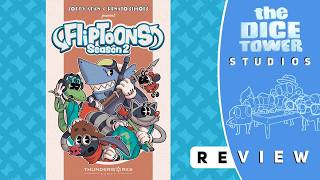
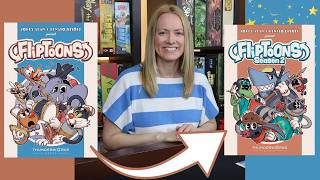
The 2025 season 2 content split opinion along a different axis: whether more of the same is a good thing. Let's Table It, reviewing with a Thunderworks preview copy, framed season 2 as a deliberately familiar follow-up that layers new characters and a new mechanic onto the existing loop rather than reinventing it, and judged that restraint a strength. Tabletop Tolson reached a similarly enthusiastic verdict on season 2, singling out the new "return" keyword and the way the endgame trigger gives every player one last flip before a winner is decided.
Core Mechanics That Define FlipToons
Shuffle, Flip, and Score the Grid
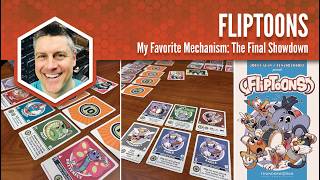
Each round, players shuffle their personal deck and flip six cards face up into a three-by-two grid, then total the fame printed on whatever landed where. Get into games walked through how position matters on specific cards: the dragonfly scores extra for each unique card next to it, the snail scores a flat two points regardless of placement, and the skunk lets the player with the least fame discard a card from their grid for free. Where There's A Wilz, There's a Play described the same flip phase and check-fame phase, noting that because everyone shuffles and flips simultaneously, there is very little downtime between turns.
Hiring and Dismissing from the Market
Fame earned from the flip becomes the currency spent in the market phase, where players can hire new cards into their deck or dismiss weak ones to a personal discard pile, with each action available more than once per turn. Where There's A Wilz, There's a Play highlighted that the market reorders by rank every time it refills, so a powerful card cannot coast to a cheap price just because weaker cards happened to sell first. That reviewer also walked through the two-player variant, where the end cards in the market row are discarded and replaced during cleanup, adding another layer of unpredictability to pricing.
The FlipToons Experience
A Fast, Pocket-Sized Session
Tabletop Tolson pitched the box itself as part of the appeal, noting it can fit anywhere and be taught quickly even to skeptical players at a convention table. One Stop Co-op Shop echoed that the game plays faster than comparable deck builders once a group knows the rules, whether running the solo mode or a full multiplayer session.
The Suspense of the Shuffle
Because every deck gets reshuffled before each flip, reviewers described a recurring moment of tension waiting to see which cards land where. Where There's A Wilz, There's a Play called this the core source of volatility in the game, since players have no control over flip order and strong combinations can simply fail to line up. Grant Lyon framed the same uncertainty more positively, describing an excitement factor each round as cards flip out and either reward or punish the deck a player has built.
What Makes FlipToons Stand Out
A Distinctive Cartoon Art Style
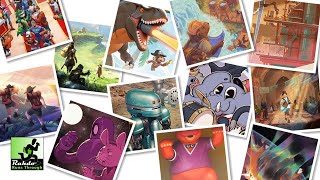
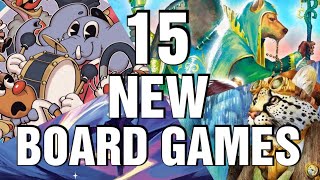
Where There's A Wilz, There's a Play compared the look to old-school rubber hose cartoon animation and praised how much personality each character card carries. Tabletop Tolson called the artwork fantastic and paired that praise with the "lovely deck building design," naming both as reasons the game stuck with them after a single play.
A Season 2 That Adds Without Overcomplicating
Let's Table It praised season 2 for introducing a new cast of characters and a single new mechanism while leaving the core loop untouched, and noted every card from both releases can be shuffled into one combined deck for extra variety. Tabletop Tolson walked through that new mechanic, "return," which tucks a card to the bottom of a deck mid-flip rather than discarding or adding it, and called the resulting strategic wrinkle "really really cool."
Potential Drawbacks
Luck of the Shuffle and the Market
One Stop Co-op Shop compared the randomness to Quacks of Quedlinburg and Challengers, noting a runaway leader issue and acknowledging that solo mode in particular has fewer viable card combinations than multiplayer because of how luck interacts with the draft. Where There's A Wilz, There's a Play pointed to the same lack of control over flip order as a source of frustration, especially when a strong round does not translate into winning the final flip.
Repetition Across Multiple Plays
Get into games was the most direct about this, describing the loop of filling the market, shuffling, and flipping as something that can overstay its welcome after repeated plays with a finite pool of cards. Let's Table It acknowledged a related limit from the other direction, cautioning that players hoping season 2 would transform the experience into something dramatically different will likely be disappointed, since it intentionally keeps the familiar gameplay loop intact.
If You Enjoy FlipToons
Based on its own play of the base game, One Stop Co-op Shop compared FlipToons to Challengers for its round-based card flipping and recruiting, and to Quacks of Quedlinburg for the way success in one round converts directly into purchasing power in the next, while noting FlipToons moves faster than either.
What Reviewers Are Saying
"This is exactly the kind of expansion I like. Instead of changing everything, it takes what already worked and simply gives you more interesting decisions."
— Sarah, Let's Table It
"Aha, really nice trigger. I love that it's not sudden death, and I love that everybody has a chance to play one more time."
— Kimberly, Tabletop Tolson
"That repetition is where I feel like it can overstay its welcome. You are just doing the same thing over and over again, hoping for the best possible outcome of your shuffled deck of cards with very little mitigation to be able to actually control where you go."
— Get into games