









































Duel for Cardia Deep Dive
What the Community Thinks About Duel for Cardia
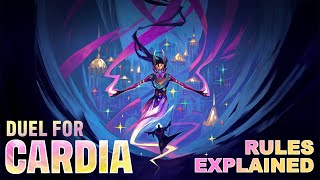
Duel for Cardia has earned widespread praise across the board gaming community for delivering exceptional depth from a deceptively simple design. Reviewers consistently highlight the game's remarkable value proposition, noting that the meager physical footprint belies a rich decision space and countless mind games packed within.
Core Mechanics That Define Duel for Cardia
Simultaneous Card Revelation and the Core Tension
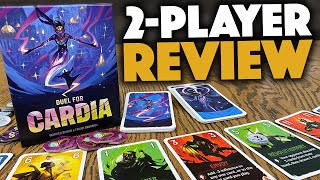
At the heart of Duel for Cardia sits an elegantly brutal choice: each turn, both players simultaneously select a card from their hand without knowing what their opponent will play. When the cards flip, the higher number wins a point toward the five needed for victory. But this is where the tension peaks. The lower card activates its special ability instead. This creates an exquisite push-pull dynamic that defines every single decision. Do you chase the point you desperately need to finish, or do you sacrifice the round to unlock a powerful ability that might set up future dominance?
Persistent Duels and Retroactive Manipulation
What elevates Duel for Cardia beyond a simple number comparison is its clever memory system. Every pair of cards played remains locked in place on the table for the entire game, creating a permanent record of each duel. Later card abilities can reach back and alter the results of previous encounters, changing values or retroactively flipping who won a particular round. This cascading effect transforms the game into something far more strategic and less purely swing-dependent than appearances suggest, rewarding players who think three moves ahead.
The Duel for Cardia Experience
Quick, Snappy Intensity
With fifteen-minute rounds and the ability to chain multiple games together, Duel for Cardia delivers the rush of competitive dueling without demanding hours at the table. The speed never sacrifices decision weight, allowing for best-of-three or best-of-five matches where tension ratchets upward with each game. Reviewers consistently mention wanting to play multiple rounds back-to-back, a testament to how the brevity enhances rather than diminishes the experience.
Mind Games and Opponent Reading
Perhaps the most frequently praised element is the psychological warfare simmering beneath the surface. Since both players hold identical card pools, perfect information becomes available through careful observation and memory. Experienced players build mental models of what cards their opponent likely holds, which they have already used, and what desperation or confidence might signal. The game rewards you for getting inside your opponent's head, for understanding their risk tolerance, for predicting whether they will play safe or ambitious.
What Makes Duel for Cardia Stand Out
Elegant Simplicity Masking Strategic Depth
The ruleset fits on a single page. Pick a card, compare numbers, activate abilities. Yet this clean framework conceals layers of subtle decision-making that unfold across the game. The abilities themselves are universally powerful, scaling elegantly with card numbers, meaning high-value cards offer attractive abilities while low-value plays still represent meaningful strategic choices rather than pure disadvantages. Nothing feels wasted or bloated.
Minimal Luck, Maximum Agency
While card draw introduces some variance about which cards appear in which hand, the game grants players abundant tools to overcome bad luck. The simultaneous play means you cannot be locked out by opponent sequencing, and the retroactive ability system lets you salvage seemingly lost positions. Every decision feels yours to make, every outcome something you had influence over.
Potential Drawbacks
Limited Player Count and Rigid Format
Duel for Cardia is strictly a two-player experience. For groups larger than pairs, it offers nothing, and the simultaneous reveal mechanic simply does not scale. This narrow design space is a clear positioning choice rather than a failing, but it limits accessibility for casual game nights where player counts fluctuate.
Bluffing and Prediction Uncertainty
While the ability to read your opponent is thrilling, newcomers may feel uncertain about how to interpret behavior or may lack the pattern recognition to make confident predictions. The early games against stronger players can feel opaque, and some might perceive the mental game as uninviting rather than engaging. The community tends to cluster around players who embrace this psychological element.
If You Enjoy Duel for Cardia
Players drawn to Duel for Cardia typically love Zenith, another elegant two-player duel game with surprising depth beneath a clean ruleset. For those captivated by the simultaneous selection mechanism, Duel for Middle Earth expands the formula to include multiple scoring tracks. Radlands delivers two-player competition with brutal card effects, though with higher complexity and less forgiving turns. Sky Team captures the mutual mind-reading aspect but redirects it toward cooperative shared victory. For fans of Stonemaier Games seeking a different experience, Wingspan offers the same publisher's commitment to polished, elegant design in a larger format.
What Reviewers Are Saying
"The central concept is we both play a card at the same time and then we flip them up. Whoever plays the higher value gets a sigil which is worth a point, but whoever plays the lower value gets to activate the cool special ability on their card. There's this tension throughout the whole game of like, do I want to win for a point or do I want to get this special ability?"
— Grant Lyon
"It's really neat. It's a very tactical game with some fun combos in it, some really neat recursion effects where you can play a card and then return a previous card to your hand. There's just some fun manipulation with the amount of content you get."
— The Dice Tower
"The core of this game is really clever about the game, which is the idea that every card that you play is part of a duel against another card that your opponent is simultaneously playing. And those cards remain locked in that duel for the rest of the game."
— Stonemaier Games