











Bullseye Deep Dive
What the Community Thinks About Bullseye
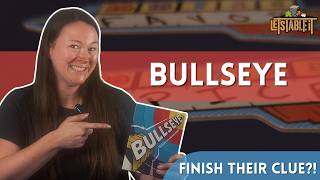
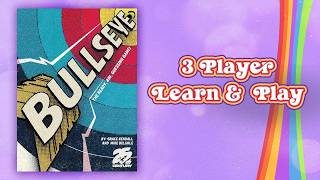
Bullseye lands solidly as a surprise hit among party game enthusiasts, earning enthusiastic praise across YouTube reviewers for its deceptively clever mechanic and accessible play. The consensus centers on the game as a refreshing take on the crowded word-guessing genre, though not every reviewer found it equally compelling for their own tables. The overwhelming majority describe Bullseye as a genuinely clever design that accomplishes something distinctly different from its spiritual cousins like Codenames and Just One. Going Analog's hosts describe it as a current favorite new party game, while Tabletoptiktok calls it one of the coolest party games they have played in a long time. Let's Table It celebrates it as a surprise family favorite, particularly praising its accessibility alongside its novelty. Even when reservations appear, as with Ryan and Bethany Board Game Reviews who found the game a bit lukewarm for their group, the reviewers acknowledge its uniqueness and potential appeal to others who enjoy layered word-guessing mechanics.
Core Mechanics That Define Bullseye
Word Deciphering Through Sequential Letters
The heart of Bullseye lies in a stripped-down word-guessing mechanic where players transmit clues through single letters, building up gradually as the guesser requests more information. One player takes the role of archer and attempts to decode what everyone else is hinting at. The other players each write a single letter of a word they think will lead the archer toward the target, then pass their arrows around the table. In subsequent rounds, each player adds the next letter to whatever arrow they receive, often having no idea what the previous letter giver intended. This mechanic forces players to either intuit what word their teammate started or pivot to something new entirely. As Going Analog explains it, when you hand over an arrow with just one letter, you are "hoping that the other people either know what word you are going for or have another word that fits the category." The result is a constantly shifting, often hilarious collaboration where a clue about "revenge" gets interrupted and transformed into something completely different.
Limited Points Driving Urgency
Scoring in Bullseye creates visible momentum toward victory. If the archer guesses correctly on the first clue letter, the team scores twenty points and achieves a perfect bullseye. Correct guesses on subsequent rounds yield diminishing points: ten, five, and three. Missing entirely awards nothing. This architecture means fewer letters equal a higher score, rewarding both fast thinking and good clue-giving. Teams only count their top five rounds toward the final tally, which softens the sting of any particularly bad guesses and keeps the atmosphere playful rather than punitive. The visible point track and escalating scores create natural tension as teams race toward victory, but the focus remains on the experience of playing rather than the scorecard itself.
The Bullseye Experience
Mind-Reading Chaos
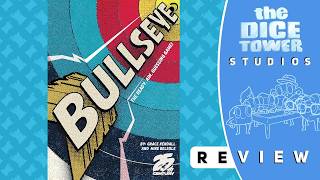
What makes Bullseye special is the theatrical moment when a letter arrives at your arrow and you must guess what your teammate was thinking. Sarah from Let's Table It nails this: "Trying to read your teammates' minds creates hilarious moments that wouldn't exist in a traditional clue game." The game thrives on these moments of beautiful misunderstanding. When someone writes an R intending "revenge of the nerds" but you read it as "read," and the next player interprets it as "red," the table erupts. Tom Vassel from The Dice Tower describes the joy of witnessing someone's baffled reaction: after writing M for milk with a breakfast cereal category, his wife had no idea what the word was. These moments of genuine confusion become the game's comedy gold. Going Analog's Christina explains that "there's a lot of really interesting communication and even when somebody guesses it correctly or after there's a lot of table talk, which is really fun," describing the natural debrief conversations where players discover how far apart they actually were.
Engagement and Shared Ownership
Unlike many party games where some players wait passively for their turn, Bullseye keeps everyone mentally active simultaneously. Ryan and Bethany Board Game Reviews emphasize that "everybody's really engaged the whole game" because you are constantly writing letters, thinking about what your neighbors might be thinking, and attempting to infer their clues. The guesser carries the spotlight, but every other player bears responsibility for clarity and clever thinking. The game's cooperative nature means the group shares both success and failure, with no individual winner to blame. This shared ownership drives the collaborative spirit and makes each person feel like they contributed to the outcome.
What Makes Bullseye Stand Out
The One-Letter Clue Twist
The design innovation that separates Bullseye from countless other guessing games is the constraint of a single letter at a time. Sarah from Let's Table It observes that "this simple twist completely changes the experience." The one-letter constraint forces elegance on the clue-giving process. It prevents someone from being too literal, too long-winded, or too helpful all at once. Going Analog's hosts describe the moment they understood the mechanic: "when I heard it, I was like 'Oo, that's really clever,' and every time I've taught this game, I get the same reaction where people like soon as I explain that part, like you only write one letter, but then you give your board away and everyone's like 'Ooh,' because it's just such a neat, clever idea." This one-letter-then-pass structure creates a rapid-fire exchange that distinguishes Bullseye from slower-paced word games where clues are debated at length.
Category Variety and Accessibility
The game ships with a expansive deck of category cards covering everything from fast food restaurants to comic book villains to country singers. Sarah from Let's Table It explains why this breadth matters: "It's incredibly easy to scale the difficulty depending on who's playing" because the table gets to choose the specific word within a category, not guess it outright. This design choice puts agency in players' hands rather than forcing them into unfamiliar territory. Ryan and Bethany Board Game Reviews praise the "excellent categories that lots of a wide ranges of people and age groups...are going to be able to work with," and note that the ability to choose between two drawn categories "helps give you a little bit of focus" while ensuring no single player feels lost. The categories span obscure and mainstream, difficult and easy, giving every player table something to hook their clues to.
Potential Drawbacks
Confusion and Frustration in Later Rounds
The passing mechanic that creates the game's best moments can also generate frustration. When an archer receives an arrow showing five accumulated letters with no clear pattern, confusion can set in. Sarah from Let's Table It notes that "sometimes you'll inherit an arrow with two or three letters and have absolutely no idea what the original clue giver was thinking." The solution is group temperament: "If your group laughs those moments off, it's fantastic. If your group gets frustrated when clues don't make sense, this might not land quite as well." Tom Vassel from The Dice Tower acknowledges that some categories can be quite small or obscure, which limits the pool of reasonable guesses and may compound frustration. A group that prefers precision and predictability in party games might find the chaos less appealing.
Game Length and Pacing
While Bullseye advertises twenty-five minutes of play, some reviewers found their actual sessions stretched longer, particularly when arrows grew crowded with letters. Ryan and Bethany Board Game Reviews observed that "it tended to go a little longer than what I would have wanted" and felt the game works best when kept snappy. A table of slow thinkers or players who deliberate heavily over letter choices can bog down rounds. Additionally, waiting for the archer to make their guess creates a moment of passive time for everyone else, though the cooperative nature softens this pause relative to competitive formats.
If You Enjoy Bullseye
Reviewers place Bullseye squarely among cooperative word and clue games. Let's Table It recommends it to fans of Codenames, Just One and So Clover, all of which ask a team to pass meaning through tightly constrained clues. One reviewer traces the idea back to Talking Tango, an older party game where a clue is built one word at a time; Bullseye does the same thing one letter at a time. Groups that enjoy the laughter of a clue going sideways will find the same energy in each of these.
What Reviewers Are Saying
"Most word games ask you to think of the perfect clue. Bullseye asks you to finish someone else's, and that's where the chaos begins."
— Let's Table It
"So, this is one of the coolest party games I have played in a long time, and I really like it. They suggest if you're playing with three to five players, everyone's the guesser twice. With six to eight players, everyone's the guesser once."
— Jamie, Tabletoptiktok
"There's a lot of really interesting communication and even when somebody guesses it correctly or after there's a lot of table talk, which is really fun."
— Going Analog