


Misfit Heroes Deep Dive
What the Community Thinks About Misfit Heroes
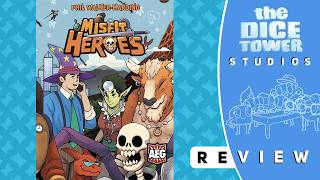
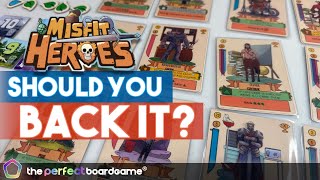
Misfit Heroes stands out in the card game landscape as a tableau builder that has captured genuine enthusiasm from reviewers. The consensus is that the game excels at delivering lighthearted, accessible fun through a unique combination of customizable card components and satisfying mechanical depth. Phil Walker Harding's design accomplishes something unusual: it appeals to both players seeking strategic synergies and those who simply want to enjoy the absurdist humor embedded in every card pairing. Reviewers consistently praise the game's replayability and charm, though some note that the experience leans toward solo puzzle-solving rather than interactive confrontation. The game divides most naturally on player count; two-player games flow smoothly with engaging turns, while four-player experiences require patience as the grid fills gradually.
Core Mechanics That Define Misfit Heroes
Tableau Building
At its heart, Misfit Heroes is a tableau building game where players construct a personal 4x4 grid of cards over the course of a game. Each player begins in the bottom left corner and expands orthogonally outward, creating a custom engine of heroes and abilities. Reviewers emphasize that the tableau is where the core satisfaction lies: you are assembling a personal collection of characters and watching them interact through a system of recruitment and activation boxes. Cards feature different types of abilities marked by distinct symbols. A heart symbol triggers immediately when you play the card; a green triangle requires you to meet a specific condition first; a gray star demands you pay a cost to activate; and a trophy symbol grants points only at game's end. This layered system means every card placement matters, and reviewers note that the experience revolves around discovering which cards combo together to generate powerful chains of effects. The objective is straightforward: score the most points through your tableau, region tiles, and leftover resources.
Influence Points and Resource Management
The game employs a secondary economy built on influence tokens that operate independently from coins. Three types of influence tokens, mountains, water, and leaves, represent your political and social weight in the land of Absurdia. Each turn you can choose to recruit a card, draw more cards, claim a single influence token, or gain ten coins. The genius of the influence system, as reviewers point out, is that it creates a genuine strategic tension: influence tokens can be converted into region tiles that score substantial points. By spending six tokens of the same type, you claim the highest-valued region of that type; alternatively, two tokens of each type claim a purple city region. Players racing to claim these tiles before they diminish in value creates one of the few moments of direct competition in an otherwise multiplayer-solitaire experience. Reviewers note that the region tiles often dominate the final score, making influence generation and token acquisition a driving force for deckbuilding decisions.
The Misfit Heroes Experience
Lighthearted and Absurdly Comic
The game radiates charm through its wildly improbable character combinations. Reviewers repeatedly highlight the joy of discovering absurd pairings: a monster-accountant, a cosmic wedding planner, a dark real estate agent, a tentacled swindler. The theme of Absurdia, born when Earth collided with a fantastical realm, gives every card pairing permission to be ridiculous. This creates a breezy, fun-first atmosphere where losing feels fine and the mood stays upbeat. One reviewer noted they immediately wanted to help their children construct the deck simply because the process was so entertaining. The visual design supports this tone perfectly: the card art is colorful and vibrant, with saturated hues that pop on the table. Players speak of having belly laughs while flipping through the deck and discovering new combinations, especially since the overlay system means no two games contain identical cards.
Satisfying Chain Reactions and Puzzle Solving
Beyond the humor lies a meditative puzzle: how do I arrange these heroes to create synergy? Reviewers describe a rhythm similar to Dominion, where most turns are quick and straightforward but occasional turns explode into exciting cascades. When cards trigger other cards, and those activations enable further effects, the satisfaction is genuine. A player might play a single card that, through its recruitment and activation boxes, generates coins, draws cards, gives influence tokens to opponents, and triggers two other cards in their tableau. Reviewers appreciate that the game rewards studying your hand and tableau to find these combos. However, they note that this is fundamentally a solo puzzle: you are optimizing your own tableau with minimal direct interference from opponents. The game does not feature steal mechanics or widespread disruption, which keeps the tone light but reduces interactive tension.
What Makes Misfit Heroes Stand Out
The Customization System and Infinite Variety
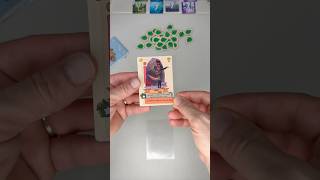
The heart of Misfit Heroes is its overlay system. The game includes 82 attribute cards and 82 character cards, each housed in transparent sleeves, creating over 6,700 possible combinations. Reviewers marvel at this staggering scope: one noted that if every person on Earth bought a copy and played it daily with a reshuffled deck, it would take billions of years before any two people played an identical configuration. More practically, the rules suggest shuffling four cards per player and reassigning the transparent character overlays between games, ensuring variety without the tedium of dismantling and rebuilding every card. Players speak of this system being genuinely fun to interact with. One reviewer watched children assemble the deck for the first time and noted their pure delight at the process. The physical act of sleeving and shuffling the overlays becomes part of the pre-game ritual, and the endless combinations mean the game feels fresh across many plays.
Excellent Components and Approachable Design
The production quality resonates consistently across reviews. The artwork is described as fantastic and energetic, with a cartoony style that embraces the theme's inherent silliness. The included sleeves for card customization demonstrate thoughtful manufacturing. Beyond physical components, the rules are easy to learn. A single teach can bring new players into their first game, and the turn structure is straightforward: take one of four actions, optionally claim a region tile if you have the influence, then discard down to hand and resource limits. The game scales well at two players, where turns flow briskly and decision-making feels sharp. Reviewers praise the overall accessibility, noting that the game presents as inviting to casual players while offering depth for those seeking optimization puzzles.
Potential Drawbacks
Limited Player Interaction and Multiplayer Solitaire Feeling
Several reviewers note that Misfit Heroes is predominantly a game about optimizing your own tableau with minimal direct player interference. There are no steal mechanics, and most interaction comes through competition for region tiles or cards that require giving resources to opponents. The game is not adversarial; rather, you are solving your own puzzle while others solve theirs. For players who value direct confrontation and constant decision-making around opponents' actions, this can feel isolating. In higher player counts, the gap between turns grows, potentially dampening engagement. The lack of meaningful player-to-player interaction also means that subtle social dynamics play little role, making Misfit Heroes less about reading opponents and more about card mathematics.
Card Dependency and the Obvious Path to Victory
Because the deck is randomized and you are drawing from a hand you do not control, there is an element of card-dependency that some reviewers find limiting. If you draw weak cards, your options narrow significantly; the best strategy often becomes simply drawing more cards until you find something useful. Relatedly, reviewers note that region tiles, which award 12, 11, 10, 9 points and downward, are so numerically dominant that the optimal strategy revolves around generating influence to claim them rather than carefully building card synergies for endgame bonuses. One reviewer described the game as falling into a "chase the tokens" mentality, where the flashy combo aspect becomes secondary to the raw math of tile acquisition. For players expecting card effects to matter as much as resource generation, this can feel like a missed opportunity to make every card type feel valuable.
If You Enjoy Misfit Heroes
Players who love tableau building and card synergies will find similar satisfaction in Dominion, which shares Misfit Heroes's quick turns and occasional explosive card sequences. For those drawn to the competitive region-claiming aspect, Or offers a different flavor of influence racing. Those seeking more elaborate thematic synergies might explore Castle Combo or Far Away, which reviewers mention as games where card effects feel more intrinsically linked to scoring and theme. The customization angle also recalls Covenant, which similarly experiments with component variability and player agency in card assembly.
What Reviewers Are Saying
"We love combo-riffic games and Misfit Heroes provides a lot of opportunities for that. Cards that activate other cards or allow you to take extra actions, so much fun. The art is really fun on the cards and it's amusing to just flip through the cards and find funny and interesting combinations."
— Let's Table It
"The setup for this game is awesome. The gameplay reminds me a bit like Dominion. Often times you're going to have very quick turns where you know exactly what you want to do, and then sometimes you're going to have a really cool exciting turn where things chain together and you get to do something really big. But most of the time it's a pretty fast-paced game and it's pretty fun to play."
— Board Game Dad
"It does several things that are very fun and I like seeing the combinations of the card effects. I like the general flow of when I'm taking my turns in a two-player game. There's just a few too many obvious issues that I can't really go higher than that. The obvious path to victory, I think, kind of sours me on it."
— The Dice Tower