








Storm Raiders Deep Dive
What the Community Thinks About Storm Raiders
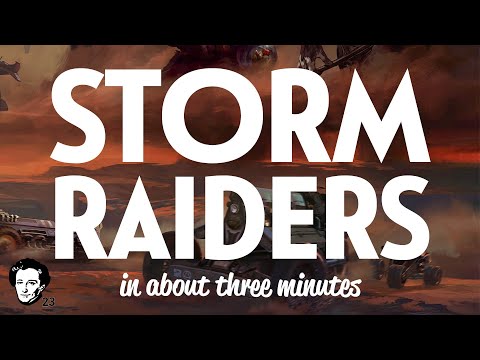
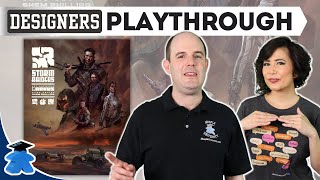
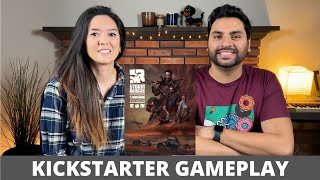
Storm Raiders arrives with remarkable consensus: reviewers recognize a tightly crafted design that wraps mechanical depth inside a visually arresting post-apocalyptic wrapper. The game's central conceit, salvaging resources while navigating an unpredictable storm, resonates as genuinely novel. Three Minute Board Games praises it as a tight action-selection engine, while Meeple University celebrates the complex interplay between its systems. Let's Table It emphasizes the production quality and unique theme, and The Dice Tower singles out Storm Raiders for bringing fresh energy to the post-apocalyptic space. Reviewers disagree primarily on tone: some find the frenetic decision-making exhausting, while others relish the puzzle it presents. Publisher Arcus Games produces a notably different visual identity than designer Shem Phillips' previous work with Garfield Games, which divides opinion on presentation but not substance.
Core Mechanics That Define Storm Raiders
Dice Drafting
Each round, players roll a shared pool of dice and take turns claiming individual dice, one per action. The number on a die directly fuels how far a vehicle can travel on the map, but its color and value also unlock special abilities unique to each player. The mechanic transforms a simple randomizer into a spatial-strategic contest: claiming high dice grants movement range, but forces commitment to specific vehicles and damage outcomes. Shem Phillips layers decision complexity through cascading consequences: claiming a die with medals attached, denying it to opponents, planning ahead multiple turns, and managing the damage that certain die values inflict on your vehicles. The draft shrinks visibly each turn, so later players inherit both fewer choices and more information about the board's evolution. It is a narrow decision space squeezed tight.
Pick-Up and Deliver with Contracts
The core gameplay loop pits players against a multi-system resource puzzle. Move to a wreck site to gather goods, then navigate to a stormhold and spend those goods to complete a contract for points and rewards. Contracts are the engine of score-building, but the board state shifts constantly as the storm moves unpredictably through locations, blocking access and scattering fresh resources. Each contract exists only temporarily: ignore it for too long and it vanishes, taking its reward with it. Reviewers emphasize the planning overhead this creates. Meeple University's teaching and playthrough highlight how deeply interlocked the vehicle abilities, crew powers, and mod unlocks become: a single action might open or foreclose options several turns distant. The game is not about moving pieces around; it is about parsing a continuous stream of trade-off decisions where no choice is cost-free.
The Storm Raiders Experience
Chaotic Precision
Storm Raiders feels urgent. The storm's movement is determined by the final die of each round, introducing genuine unpredictability that ripples backward through earlier decisions. A player might plan a three-turn sequence to reach a contract, only to watch the storm block the path on turn two. Board state transforms between rounds: new contracts appear, resources scatter, and locations change danger profile. Three Minute Board Games points out this rapid volatility is both the game's draw and its friction: the speed at which plans become obsolete forces a moment-to-moment problem-solving mindset rather than long-term strategy. The experience is less about executing a grand design and more about staying responsive within a system that rewards reading immediate advantage.
Interlocking Systems
Each mechanism (the vehicles, the damage tracking, the dials that multiply final score, the crew abilities) exists in conversation with the others. Meeple University's playthrough repeatedly surfaces moments where a single action ripples across multiple systems: placing a die damages one vehicle but improves a scoring dial, triggering a crew ability and enabling a future turn's movement. The game demands lateral thinking. Reviewers describe it as "complex and potentially heavy," requiring "careful planning" and comfort with "tracking multiple interacting dials and dice." The puzzle is not presented as a sequence of isolated challenges but as a dense network where adding pieces in one spot inevitably constrains or enables pieces elsewhere. Mastery means internalizing how those connections work.
What Makes Storm Raiders Stand Out
Stunning Visual Design and Table Presence
Three Minute Board Games opens with unqualified praise: "the best thing about this game is the art Direction and how it looks, Simply Stunning." The aesthetic treatment is not decoration bolted onto mechanics: it serves the theme. Artwork by Paul Tobin, a senior concept artist whose film credits include The Lord of the Rings, Ghost in the Shell and Narnia, and Dane's 3D-rendered vehicles and characters create an immersive Atlantean storm-ravaged world. Let's Table It emphasizes the deluxe edition's custom storage trays as a practical victory: a game that lands on the table easily gets played more often. The physical presence of the board, the moving storm miniature, the card-driven contracts, and the resource tokens create genuine atmosphere. The game makes you want to clear space for it.
An Innovative Approach to Familiar Mechanisms
Storm Raiders does not invent new mechanics; it recombines dice drafting, pick-up and deliver, resource management, and set collection into a whole that reviewers consistently describe as "clever." What makes it stand out is how tightly the mechanisms constrain each other. You have exactly twelve actions across six rounds. Vehicles take damage that fills their storage. Damage limits future vehicle use. Completing contracts requires vehicles and resources. Vehicles need rest turns to clear damage and regain capacity. The storm moves unpredictably, scattering resources and forcing repositioning. The Dice Tower identifies the thematic brilliance: the post-apocalyptic storm-chasing setting is not a skin applied to an abstract game. The storm's movement, the resource scarcity, the wreck sites, and the contracts all flow from the setting's logic. Shem Phillips has built a game where theme and system are inseparable.
Potential Drawbacks
Rest Actions and Balance Tension
Three Minute Board Games raises a specific concern: "rest actions in this game can feel very strong and that can be jarring." On a rest turn, a player flips one crew card, removes damage, discards high dice, and gains a reward, all in a single turn's economy. Because the game offers only twelve actions total, rest turns represent a significant tempo commitment. They solve problems (damage removal, clearing dice) that seem to arise from other actions, creating a dynamic where optimal play sometimes means taking a dedicated repair turn rather than pushing forward on your strategy. Reviewers view this as balance tension rather than outright brokenness, but note it as a friction point where the metagame around resting can feel unintuitive.
Rapid Board State Changes and Planning Constraints
The flip side of the storm's dynamism is planning paralysis. Three Minute Board Games notes that "the board state changes rapidly between turns, complicating planning." With only twelve actions, each one must earn its weight, yet the storm's arrival and the appearance of new contracts mean some actions become suboptimal the moment they are taken. A player might claim a die to move toward a contract, only to have the storm move the contract away or change the optimal path. Reviewers call this a feature, since it reinforces the chaotic, reactive feel of scavenging in an apocalyptic setting, but acknowledge it can feel punishing for players who prefer strategic foresight. The game asks players to embrace improvisation within tight constraints, which is not everyone's preference.
If You Enjoy Storm Raiders
Reviewers ground their recommendations in direct mechanical comparison. Forbidden Desert shares the storm-and-survival core, though Storm Raiders layers more mechanical complexity. Wasteland Express Delivery Service offers similar pick-up and deliver routing, though without the storm's dynamic chaos. Cold Express and Steampunk Rally echo the vehicle management and damage-mitigation puzzle, demanding players maintain their transportation systems while pursuing objectives. Troyes offers focused dice-drafting decision-making at medium weight. Mad Max</strong-style racing games share the post-apocalyptic aesthetic, though Storm Raiders trades direct conflict for environmental hazard and resource scarcity. For players seeking Shem Phillips' signature mechanical density, this is notably lighter (2.5 BGG weight) than his Garfield Games releases like the Kingdom series, making it an accessible entry point to his design philosophy.
What Reviewers Are Saying
"Storm Raiders is a fantastic looking pickup and delivery game with a fun and engaging central premise. The storm drops loads of resources but it's also very dangerous to get close to. With six rounds and two actions you only get twelve opportunities to do something in the game and you have to make them count."
— 3 Minute Board Games
"Players are crews salvaging the storm sites of Atlantis in search of prestige drafting dice as they traverse the board, collecting resources and aiming to complete contracts and earn medals and crew, all while avoiding the hazards of the storm."
— Meeple University
"Storm Raiders takes this post-apocalyptic kind of Mad Max theme that we know and throw in stormchasing as well. So you are going to be a stormchaser who is going through this big storm that is dropping all these goodies and materials that you're trying to stay just outside the wake and not get caught in the storm, pick them all up for this kind of contract fulfillment point scoring good time. I think that's really a unique take on post-apocalyptic, again Mad Max kind of feel, that's not just big cars racing each other."
— The Dice Tower