


Castle Nightingale Deep Dive
What the Community Thinks About Castle Nightingale
Castle Nightingale arrives as a refined two-player experience that has earned strong praise from the board game reviewing community. The Dice Tower's Z Garcia calls it a clear winner with an 8 out of 10 rating, emphasizing its elegant design and rich decision-making on both sides. Brains on Games' Dr. Brian McDonald ranks it as their second-favorite hidden movement game of all time, noting that it achieves something special in a crowded genre. Game Boy Geek (from the Unknown Channel) describes it as a fascinating blend of programming and bluffing that improves markedly once players internalize its ~20 different ability symbols. And Chaz Marler of Game Night Picks selects it as their "bestest bet" for newcomers seeking strategic depth. Reviewers consistently emphasize that Castle Nightingale rewards familiarity. The game has a learning curve, but those willing to invest in understanding its mechanics discover a richly asymmetric duel that continues to surprise and delight across multiple plays.
Core Mechanics That Define Castle Nightingale
Programming
At the heart of Castle Nightingale lies simultaneous action programming. Each round, both players select from a hand of three cards and place them face down, keeping their intentions hidden from their opponent. The samurai also secretly selects which floor color will trigger the nightingale alarm that round. Only after both players commit do cards reveal and resolve simultaneously. The ninja moves first (drawing an action, then advancing one square at a time), followed by the samurai (moving by color zones). Because players cannot react once the sequence begins, every card choice becomes an exercise in prediction and bluff. The samurai must guess where the ninja will move; the ninja must anticipate which floor the samurai suspects them on. Game Boy Geek describes this as the "Princess Bride" game: you think they'll go here, so they'll do something else, but they know you think that, so they'll actually do the first thing anyway. This cascading logic of nested assumptions is what makes each turn electric.
Hidden Movement with Conditional Visibility
Castle Nightingale's hidden movement system operates with unusual elegance. When the ninja moves, they place up to five footprint tokens on the board one square at a time. If any footprint lands on a floor color that matches the samurai's secretly selected nightingale alarm, the ninja stops in place and becomes visible. If no alarm triggers, the footprints vanish and the ninja's location remains hidden (though the samurai now knows one of five possible spawn locations for next turn). This creates the game's signature tension: the ninja must balance aggression with caution, knowing the samurai is making informed guesses based on relic locations and previous movement patterns. The samurai, meanwhile, gains one revealed tile after the first round, creating a permanent safe color that both players know about. Z Garcia notes that this asymmetry in information and mechanics creates a stark, interesting difference between the two sides that keeps both players engaged throughout.
The Castle Nightingale Experience
Tense Strategic Duel of Deduction and Bluffing
Every turn in Castle Nightingale crackles with tension. Dr. Brian McDonald describes it as "a tense two-player duel where there's hidden movement and there's deduction and bluffing, and some strategic planning that's required." The samurai must infer where the ninja is heading based on which vases they've already stolen, which secret passages remain open, and where the ninja spawned last round. The ninja must anticipate not just where the samurai will guard, but whether the samurai is setting a trap or merely blocking an exit. Game Boy Geek notes that the game's intrigue lies in never knowing exactly how many relics the opponent has collected until the end, creating an extended sense of suspense. You can grab what you think is a treasure vase only to reveal an empty one on your turn, denying yourself points. Similarly, the samurai might rush to block a secret passage only to discover the ninja took an entirely different route. This constant guessing game, where both players are actively trying to outwit each other through simultaneous action selection, gives Castle Nightingale its defining emotional signature.
Asymmetric Thematic Immersion of Ninja Versus Samurai
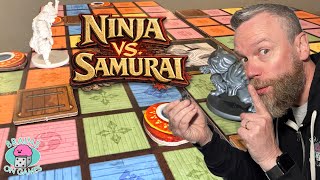
The ninja-versus-samurai theme permeates every mechanic, creating a richly asymmetric experience that feels thematically earned. The ninjas are represented by sleek cat figurines; the samurai, by a vigilant red panda miniature. This visual identity reinforces the different roles: stealthy predators against a watchful guardian. Dr. Brian McDonald emphasizes the "great table presence" and notes that even though the cute animals might suggest a children's game, adults engage deeply with the thematic premise. The mechanics reflect the theme perfectly: the ninja moves one square at a time, creeping through the castle; the samurai sweeps by color zones, able to cover ground quickly but constrained to broader movements. The nightingale floor concept, where certain wood planks squeak loudly, grounds the game in the historical detail of Japanese castles designed with security in mind. Z Garcia notes that "the tension in the game is palpable" precisely because the asymmetry is so stark. Both players are fighting toward the same objective (controlling the castle's treasures) but with completely different tools and constraints.
What Makes Castle Nightingale Stand Out
Asymmetric Design That Remains Perfectly Balanced
Castle Nightingale's greatest achievement is how thoroughly it commits to asymmetry without sacrificing balance. The ninja and samurai operate under entirely different rules: different card decks, different movement systems, different win conditions (one steals relics; one captures bodies). Yet reviewers consistently report that both sides remain viable and engaging. Dr. Brian McDonald notes that early in gameplay, the ninja seemed to have an easy time evading, but as the samurai closed off secret passages, the pressure intensified until the final round came down to whether the ninja could grab one last relic before losing a third operative. Z Garcia emphasizes that "both sides are filled with rich and engaging choices" and "both sides know how to put pressure on the other." This balance through asymmetry is rare and valuable, making Castle Nightingale rewarding regardless of which role you take.
Exceptional Production Quality and Strategic Depth in a 30-Minute Package
Z Garcia praises Castle Nightingale's production across the board: "The cardboard is very good, but then the miniatures are wonderful. The paw print tokens being that clear acrylic look really good on the table. The cards have great iconography." The game arrives with cheat sheets for each player, clearly explaining the two dozen or so card and tile abilities without requiring constant rulebook consultation. Game Boy Geek notes that while the learning curve is real, the dual-sided board tiles keep every game feeling fresh, with asymmetric layouts adding replay value. Dr. Brian McDonald highlights how the game delivers genuine strategic depth without overstaying its welcome at 20 to 30 minutes. This efficiency is crucial: the tension remains high throughout because the game ends before either player tires of the mental chess match.
Potential Drawbacks
Steep Initial Learning Curve Requiring Multiple Plays
Game Boy Geek identifies the game's primary obstacle: you need to internalize roughly twenty different ability icons and tiles before you can play with full information. On the first couple of plays, surprises abound ("Oh, I didn't know you could go through the garden with the keys!"), and some defeats will sting because you didn't know your opponent had a powerful option available. This is not a game where an experienced player can teach a newcomer and have both enjoy the first play equally. Z Garcia acknowledges that the game is "not the most intuitive of games" and notes that the asymmetric mechanics have a "strange cadence" that takes time to settle into. Game Boy Geek emphasizes that the game gets significantly better with more plays, suggesting that Castle Nightingale is best suited for committed player groups willing to invest in familiarity.
Two-Player Only Limits Group Play Options
Castle Nightingale is exclusively a two-player game with no solo variant and no multiplayer scaling. Dr. Brian McDonald notes this as the downside: "The downside here is that it is a two-player game. It's two-player only. You can't play solo, and you can't play it multiplayer." For players with larger gaming groups or those seeking variety in player counts, this is a significant limitation. The asymmetric design is fundamental to the game's appeal, and attempts to adapt it for three or more players would likely dilute what makes it special. This constraint means Castle Nightingale occupies a specific niche in a player's collection.
If You Enjoy Castle Nightingale
Dr. Brian McDonald recommends Run, Mr. Jack Pocket as the most similar experience, though Dr. Brian McDonald notes that Castle Nightingale's asymmetry and bluffing mechanics place it as their second-favorite hidden movement game (with Run holding the top spot). Game Boy Geek also compares it favorably to Mr. Jack Pocket, emphasizing the shared sense of intrigue and the hidden information about which items or vases are truly valuable. Both Mr. Jack and Castle Nightingale reward careful deduction and penalize overcommitment. If you crave other asymmetric two-player duels with strong thematic flavor and hidden information, these recommendations from working reviewers offer a clear path forward.
What Reviewers Are Saying
"The tension in the game is palpable. The difference between the two sides is stark and interesting. Both sides are filled with rich and engaging choices. Both sides know how to put pressure on the other. Both have a fantastic array of tools at their disposal."
— The Dice Tower
"This is a tense two-player duel where there's hidden movement and there's deduction and bluffing, and some strategic planning that's required. It really is a strategic duel where that planning is very important and deducing what the other player is going to do is very important, too."
— Brains on Games
"It's a lot of it is about guessing what your opponent's going to do and bluffing, double bluffing. That's the main thing about this game, programming and bluffing, more than hidden movement, really. The head games in this game is great. Again, like, hey, they think I'll do this, so I'll do something else. Or they'll think I'll do this, so they think I'm going to do something else, so I'll actually go right down the middle and do the thing that they thought I was going to do in the first place."
— Game Boy Geek