
Game Info
Players
2
Age
8+
Playtime
20 min
Collection
Your Tier
Loading…
Mechanic profile
Not enough video data yet
Vibe profile
Not enough video data yet
Description
No description available.
Featured Videos


Ask a Rules Question
All mentions
Browse transcript mentions, sentiments, pros/cons, mechanics, topics, quotes, and references.
Total mentions: 6
This page: 6
Sentiment:
pos 4 ·
mix 1 ·
neu 1 ·
neg 0
Showing 1–6 of 6
Video xz5KZ7PigUk
Watch It Played Top 10 List at 6:21 sentiment: positive
video_pk 85921 · mention_pk 221162

Click to watch at 6:21 · YouTube ↗
Overall sentiment (raw)
positive
Pros
- Best game box cover
- Drawn in by the theme and art
Cons
- Not much information available
- From a first-time designer
Thematic elements
- Exploring a cave and competing for precious gemstones.
- Cave system
Comparison games
none
Mechanics (from transcript analysis)
- Push Your Luck — The deeper players descend, the more valuable the treasures, implying a risk-reward element.
- Set Collection — Players locate and collect gemstones.
Video topics + discussion points
No key topics recorded for this video.
Quotes (from this video)
- These are games on our radar.
- I really love this game. I think this might become a grail game situation for me because I think it's out of print and I really want my own copy and I don't know how to get it.
- Is this the greatest board game box cover of all time? It's got to be close.
- I like it better than a Zul.
- I don't know what a card dancing game is, but I'm very excited to find out.
- The decisions feel meaningful and interesting and I find myself just really happy to play it over and over and over again honestly.
References (from this video)
No references stored for this video.
Video T1Qxa7UtJPk
The Brothers Murph Review at 49:53 sentiment: positive
video_pk 85645 · mention_pk 220044

Click to watch at 49:53 · YouTube ↗
Overall sentiment (raw)
Positive, with noted difficulty
Pros
- Interesting spatial puzzle
- Engaging mechanics
Cons
- Difficult to visualize at first
- Requires strategic placement due to shared tokens
Thematic elements
- Collecting gems
Comparison games
- Pergola
Mechanics (from transcript analysis)
- area influence — Tokens placed on the board can influence future scoring or collection opportunities for both players.
- Diagonal placement — The core mechanic involves placing pieces that interact diagonally.
- Set Collection — Players collect gems.
- Spatial Puzzle — Players place tokens (lantern, pickaxe, backpack) on a grid to achieve collection goals.
- Wildcard — A special piece can act as a wildcard.
Video topics + discussion points
No key topics recorded for this video.
Quotes (from this video)
- I will try and solo it before we hang out on Tuesday to record this game is broken and we'll talk about it again.
- I had a mental breakdown because I was just like, I can't I can't get it. I can't figure it out.
- When did we decide to start making um paperbacks way bigger?
- Paperback books are just the size of hard covers now.
- I literally will only I will only actively seek out a place that sells it in the normal paperback size.
- I do. I'm very mean to my books.
- I dogge earring all day.
- I hate reading series that aren't done. It drives me crazy.
- The library in this is true for a lot of libraries around has so much more stuff than you think.
- So free. So free. So incredibly free.
- The Dresden Files has been the bane of my existence cuz it's just been for like a decade plus now.
- I listen to more lecture series than probably anything else on Audible.
References (from this video)
No references stored for this video.
Video 4P5qjBAzSQM
Chairman of the Board Discussion at 3:02 sentiment: positive
video_pk 84518 · mention_pk 214808

Click to watch at 3:02 · YouTube ↗
Overall sentiment (raw)
positive
Pros
none
Cons
none
Thematic elements
Comparison games
none
Mechanics (from transcript analysis)
- abstract strategy — A two-player only abstract strategy game.
- Set Collection — If you have three different items pointing at one one of these gems, then you'll collect the gem and gems are worth at different points.
- Tile Placement — Placing these little items down on these grids.
Video topics + discussion points
No key topics recorded for this video.
Quotes (from this video)
- So, I'm not going to share much more.
- Again, I'm I'm actually really optimistic about it.
- I've not played it yet.
- It could be good when it's got the uh the good doctor's name on the box.
- It sounds like it's flimsy to say the least, but hey, it could be fun for one or two plays.
- I think it's absolutely fantastic.
- Um, but intrigued to see what this one has to offer.
- Uh, and if it's as good as people say it is.
- Fascinating design.
- So, you got to be quite careful with that.
- And probably I think well spoiler alert it's probably going to be one of the big hits of the year.
References (from this video)
No references stored for this video.
Video ZhrHmFuFrcU
Chairman of the Board Top List at 0:31 sentiment: mixed
video_pk 84388 · mention_pk 214401
Click to watch at 0:31 · YouTube ↗
Overall sentiment (raw)
mixed
Pros
- Interesting gameplay with a lot to weigh up.
- Unique abstract strategy game.
- The interaction of pieces being utilized by both players is loved.
- Pacing oneself is important due to limited tokens.
Cons
- Very busy board state.
- Constantly reassessing and reanalyzing the board state can feel like work.
- Not intuitive at a glance.
- Hampered by the busyness of the board.
Thematic elements
Comparison games
none
Mechanics (from transcript analysis)
- abstract strategy — A two-player only abstract strategy game.
- Area Control — Players aim to claim gemstones by getting three different items hitting them from three different directions.
- Opportunity Cost — Players constantly weigh the opportunity cost of placing a token, as it can be used by the opponent.
- Set Collection — There are different sets of gemstones that can be collected.
Video topics + discussion points
No key topics recorded for this video.
Quotes (from this video)
- This is where I take a look at the last five new to me board games and I rank and review them in order of preference.
- So, I really love that kind of exchange market system that goes on here as all these currencies are constantly being chopped and changed and swapped between all the players and are formulating those sets in people's hands.
- This is probably the strongest example of a simultaneous reveal game that I've played.
- This one seems to just do it perfectly.
- It is a work of art.
References (from this video)
No references stored for this video.
Video hzq8z2BnBk4
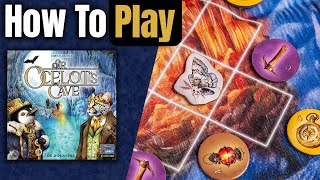
kovray Rules Teach at 0:00 sentiment: neutral
video_pk 64784 · mention_pk 158280
Click to watch at 0:00 · YouTube ↗
Overall sentiment (raw)
neutral
Pros
- Clear two-player design that supports head-to-head competition without needing a larger player count, which fits the channel's focus on intimate play experiences.
- The companion mechanic adds a meaningful strategic layer, offering a flexible tool option that can be leveraged to maximize specific gem collections while shaping the other player's options.
- A well-structured endgame with layered scoring (geodes, celestites, and special amethyst tokens) creates multiple avenues for point accumulation and strategic risk management.
- Layered cave levels and perimeter placement create interesting spatial planning challenges, encouraging players to think in terms of routes, visibility, and timing.
Cons
- Rule complexity is relatively high for newcomers, with multiple interacting systems (placement, companion movement, visibility rules, and various scoring tokens) that can be overwhelming.
- Hidden amethyst tokens require careful memory and deduction, which may increase cognitive load and potentially slow the pace for casual players.
- The scoring system involves several different token types and conditional bonuses, which can complicate scoring consolidation and may require a dedicated follow-up read or reference sheet.
Thematic elements
- Competitive treasure-hunting with a whimsical duo—Sir Ocelot and Professor Penguin—who leverage a set of tools and a guiding companion to uncover gems and score points, all within a modular cave layout.
- A fantasy-themed cave exploration duel for two players, featuring multiple cave levels and a ritual of gem gathering that unfolds as players take turns placing tools and moving a loyal companion.
- Abstract, rules-forward presentation with emphasis on strategic planning, spatial reasoning, and resource management rather than narrative storytelling.
Comparison games
none
Mechanics (from transcript analysis)
- companion placement and movement — A player may place their companion in a level-one cave (on an empty space or on a one-point gem) or move the companion to the next level in future turns. Once placed or moved, the companion cannot be moved again in the same turn. The companion can later advance from level one to two and from level two to three, but only twice per game, functioning as a flexible, wildcard support that can boost collection opportunities within its current cave.
- dual-cave interactions and board-wide effects — While most tool placements affect only a single cave, there are strategically important spaces on the board that influence both adjacent caves. Players must consider these dual-area effects when planning token placements, as these cross-cave interactions can unlock critical collection opportunities or deny them to the opponent.
- end-game and scoring cadence — Gameplay proceeds with continuous turns of placing tokens and collecting gemstones until each player has exhausted all tokens, which typically results in a total of 16 turns per game. The final scoring occurs after all tokens have been used, where players reveal their amethyst tokens and tally points from all gemstones collected, with the higher total determining the winner.
- gem visibility rule — To collect a gemstone, it must be seen by three different tools from three distinct sides. When a gemstone meets this condition, the active player may collect all gems in that cave that satisfy the visibility rule, placing them into their personal supply for end-game scoring.
- geodes and celestites — Geodes: when a geode is collected, a color-matching amethyst is drawn from the corresponding bag and kept hidden from the opponent, then the geode is returned to the box. Celestites: located only in level-one caves, Celestites come in three shapes; collecting all three shapes enables the player to draw an amethyst token from the blue bag. Celestites tokens are kept and can be used to form multiple sets throughout the game, but each celestite token can only contribute to one set.
- scoring tokens and amethyst tokens — In addition to gems, there are special amethyst tokens whose scores vary depending on the gemstones you have collected. Four special amethyst tokens grant different scoring conditions, such as points per gemstone with a printed value of 1 or 3, or points for gemstones remaining in particular caves at the end of the game. The amethyst tokens themselves are kept hidden from the opponent, adding a layer of strategic misdirection and bluff.
- token placement — Each turn requires a player to place one of their remaining tool tokens on an empty circular space on the perimeter of any cave (including level three). This placement is mandatory and sets up the potential for gem visibility by three different tools from three different sides, which is essential to unlock gem collection on that turn.
Video topics + discussion points
No key topics recorded for this video.
Quotes (from this video)
- In Sir Ocelot's Cave, you'll compete as either Sir Ocelot or Professor Penguin to collect the most precious gemstones in the newly discovered cave.
- You may only move your companion twice per game.
- the game will end when each player has played all of their tokens, so 16 turns.
- the player with the most points wins.
References (from this video)
No references stored for this video.
Video q29C0PNF500
The Board Game Garden Discussion at 13:23 sentiment: positive
video_pk 35663 · mention_pk 106619

Click to watch at 13:23 · YouTube ↗
Overall sentiment (raw)
positive
Pros
- Elegant two-player puzzle
- Interesting companion mechanic
Cons
- Abstract component may not appeal to all players
Thematic elements
- gem tokens and companion wild, cave traversal
- two-player abstract/arena of gem collection
- abstract puzzle with thematic surface
Comparison games
- Hannabi
Mechanics (from transcript analysis)
- two-player abstract placement — place tokens to trigger gem collection via cave icons
- wild companion — companion piece acts as a wildcard to reach gem sets
Video topics + discussion points
No key topics recorded for this video.
Quotes (from this video)
- It's going to be a long one because I have a lot of games to talk about.
- I really enjoyed Sir Ocelot's Cave.
- Faeya's Swamp is fantastic.
References (from this video)
No references stored for this video.
Transcript Navigation
Showing 1–6 of 6