
Game Info
Players
1-4
Age
10+
Playtime
30 min
Collection
Ratings
Creator Score
Mechanic profile
Not enough video data yet
Vibe profile
Not enough video data yet
Description
No description available.
Featured Videos


Ask a Rules Question
All mentions
Browse transcript mentions, sentiments, pros/cons, mechanics, topics, quotes, and references.
Total mentions: 5
This page: 5
Sentiment:
pos 3 ·
mix 1 ·
neu 1 ·
neg 0
Showing 1–5 of 5
Video Tt2o9VpFXhQ
Board Gaming Ramblings Top 3 List at 3:04 sentiment: positive
video_pk 81884 · mention_pk 204837

Click to watch at 3:04 · YouTube ↗
Overall sentiment (raw)
positive
Pros
none
Cons
none
Thematic elements
Comparison games
none
Mechanics (from transcript analysis)
Mechanics unknown.
Video topics + discussion points
No key topics recorded for this video.
Quotes (from this video)
- I love Klask.
- it's all about luck in Flip Seven.
- It's a two-player game.
- Goa and it's my number three.
- We got to play Goa. It's not on my list, but no, it is because it's really fun.
- Fields of Arle is a game we played many years ago.
- You're trying to get the peat away.
- My number one is Keyflower.
- Probably it is one of my favorite cooperative games.
References (from this video)
No references stored for this video.
Video 9s1ywzs9Yfk
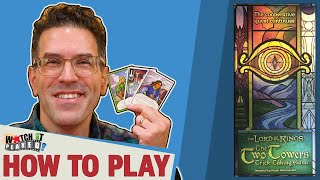
Watch It Played Rules Teach at 0:12 sentiment: neutral
video_pk 66075 · mention_pk 160598
Click to watch at 0:12 · YouTube ↗
Overall sentiment (raw)
neutral
Pros
none
Cons
none
Thematic elements
- trick-taking with fantasy elements (towers, orcs, heroes)
- The Lord of the Rings universe
- chapter-based narrative with character goals
Comparison games
- Fellowship of the Ring tricktaking game
Mechanics (from transcript analysis)
- character goals and star tokens — Each character has a personal goal; stars tokens indicate completed goals; tricks count toward those goals.
- lead and follow in tricks — The lead player plays a card; other players must follow the lead suit if possible; highest-ranked card in lead suit wins.
- setup actions / exchange — During setup, players exchange cards between hands as dictated by the chapter rules; Aragorn leads first trick.
- special cards and suits — Cards come in four suits (hills, mountains, forests, shadows) each with ranks 1-8; some cards are orcs and do not win tricks.
- tower cards — White and black tower cards win tricks in various conditions; the white tower always wins unless the black tower is played into the same trick; the black tower wins unless the white tower is played too.
- Trick-Taking — The lead player plays a card; other players must follow the lead suit if possible; highest-ranked card in lead suit wins.
- two-player pyramid setup — Two-player variant uses a pyramid layout to simulate a third hand; the Aragorn player still leads first; pyramid can be exchanged and controlled by the Aragorn player.
Video topics + discussion points
No key topics recorded for this video.
Quotes (from this video)
- Join me at the table and let's learn how to play.
- If you have any questions about anything you saw here, feel free to put them in the comments below, and I'll gladly answer them as soon as I get a chance.
References (from this video)
No references stored for this video.
Video 0xWUaLJAzco
Rolling Dice & Taking Names Discussion at 12:14 sentiment: positive
video_pk 41688 · mention_pk 126348
Click to watch at 12:14 · YouTube ↗
Overall sentiment (raw)
positive
Pros
- Innovative use of two towers and archon mechanics
- Tightly integrated theme and mechanics
- Puzzle-like planning before each turn
Cons
- Complexity may be daunting for casual players
- Potential downtime in multi-player rounds
Thematic elements
- Trick-taking with a narrative arc and card-based twists tied to the LOTR story
- Middle-earth, The Two Towers arc
- Chapter-based, story-forward with twists
Comparison games
- Return of the King
- Chimera
Mechanics (from transcript analysis)
- Modular action placement — Tiles on player boards offer actions; archon moves and chain jumps influence turn flow.
- Modular Board — Tiles on player boards offer actions; archon moves and chain jumps influence turn flow.
- Trick-Taking — White and black tower cards, archon-driven actions, and in-between-die activation mechanics.
Video topics + discussion points
No key topics recorded for this video.
Quotes (from this video)
- This is one of those games where it is so brilliant it's so simple but gives a great experience.
- The rules aren’t complicated at all but the game play is just a lot lot of fun.
- 10 rounds. At the end of each round, you resolve one of the fate tiles.
- This is not a three against one game, it's a semi-op game.
References (from this video)
No references stored for this video.
Video z7VC05Sse9Y
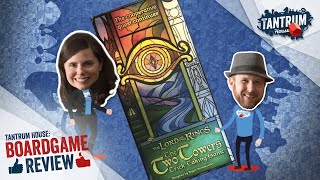
Tantrum House Review at 0:24 sentiment: mixed
video_pk 36976 · mention_pk 111001
Click to watch at 0:24 · YouTube ↗
Overall sentiment (raw)
mixed
Pros
- strong thematic fit with The Lord of the Rings; faithful to the source material
- two-chapter-like halves provide variety and a sense of progression
- new elements (orc cards, tower mechanics) add depth and challenge
- standalone play; compatible with Fellowship of the Ring; allows replayability and variety
- versatility in play length and modes (solo, 2-player pyramid, multiple chapters)
Cons
- character assignment can feel restrictive due to the White Tower rule
- ramp-up may be abrupt for new players; some chapters are very difficult
- card quality could be improved; aging or inconsistent print feel
- first half more varied than second half; some chapters feel repetitive
- some chapters demand many plays to align strategies
Thematic elements
- cooperative progression through story-driven trick-taking chapters
- Middle-earth; follows the Two Towers storyline within the LOTR universe
- book-based arc; alternates perspectives between main group teams across chapters
Comparison games
- The Lord of the Rings: The Fellowship of the Ring Trick-Taking Game
Mechanics (from transcript analysis)
- chapter-driven setup — each chapter defines which characters you play, their goals, and any special rules
- Cooperative Actions — per-chapter victory conditions require team collaboration to meet story-driven goals
- Cooperative objectives — per-chapter victory conditions require team collaboration to meet story-driven goals
- Cube Tower — white and black towers can influence trick outcomes; if both are played in the same trick they cancel each other
- tower interaction — white and black towers can influence trick outcomes; if both are played in the same trick they cancel each other
- Trick-Taking — lead and follow; highest card in the lead suit wins each trick; suits mapped to in-world themes like hills, mountains, forests, and shadows; additional dynamics with orc and tower cards
- two-player pyramid variant — when playing two players, one hand forms a pyramid with certain cards face up; playable cards are limited to uncovered cards
Video topics + discussion points
No key topics recorded for this video.
Quotes (from this video)
- The Two Towers Trick Taking Game is a cooperative trick-taking game for one to four players.
- This box is more challenging.
- I give it two thumbs up for the thematic elements of the game.
- Two Towers felt familiar yet fresh, and you have new challenges in Two Towers.
- It's a standalone sequel to the Fellowship of the Ring tricktaking game.
- We haven't beat that final chapter.
- I like a good challenging trick-taking game.
References (from this video)
No references stored for this video.
Video HQ_snH4lfn0
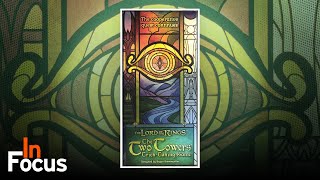
BoardGameGeek Review at 0:00 sentiment: positive
video_pk 3649 · mention_pk 10783
Click to watch at 0:00 · YouTube ↗
Overall sentiment (raw)
positive
Pros
- Strong alignment between cooperative objectives and Tolkien-inspired narrative
- Rich thematic integration with character-driven goals and evolving chapters
- Multiple chapters offer variety and replayability across play sessions
- Escalating tension through increasingly challenging scenarios and new characters
Cons
- Rule complexity and the number of moving parts can create a learning curve and potential downtime
- Secret goals require careful tracking and memory, which may slow pace for some groups
Thematic elements
- cooperative victory with individual character-oriented objectives set within a trick-taking framework
- Middle-earth during The Two Towers era; 18 chapters mirror the Tolkein narrative arc for a tabletop experience
- chapter-based storytelling that evolves with new characters and evolving goals per chapter
Comparison games
none
Mechanics (from transcript analysis)
- chapter-based progression — Up to 18 chapters, with the possibility to play in any order; chapters introduce new characters and challenges
- Cooperative Game — All players share a common win condition; failure affects the entire group rather than individuals
- cooperative play — All players share a common win condition; failure affects the entire group rather than individuals
- secret/individual goals — At the start of each chapter, players select a character with a unique objective that influences decisions
- special tower cards — The black tower and white tower act as pivotal cards with powerful effects that shape trick outcomes
- Trick-Taking — Players play one card each round; the highest card wins the trick and determines the lead for the next
- Unique Player Powers — Characters such as Aragorn, Boramir, Legolos, and Gimley carry distinct nuances that shape chapter strategy
- Variable player powers — Characters such as Aragorn, Boramir, Legolos, and Gimley carry distinct nuances that shape chapter strategy
Video topics + discussion points
No key topics recorded for this video.
Quotes (from this video)
- The Two Towers follows the rules of a standard tricktaking game.
- But the two towers differs from most trick-taking games in two ways.
- This game is cooperative with all players trying to win together.
- Each player chooses one of the characters in play with the characters in the first chapter, chapter 19, being Aragorn, Boramir, Legolos, and Gimley.
- You win together or you don't win at all.
- you can play the game's 18 chapters in any order you like, but Tolken fans will want to move through them in order.
- With each chapter you play, you're trying to keep everyone's goal in mind.
References (from this video)
No references stored for this video.
Transcript Navigation
Showing 1–5 of 5