
















Tangram City Deep Dive
What the Community Thinks About Tangram City
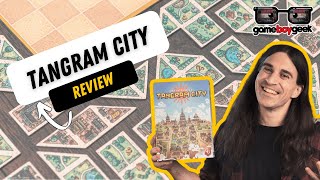
Tangram City has earned consistent appreciation from reviewers as a lightweight, accessible puzzle game that strikes a rare balance between simplicity and meaningful decision-making. The game resonates with players who value fast play and easy setup, though opinions vary on its long-term appeal. Some reviewers, like those from The Board Game Garden, count it among their favorite comfort games and top-ranked titles, praising its repeated playability and soothing experience. Others, such as the Game Boy Geek, acknowledge its quality but note that the novelty fades after a handful of plays. A common thread across reviews is respect for designer Uwe Rosenberg's execution: reviewers note the game is well-crafted, easy to teach, and produces satisfying puzzle moments without overwhelming complexity. The hidden information mechanic and simultaneous play create moments of mild tension and engagement, though some feel the game lacks the deep player interaction or mounting complexity of Rosenberg's other tile-laying designs.
Core Mechanics That Define Tangram City
Tile Placement
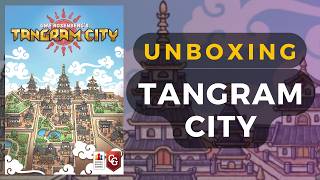
The heart of Tangram City is its distinctive tile placement system built around tangram-style pieces. Unlike traditional polyomino tiles found in games like Patchwork, Tangram City's pieces feature irregular shapes including half-blocks, diagonal cuts, and asymmetrical forms. Each round, cards are revealed that dictate which tangram tile all players must place onto their personal 7x7 grid. Players can rotate and flip these pieces anywhere on their board, creating a spatial puzzle that requires careful planning. The novelty of the tangram geometry—pieces that don't nestle into neat rectangular arrangements—changes the mental calculus compared to standard tile-layers. Reviewers noted this puzzle presents a genuine challenge: the unusual shapes forced players to visualize placements differently, making the game feel fresher than games with simpler geometric pieces. Yet all players have access to the same tiles in the same order, which constrains the strategic depth; everyone is solving essentially the same puzzle, just on different turns.
Hidden Information and Memory
Tangram City layers strategy through selective knowledge. At the start of each round, some players see cards face-down that reveal which tile they will place before others know it. This imperfect information encourages players to plan ahead for tiles they know are coming while other players must react to tile reveals they couldn't anticipate. Reviewers appreciated this mechanic as a source of player advantage without creating frustration; it rewards attention and forethought but doesn't punish those who miss a card reveal. The hidden information transforms what could be a fully deterministic puzzle into a tactical placement game where positioning tiles becomes a balancing act between building your intended pattern and adapting to surprise reveals.
The Tangram City Experience
Accessible and Puzzling
Tangram City delivers a puzzle experience with virtually no rules overhead. Reviewers consistently highlighted the speed of teaching and play: rules can be explained in under two minutes, and a full game completes in 30-40 minutes with simultaneous turns eliminating downtime. The game teaches itself through play, allowing newcomers and experienced gamers alike to jump in without friction. Yet despite the simplicity, the puzzle is genuine. Players face real choices about where to place tiles, how to maximize rectangle scoring each round, and how to balance competing visual themes. This combination—quick to learn but engaging to solve—makes Tangram City an ideal gateway game for introducing polyomino and tile-placement concepts to non-gamers.
Meditative and Repeatable
Multiple reviewers described Tangram City as a comfort game they return to repeatedly, even playing it 20+ times in a year. The combination of accessible rules, short playtime, and calming puzzle creates a meditative experience. One reviewer noted playing it while watching television, using it as a distraction that doesn't demand constant focus but still engages the mind. The simultaneous action keeps the table engaged and social without players waiting for their turns. This accessibility to both solo and group play, paired with the soothing geometric puzzle, makes Tangram City appealing for moments when players want satisfying gameplay without cognitive overload.
What Makes Tangram City Stand Out
Unique Tangram Geometry and Visual Balance
The tangram-style pieces immediately distinguish Tangram City from the sea of polyomino games. The irregular shapes with half-blocks and diagonal cuts create a spatial puzzle that feels genuinely different. Reviewers noted the pieces forced them to think differently about how tiles fit and orient compared to games with square blocks. Beyond the mechanical uniqueness, the game's thematic scoring system—balancing parks (green) and buildings (gray/red)—gives players a secondary puzzle layer. Achieving perfect balance at game's end awards 20 bonus points, encouraging aesthetic and strategic play. This two-sided, dual-mechanic approach creates a puzzle rich enough to feel substantial without becoming fiddly.
Smooth Simultaneous Action and Fast Play
In an era where many games stretch toward complexity and table time, Tangram City's lightweight simultaneous play stands out. Everyone places at the same moment, eliminating downtime and keeping the table rhythm brisk. Reviewers appreciated that a full game plays in under 45 minutes regardless of player count, making it easy to teach, play, and replicate in a single session. The speed and social engagement of simultaneous play make Tangram City a standout filler that doesn't feel fiddly or procedural.
Potential Drawbacks
Limited Replayability and Diminishing Puzzle Challenge
The most consistent concern reviewers raised is that Tangram City's puzzle novelty fades quickly. Since every player receives the same tiles in the same sequence, each play becomes a variation on solving the same core puzzle with minor differences in card order and starting positions. After a handful of plays, skilled players reach a performance ceiling where the optimal strategy becomes apparent and execution becomes routine. One reviewer noted they quickly reached the point where they were only missing one or two tiles at game's end, with nowhere left to climb in terms of points. Unlike Patchwork or Apple Jack, which feature dynamic markets and choices that shift dramatically between plays, Tangram City's puzzle solver-facing path narrows once the optimal patterns are discovered.
Minimal Player Interaction and Strategic Depth
While simultaneous play keeps everyone engaged, the game lacks direct player interaction. Tile placement decisions are largely independent; the only meaningful interaction comes from knowing which opponents saw which hidden cards. Compared to games like Patchwork, where taking a tile directly removes it from your opponent's options, Tangram City offers little negotiation, blocking, or tactical player-versus-player moments. Some reviewers felt this reduced the mastery ceiling compared to Rosenberg's deeper tile-layers. The puzzle is personal and meditative rather than competitive or interactive, which appeals to comfort-game seekers but limits appeal for players who thrive on direct competition.
If You Enjoy Tangram City
Players who appreciate Tangram City's puzzle-focused simplicity should explore Patchwork, Rosenberg's earlier tile-placement classic that adds economic tension and head-to-head play without sacrificing elegance. For those drawn to simultaneous action and city-building themes, My City or Kingdom Builder offer similar architectural satisfaction with varying rule depth. If you crave the geometric puzzle without simultaneous play, Second Chance or Apple Jack provide richer decision trees and replayability. For pure comfort-game accessibility, Tiny Towns delivers a similar lightweight polyomino experience in a tighter package. And if you want to explore tangram puzzles in a competitive auction format, Calico layers quilt-building onto tangram logic with more player agency.
What Reviewers Are Saying
"The game is easy to learn and to catch on to as you start to play and once you kind of understand the way that this game is scored I think for the most part many people, gamers and non-gamers alike, will be able to understand this game and be able to roll with it pretty quickly. The puzzle itself is unique with the scoring mechanisms and the physical tiles that you get to play around with feeling fresh and unique in the repertoire of games that both Rosenberg and other designers have done in the past with polyomino tiles."
— The Board Gaming Doctor
"I have played this game so many times in 2024 and there's something about this game I know the rules I don't have to look up any small details the rules are very simple and I'm just able to quickly set this one up either here at the board game table or at my coffee table upstairs and just play this game. It doesn't take a lot of focus as well so I'm able to watch something on the TV and then also play this game and I have just loved this game so so much."
— The Board Game Garden
"If you're after a fast, breezy, somewhat thinky filler with a bit of visual flare, Tangram City might just be your missing piece in your life. I would personally recommend Tangram City if you like games like Patchwork or Second Chance or Calico or even Railroad Inc. Or maybe you're just tired of tangram maps constantly asking you to make another duck."
— Game Boy Geek