
















Transgalactica Deep Dive
What the Community Thinks About Transgalactica
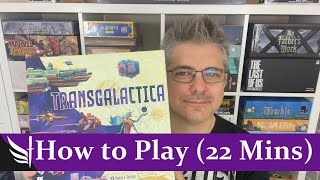
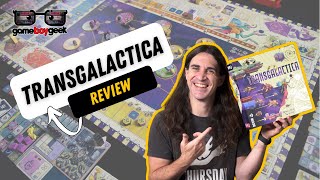
Transgalactica lands in boardgaming spaces with striking visual confidence and a confident mechanical foundation designed by Daniel Tacini. The reception is largely positive among experienced Euro players, though the game divides opinions on whether it reaches the heights of Tacini's celebrated prior work. Many reviewers praise its clever action-following mechanic and interconnected track systems, noting that it maintains engagement and creates satisfying moments of optimization. Others feel it falls short of being truly exceptional, occupying a solid middle ground within Tacini's catalog. One notable dissent voices deep frustration with the game's track-climbing mechanics, calling them tedious and poorly balanced. The consensus from most players, however, is that Transgalactica delivers a smooth, interactive Euro experience with genuine replayability thanks to its variable setup, even if some aspects—particularly the rulebook and component stickering—present friction during first plays.
Core Mechanics That Define Transgalactica
Worker Placement with Action Following
Transgalactica uses a worker-placement backbone with a crucial twist: the action-following mechanic. On your turn, you place one of your captains on an empty main action space on the board, then immediately resolve that action at full strength. Other players, in turn order, can then place one of their smaller workers (crew) onto the secondary action space beside yours and take a weaker or more expensive version of the same action. This keeps downtime minimal and everyone constantly engaged. The follow mechanic creates fascinating decisions about which workers to deploy and when—do you burn a scarce captain on an action you desperately need, or save them for later? Do you follow an opponent's action despite the reduced payoff, or pass and risk falling further behind? This push-and-pull between leading and following defines the game's rhythm and encourages both opportunistic play and tight planning.
Interconnected Track Advancement
The game features five main tracks on the central board—Technology, Military, Production, Politics, and Trade—each representing a different facet of your galactic expansion. Your advancement along these tracks is not merely cosmetic; each step unlocks new abilities, grants income, or reveals bonus tokens. The tracks are tightly woven: your Technology level gates your Military advancement, your Politics level determines which mining rewards you can collect, and your Production level dictates how many planets you can harvest for resources. This intertwining means every decision ripples forward. Rather than pursuing one dominant strategy, the game rewards players who balance their growth across multiple paths, finding clever synergies where advancement in one track amplifies returns from another. Over the course of five rounds, this creates a satisfying crescendo as early investments compound into late-game payoffs.
The Transgalactica Experience
Bright, Energetic Competition
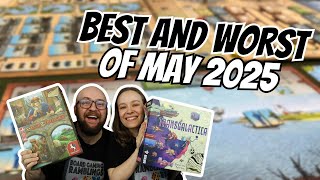
Despite its space setting and deep mechanical systems, Transgalactica eschews the dark, serious aesthetic of typical sci-fi Euros. The artwork by Eduardo Val presents a vibrant, almost retro-futuristic palette—think 1950s and 60s cartoon style applied to alien civilizations. This chromatic boldness catches players off guard; the game looks more like a family adventure than a crunchy economic engine. That visual confidence bleeds into the play experience. Players report games that feel energetic and forward-moving, where turns resolve briskly once everyone grasps the icons, and the constant opportunity to follow opponent actions keeps the table engaged. There is rarely a moment where you are completely shut out of the action, even on turns where you choose to pass.
Tight Racing and Scarcity
Limited planets and action spaces create persistent tension. Only a handful of planets exist on the board, each with one or two slots for outposts, and the eight main action spaces accommodate far fewer workers than players will want to place, especially at higher player counts. This scarcity forces tough choices: do you race to a lucrative planet before an opponent, or develop your powers and economy? Do you claim a Senate seat now for immediate points, or focus on track advancement for long-term dominance? These are not trivial questions. The game actively prevents runaway leaders through mechanisms like military scoring (gaining points if you lead, losing them if you lag) and endgame objective cards that can reward specific paths, keeping final scores close enough that multiple players remain viable contenders into the final round.
What Makes Transgalactica Stand Out
The Galactic Senate: Thematic Integration Meets Strategy
Central to Transgalactica's unique identity is the Galactic Senate mechanic. Throughout the game, four decree cards offer public objectives anyone can pursue—accumulate a certain number of technologies, defeat space pirates, advance on specific tracks. When you meet an objective, you assign one of your crew to a Senate seat and claim its reward, which can range from victory points to a free track advance. This feels thematic—your faction's representative enters the halls of power—but it is mechanically profound. You sacrifice a worker permanently (a true cost in a game where workers are scarce) and must decide which reward you need most from a tiered structure. Early grabs on a lucrative seat can swing the game, while late-game Senate plays often determine the winner. No other single action in the game carries quite the same weight, making the Senate an elegant focal point that ties together the game's political flavor and competitive urgency.
Variable Setup and Replayability
Transgalactica refuses to repeat itself. At game start, you draft a unique player power (skill tile) and a set of starting resources from a two-part draft. The planets themselves are shuffled and placed randomly, technology cards are randomized by level, mission cards reshuffle each round, and Galactic Decrees are drawn from a larger deck. No two games will ask the same questions or reward the same paths forward. Players report that their scores and strategies diverge sharply across plays—one game calls for aggressive technology and exploration, the next demands military dominance and careful politics. This variability, combined with the tight mechanical coupling between systems, means returning to the table feels fresh rather than repetitive, even after multiple plays.
Potential Drawbacks
Rulebook Confusion and Component Complexity
Multiple reviewers flag the rulebook as the game's weakest link. Errors, ambiguities, and misprints have led players to house-rule situations in nearly every game until they consult online clarifications. The initial printing required a major overhaul; the designer subsequently published an updated rulebook and FAQs, but the initial friction is real. Compounding this is the sheer icon density—Transgalactica uses many distinct symbols to represent abilities, costs, and bonuses, and new players report it takes one or two plays just to internalize them all. For groups new to Tacini's designs, this learning curve can feel steep despite the smooth turn flow. Additionally, the game comes with over 300 stickers that enhance the visual presentation but demand hours of careful application before first play.
Planet System Asymmetry and Learning Curve
The planets that dot the central map come in three types with different rules: action planets (unlocking special worker actions), wilderness planets (requiring a crew sacrifice to settle), and mining planets (granting bonuses when developed). Some planets offer ongoing income during the production phase, others interact with your politics level, and a few have unique symbology. For experienced Euros players, this is manageable differentiation. For newcomers, it creates learning friction—the planet rules form a subsystem distinct enough from the main board actions that it can feel like players are juggling two games simultaneously. One reviewer noted that the iconography choice (using lightning bolts as resources rather than immediate-action symbols) created unnecessary confusion, since conventions taught by other games mislead new players. The planets themselves are replayable and create interesting decision points once mastered, but the on-ramp is steeper than the rest of the game's learning curve.
If You Enjoy Transgalactica
Players who love Transgalactica's blend of worker placement, track climbing, and interactive follow mechanics will find familiar satisfaction in Tapestry, another Tacini masterpiece, though Tapestry operates at a grander scale with a deeper civilization-building arc. Teot Towakan (also by Tacini) offers even more interlocking systems and demands sharper resource planning, though it is denser and heavier than Transgalactica. Rising Sun pioneered the action-following mechanic at its core and shines in interactive, politically-charged gameplay. Race for the Galaxy</strong similarly uses action selection where everyone can follow, rewarding clever play and tight hand management. The White Castle</strong and Minos offer comparable depth and aesthetic boldness within tighter footprints. For those drawn specifically to the space setting and light-4X flavor, Transgalacticais one of the few Euros that wraps that theme authentically without sacrificing mechanical elegance.
What Reviewers Are Saying
"The action following system, although not new, is extremely clever and keeps everyone constantly engaged. You're rarely sitting around waiting for your turn. It's awesome. The table presence—the design, artwork, and overall aesthetic—are literally out of this world. That alone is enough to make me want to play this game over many others."
— TheGameBoyGeek
"The play is kind of a beigy Euro game. But there's real depth here—every game we've improved by 20, 30 points, which says there's a lot that you can improve on. And that's always a sign of a Euro game that has more depth to it. All the tracks are really interconnected in a satisfying way, and once you understand that, the game flows really nicely."
— Allies or Enemies
"Even at two players, the play experience has been very solid every single time. It's actually been very similar across player counts. One of the things that is satisfying is taking your turn and looking around—there's probably two tracks you want to go up on—and then you see that everybody else at the table doesn't have the resources needed to go up that track. So you go, and then they have to make the hard decision: Do I follow and take the minor version of this action?"
— Tanger Mouse Studio