






Sanibel Deep Dive
What the Community Thinks About Sanibel
Sanibel has captured the hearts of board game reviewers as a uniquely relaxing and thematic experience. Across multiple play sessions and review channels, the game consistently impresses with its peaceful, meditative gameplay and beautiful execution of a beach-collecting theme. Reviewers praise its accessibility for casual players while acknowledging its lighter weight, and nearly all emphasize how the game succeeds at creating a genuinely cozy experience that appeals to both seasoned gamers and family members new to the hobby. The game's strongest advocates, including content creators from Where There's A Wilz, There's a Play and The Dice Tower, highlight Sanibel as a must-play for anyone seeking a contemplative tabletop experience with elegant mechanics and outstanding thematic coherence.
Core Mechanics That Define Sanibel
Spatial Puzzle Placement
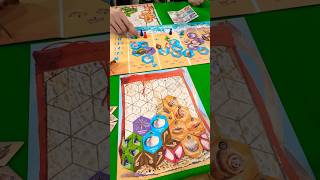
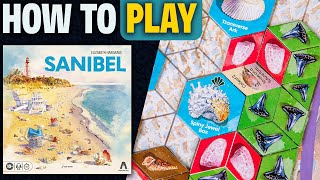
At its heart, Sanibel tasks players with arranging hexagonal shell tiles into their personal player bag using Tetris-like placement rules. Each turn, players collect shells from the beach and must drop them into their bag, where they fall and settle according to physical laws. The puzzle dimension emerges from the fact that shells can only be placed where they fit within the gridded outlines of the bag, and they must rest on either the bottom or on other shells. This spatial reasoning layer transforms the game from mere collection into a satisfying puzzle where players must think several moves ahead about how their current placement will affect future acquisitions. HSBG published this Elizabeth Hargrave design with components that reinforce the theme, giving players the tactile satisfaction of arranging physical pieces into an intentional arrangement. The puzzle never feels onerous, but it provides genuine strategic depth for players who want it.
Dynamic Turn Order via Wave Mechanic
Rather than following a fixed turn sequence, Sanibel employs a wave mechanic that determines who plays next. The player furthest behind on the beach path always takes the next turn, creating a catch-up mechanism that rewards thoughtful movement decisions. As players complete their walk along the beach, the wave token advances and refreshes the available shells at each beach section, ensuring that later players always have new options to pursue. This mechanic elegantly mirrors how real waves deposit shells on a shore, making it as much a thematic decision as a mechanical one. Players must constantly choose between moving slowly to gather more shells from their current section or making bold strides to reach particular shells before other players claim them. The wave also serves as a turn marker, ensuring the game maintains steady pacing while keeping all players engaged in meaningful decisions about positioning and collection.
The Sanibel Experience
Serene Beach Atmosphere
Reviewers consistently describe Sanibel as a calming, almost meditative experience. The artwork depicts a stylized shoreline with soft colors and gentle imagery that evokes the relaxation of a beach walk. Players are not competing in the cutthroat sense of traditional board games but rather pursuing their own optimal collection and arrangement strategy. The pace of the game reinforces this; there is no time pressure, no confrontation, no player elimination. Each turn invitation comes naturally as the wave token moves, and players have space to consider their spatial puzzle thoughtfully. Content creators familiar with the concept of cozy games universally apply the term to Sanibel, noting that even players unfamiliar with modern board games immediately sense the peaceful intent behind every design choice. The theme is not pasted on but woven throughout: the shells represent genuine creatures that might be found on a beach, the lighthouse represents a real landmark, and the wave genuinely refreshes the available resources. Players walk an imaginary beach from a small beach house to a lighthouse and back, and the game's brevity (around 45 minutes) means the experience never overstays its welcome.
Satisfying Puzzle-Solving Physicality
The tactile dimension of Sanibel elevates it beyond a purely strategic exercise. As players place tiles into their bags, there is genuine satisfaction in optimizing the arrangement, watching pieces settle into place, and realizing that a clever placement opens up future opportunities. Reviewers note that the hexagonal and diamond-shaped shells, combined with the Tetris-style falling mechanic, create a pleasant moment of puzzle satisfaction with every single placement. The game never becomes frustrating because there is always another beach section to visit and more shells will be available on the next wave. This balances the puzzle challenge with the relaxation mandate: players can think deeply about placement strategy without ever feeling locked into a sub-optimal choice. The physicality of manipulating the tiles and watching them settle in the bag is genuinely rewarding, giving the game a presence on the table that digital versions would struggle to replicate.
What Makes Sanibel Stand Out
Thematic Coherence and Art Direction
Sanibel achieves a rare quality: its theme and mechanics are inseparable and mutually reinforcing. Every rule serves the simulation of walking a beach and collecting shells. The wave mechanic is not an arbitrary turn-order device but a literal representation of how shells are deposited on a beach. The bag storage is not an abstract inventory but a visual and tactile reminder that you are collecting shells into a personal container. The lighthouse represents a genuine landmark that organizes the game's geography. Reviewers and designers consistently praise Elizabeth Hargrave for this level of thematic integration; the game does not feel like a generic spatial puzzle adapted to a beach setting but rather a design where the theme informed every mechanical choice. The artwork reinforces this through a cohesive visual style that specializes in this exact kind of landscape illustration. Players report that the game's thematic execution is so complete that it adds to the decor of a game shelf, making it an object worth displaying.
Accessibility for Diverse Player Groups
While Sanibel is mechanically sound, its greatest strength may be its approachability. Multiple reviewers specifically tested it with family members and casual players unfamiliar with modern board games, and in every case, the game was embraced and enjoyed. The rules are straightforward: move your token, collect shells, place them in your bag following simple spatial rules. The strategy emerges naturally from play rather than requiring players to internalize complex systems. The game teaches itself through experience; new players quickly grasp why certain placements are advantageous without the game ever feeling punishing when they make a suboptimal choice. Reviewers who regularly teach games to new audiences cite Sanibel as one of their reliable introductions, valuable for players who want a genuine game experience without the mental load of heavier titles. This accessibility extends to player count and experience level; the game works equally well with two players as with four, and works equally well for someone playing their first modern board game as for someone with hundreds in their collection.
Potential Drawbacks
Component Quality Variance and Perceived Lightness
Some reviewers noted minor concerns about component quality, particularly around the material thickness and durability of certain shell tiles. While the deluxe versions reportedly address these concerns, the standard edition prompted a few players to request sturdier components. Additionally, the game's relatively lightweight nature and straightforward mechanics mean that experienced board gamers seeking deep strategic complexity or high player interaction may feel the game is too simple or solitaire-like. Each player is primarily focused on optimizing their own bag arrangement, and while the shared beach sections create moments of meaningful interaction, the game does not feature direct take-that mechanics, combat, or heavy negotiation. Players who derive satisfaction from confrontational or strategically dense games may find Sanibel too gentle.
Scoring Process as Mechanical Disconnect
One respected reviewer noted that the transition from the flowing, intuitive placement phase to the scoring phase created a jarring tonal shift. The scoring system involves tallying points across multiple shell types with different scoring conditions (connected groups, adjacency rules, unique counts), and this mechanical resolution moment temporarily breaks the meditative flow that the rest of the game cultivates. Players must refer to scoring reference cards and carefully count adjacencies and groups, which is not integrated into the turn structure as smoothly as the core placement mechanic. For most players, this is a minor quibble in an otherwise polished experience, but it represents one area where the elegant theme-to-mechanic relationship could theoretically be strengthened.
If You Enjoy Sanibel
Players drawn to Sanibel should explore games that emphasize similar qualities: peaceful themes, spatial reasoning, and accessible depth. Tokaido shares Sanibel's movement-based turn order system and contemplative pacing, inviting players to walk a path and collect items along the way. Wingspan combines an approachable aesthetic with satisfying tableau-building and beautiful artwork, offering a similar appeal to casual and experienced players alike. Aquagarden presents another water-themed spatial puzzle where players draft tiles and arrange them to build underwater ecosystems, with a comparable weight and satisfying puzzle-solving experience. Parks captures that same sense of moving along a path with meaningful decisions at each step, though with slightly more strategic depth. All of these games share Sanibel's commitment to creating beautiful, thematic experiences that reward thoughtfulness without demanding cutthroat competition.
What Reviewers Are Saying
"Do you like long walks on the beach or feeling the soft hot sand between your toes? Well, you better watch out next time because there's shark teeth and a variety of different shells and sea creatures on there that you might accidentally step on. Sanibel is a beach walking game where you'll be walking along the sand collecting shells and different creatures and placing them into your bag."
— Board Game Reviewer
"I love that because you're going down one way to the lighthouse and then you're coming back. So stuff is washing off on spaces you've already been to, but they're going to be there later. So that is such a cool mechanic where it washes stuff up onto the beach."
— Where There's A Wilz, There's a Play
"Every house in Southwest Florida should have this sitting right there on the shelf, because it just adds to the decor of it. But this is one definitely to check out. I'm coming in at a 7.5 on this. Really enjoy this."
— The Dice Tower