








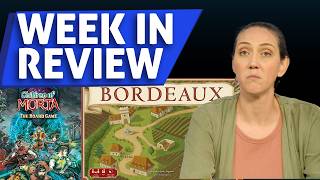
Children of Morta Deep Dive
What the Community Thinks About Children of Morta
Reviewers largely agree that Children of Morta successfully translates the video game's roguelike spirit into a cooperative board game experience. The game earns consistent praise for its accessible rules and thematic execution, though opinions diverge on its long-term staying power. Let's Table It and Grant Lyon highlight the satisfying family dynamic and character progression, while BoardGameCo acknowledges strong initial appeal but notes that difficulty scaling falters as play continues. The Dice Tower and solo-focused reviews celebrate how well the game captures the roguelike feel of running short, escalating challenges, though some point out that certain moments can feel unexpectedly punishing for a cooperative title.
Core Mechanics That Define Children of Morta
Shared Bag Building
Children of Morta's central mechanic revolves around a cooperative bag building system where all players draw from and contribute to a single shared pool of tokens. Players accumulate tokens in their bag throughout the campaign, upgrading weak tokens and adding powerful new ones to improve their draw consistency. Each turn, players draw five tokens and place them on their character boards to activate different abilities: attacking, generating resources, defending, or supporting teammates. The Dice Tower praises this shared approach to bag building, noting that it creates meaningful cooperation: players must discuss who will draw tokens and collectively decide how to spend rage, a shared resource that can boost attacks. The system delivers the satisfying progression feeling of deckbuilding games without requiring players to manage entirely separate pools, encouraging constant tactical discussion and mutual benefit.
Campaign Progression and Character Leveling
The game unfolds across a story campaign with multiple chapters, each with its own unique rules and mechanical twists. Between chapters, players spend coins to add stronger tokens to their shared bag and experience points to upgrade individual character abilities. This two-layer progression system ensures steady growth: even failed chapters grant resources, so players always feel more powerful on the second attempt. The Dice Tower particularly highlights how well this mechanism captures the roguelike feeling of running progressive waves of difficulty, where upgrading between attempts feels genuinely rewarding. By Chapter 3, players face harder enemy types and boss encounters that occasionally disrupt the pattern, keeping the experience from feeling overly mechanical. Let's Table It emphasizes that each chapter introduces fresh wrinkles (new rules, chapter cards with special challenges, and boss variety), so progress never devolves into rote repetition.
The Children of Morta Experience
Cooperative Family Adventure
At its heart, Children of Morta celebrates family and mutual support. The game explicitly involves characters bonding with one another through shared tokens and support cards that let players refresh each other's special abilities. The Dice Tower notes that three-player mode brings out the best of these cooperative elements, with bond cards between each pair of characters creating additional layers of interaction. Reviewers consistently mention that children engage with the game meaningfully, not as passive participants but as active planners coordinating attacks, pooling resources, and deciding which allies to support each round. The family theme is not window dressing; it shapes the entire decision space and rewards group coordination in tangible mechanical ways.
Roguelike Progression with Incremental Stakes
Each chapter plays like a self-contained roguelike run where the team moves through locations, encounters enemies, and either advances or retreats to level up. The tension lies in moment-to-moment uncertainty: players cannot fully control what tokens they draw, and some rounds deliver punishing swings where unlucky draws or poor dice rolls leave them vulnerable. Unlike purely random roguelikes, however, the shared resource pool and support abilities give players meaningful mitigation. The Dice Tower captures this duality: some rounds feel swingy and frustrating when the wrong enemies arrive, but the cooperative flexibility of the bag and the existence of flames (communal rage tokens) provide enough recovery paths that skilled planning usually finds a way forward.
What Makes Children of Morta Stand Out
Accessible Campaign with Meaningful Story Moments
The rulebook is notably well-produced and clearly written, making the game accessible to a wide audience. Let's Table It praises the design's thoughtfulness: the game is not overcomplicated, yet offers enough strategic depth that players feel genuine agency in their choices. The campaign structure avoids the trap of requiring perfect play; lose a chapter, and you spend coins and experience to try again, stronger than before. This design philosophy extends to the chapter cards themselves, which introduce special scenarios and occasional boss encounters that break up the routine of standard enemy waves. The game successfully captures the narrative progression of the video game (the sense of leveling up, unlocking new family members, and pushing deeper into the story) while remaining mechanically digestible in a 45-minute session.
Cooperative Bag Building Elevated by Shared Tokens and Supports
The shared bag mechanic stands out in the cooperative space, where most games hand each player their own deck or resource pool. By pooling tokens, Children of Morta forces constant communication: players discuss token management, argue over resource allocation, and coordinate who will benefit most from purchasing expensive upgrades. Grant Lyon notes the appeal of a shared bag-building mechanism is relatively rare in games and intriguing for those who love deck building. The game further layers cooperation through special character tokens (wild cards usable for any color) and support cards that let players sacrifice their turn to refresh teammates' special abilities. These mechanics reward the group for staying aligned, transforming what could be a solitaire experience into a genuine team effort.
Potential Drawbacks
Component Quality and Physical Accessibility
Multiple reviewers identify production concerns as the game's weakest link. The tokens are small and fiddly to draw from the bag, a significant issue given that drawing tokens is the action players perform most frequently. BoardGameCo expresses frustration with their size, noting that bigger, better-quality tokens would justify a modest price increase. The Dice Tower echoes this concern, pointing out that the icons on cards are tiny and dark, making it hard to distinguish colors at a glance (particularly the brown and green shades). The iconography could have benefited from larger symbols and lighter backgrounds. While these complaints do not break the game, they inject friction into otherwise smooth turns, requiring players to squint or lean in to confirm what they drew.
Difficulty Scaling and Late-Game Repetitiveness
BoardGameCo identifies a troubling pattern: players power up faster than enemies escalate, creating a bell curve where the early chapters feel moderately challenging but later chapters become trivial. By the time players have upgraded their bag and abilities, they can recover from almost any draw and often bypass meaningful strategic decisions. Additionally, upgrade cards feel iterative (one damage point higher, one more resource generated) rather than mechanically novel, so progression rewards feel hollow after the initial rush. The Dice Tower acknowledges occasional punishing swings when dice rolls misfire, but notes this sting less in shorter runs and more in longer campaigns where a single bad round can derail an entire 45-minute session. Some reviewers resort to house rules or voluntary handicaps to recalibrate difficulty, a sign the baseline scaling is imperfect.
If You Enjoy Children of Morta
Children of Morta shares DNA with several acclaimed titles. Fans of the roguelike progression cycle should explore Slay the Spire, the video game that introduced many to progressive deck building across fixed runs. Dead Cells, another video game roguelike, influenced the board game's pacing and enemy encounter design. For cooperative dungeon-crawling mechanics similar to Children of Morta's action resolution, Marvel Champions offers deeper deck building with a team structure. Tidal Blades 2: Rise of the Unfolders provides cooperative adventure in a smaller footprint without the roguelike campaign layer. If the family narrative resonates, returning to the original Children of Morta video game deepens the emotional connection to the Bergson family and their struggle against the corruption.
What Reviewers Are Saying
"The design of the game was very thoughtful, not too complex, but there is enough that you can do different things and be successful in this game. Everyone likes upgrading their characters as you will be spending money to get better tokens to draw from your bag, but also spend your experience to upgrade your five different action slots with better cards for that same action."
— Let's Table It
"The rule book, very beautifully done, well put together, explains everything nice and clear. It's not a lot of pages, I think like 20 pages, and you're off and running with this game."
— Watch Review
"I think one thing that this game gets pretty well is that feeling of runs, you know, there's been Dead Cells did it recently. The tricky thing, one of those things that you definitely want to get right in my opinion is that feeling of sort of doing little progressive runs. And I think this game gets that right. That feels good to me."
— The Dice Tower