
Game Info
Collection
Your Tier
Loading…
Mechanic profile
Not enough video data yet
Vibe profile
Not enough video data yet
Description
No description available.
Featured Videos

Ask a Rules Question
All mentions
Browse transcript mentions, sentiments, pros/cons, mechanics, topics, quotes, and references.
Total mentions: 1
This page: 1
Sentiment:
pos 1 ·
mix 0 ·
neu 0 ·
neg 0
Showing 1–1 of 1
Video tTIplz0GtUI
Board to Death TV - Board Game Reviews Review at 4:20 sentiment: positive
video_pk 63764 · mention_pk 157280
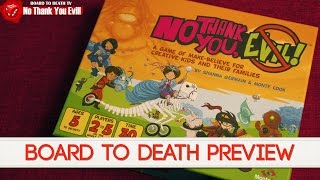
Click to watch at 4:20 · YouTube ↗
Overall sentiment (raw)
positive
Pros
- Inexpensive way to introduce kids to role-playing and collaborative storytelling
- Artwork and components are engaging and visually appealing, sparking creativity
- Colorful components and hidden adult jokes add charm without breaking family-friendly tone
- Character sheets scale for different ages and abilities, supporting accessibility
- Encourages imaginative play and cooperative problem-solving in a low-pressure setting
Cons
- Rulebook described as very redundant with repetitive information, which can hinder new players or slow onboarding
- Lack of a fixed ending may leave some players craving closure or a defined campaign arc
- As a family RPG, it may require a patient storyteller and parental involvement to manage pacing and safety checks
- Limited explicit guidance for solo play or very young players who need stronger scaffolding
Thematic elements
- Cooperative, imagination-driven storytelling for families; emphasis on creativity, collaboration, and age-appropriate fantasy exploration.
- A magical, imaginative world called Story, accessed from everyday spaces (bedroom, closet, window, etc.), where children create adventures with guidance from a storyteller.
- Storytelling-forward, collaborative, GM-led with opportunities for players to interrupt and contribute to the unfolding narrative.
Comparison games
none
Mechanics (from transcript analysis)
- Character creation via class cards — Players select a class from a card that defines starting stats and a set of abilities; their chosen class shapes their play style and capabilities in the game world.
- Cipher deck management — Players draw cipher cards to access temporary abilities and must discard or replace them as play proceeds, keeping the mechanic dynamic and encouraging strategic choice.
- Combat and monster stats — Monsters have levels, health, damage, quirks, and loot; combat relies on comparing attack outcomes to the monster’s stats, with armor and hustle affecting hit probability and damage.
- Combat: Damage Based — Monsters have levels, health, damage, quirks, and loot; combat relies on comparing attack outcomes to the monster’s stats, with armor and hustle affecting hit probability and damage.
- Companions and cipher cards — Each player selects a companion with three traits and a starting cipher; companions grant additional flavor and helper abilities, further customizing the character’s toolkit.
- Deck Manipulation — Players draw cipher cards to access temporary abilities and must discard or replace them as play proceeds, keeping the mechanic dynamic and encouraging strategic choice.
- Difficulty checks and token economy — When attempting actions (e.g., climbing a wall), a target difficulty is set; players may spend stat tokens to modify the check, and other players can contribute tokens to assist.
- Open-ended campaign structure — The game is designed without a fixed ending, enabling extended play and ongoing storytelling suitable for families and repeated sessions.
- Rewards and progression — After missions, players receive stat increases and coins; coins are spent to purchase equipment in a shop, enabling ongoing character growth within a campaign.
- Stat tokens and allocation — After choosing a class, players place tokens on stats (tough, fast, smarts, awesome) to reflect their character’s strength in those areas.
- Storyteller-driven encounters — A designated storyteller narrates the world, roles NPCs, and presents challenges; players can interrupt to propose actions, creating a collaborative storytelling loop.
- Storytelling — A designated storyteller narrates the world, roles NPCs, and presents challenges; players can interrupt to propose actions, creating a collaborative storytelling loop.
- Track Advancement — After missions, players receive stat increases and coins; coins are spent to purchase equipment in a shop, enabling ongoing character growth within a campaign.
Video topics + discussion points
No key topics recorded for this video.
Quotes (from this video)
- No Thank you Evil is a great inexpensive way to get your kids together and play some good old role playing.
- The artwork is fun and gets those creative juices going.
- You get some nice colorful components and not to mention the hidden adult jokes here and there always make it fun.
- The rule book to be very redundant. A lot of repetitive information, but it might help the younger ones who are trying to learn this game on their own.
- If you've been looking for something to do with your family or trying to show your kids what role playing games are about, check out No Thank You Evil.
- The game has no ending and could go on for months, so be creative and have fun.
- The character sheets have different levels to scale and match the player's ability or age.
References (from this video)
No references stored for this video.
Transcript Navigation
Showing 1–1 of 1