
Game Info
Collection
Your Tier
Loading…
Mechanic profile
Not enough video data yet
Vibe profile
Not enough video data yet
Description
No description available.
Featured Videos

Ask a Rules Question
All mentions
Browse transcript mentions, sentiments, pros/cons, mechanics, topics, quotes, and references.
Total mentions: 1
This page: 1
Sentiment:
pos 1 ·
mix 0 ·
neu 0 ·
neg 0
Showing 1–1 of 1
Video ZAEiqcQVMOs
Review at 0:02 sentiment: positive
video_pk 67968 · mention_pk 164280
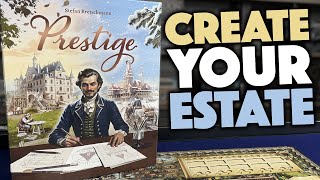
Click to watch at 0:02 · YouTube ↗
Overall sentiment (raw)
positive
Pros
- Interesting worker placement twists (using instructors, player order for next round).
- Balancing two scoring tracks (exterior and interior) is an interesting premise.
- The game ramps up, allowing for building twice with one action later.
- Dual-layered boards and detailed artwork make it a very good-looking game.
- The 'feeding the house' mechanic (discarding wood to keep rooms warm) is unique.
- Offers freedom and flexibility in strategy, allowing for different approaches to scoring.
Cons
- Can lose a ton of points if the two scoring tracks are far apart.
- Limited action spaces in a two-player game can lead to blocking.
- In a two-player game, building might only happen once or twice per round without upgrades.
- Negative points from heating the house are tracked on a separate scorepad, adding complexity.
Thematic elements
- Decorating an estate and its outward and inside appearance, gaining prestige amongst society by having the nicest house.
- RCOO era
Comparison games
- ArcNova
Mechanics (from transcript analysis)
- action selection — Choosing from six different actions, with placement on a track determining player order for the next round.
- event cards — Prestige cards dictate events during different seasons, affecting gameplay.
- Player Order Track — Placing instructors on a track determines player order for subsequent rounds, offering strategic advantages.
- Resource Management — Players collect and spend resources like wood, stone, and marble to perform actions.
- Scoring tracks — Two separate scoring tracks for exterior and interior scoring, with penalties for large differences.
- Set Collection — Collecting tiles for estate management and hiring craftsmen with specific building abilities.
- Tableau Building — Players upgrade their player board which represents their estate.
- Worker Placement — Players place 'instructors' to take actions, but the placement also determines player order for the next round. Workers themselves are a currency.
Video topics + discussion points
No key topics recorded for this video.
Quotes (from this video)
- The goal is to kind of get them close together. So, you want to like build a big building and make sure it's decorated.
- You place your instructors. We're going to use the word instructors to mean the people that you actually place out to take the actions.
- You're also choosing your place in player order for the next round.
- So while there is no traditional blocking where I'm here, you can't come here, eventually there is kind of blocking where you can't come here anymore.
- The thing that really makes you think about the actions you're taking because it's really a lot of it is about setting up for that next turn like I talked about.
- It's not about crossing them. It's not like ArcNova where one starts on one side and one starts on the other and you cross them. It's literally two scoring discs that if they're exactly together, you'll add them together and you don't lose any points.
- There's no feeding people in this game, but there's feeding the house.
- This is a very goodlooking game.
References (from this video)
No references stored for this video.
Transcript Navigation
Showing 1–1 of 1