


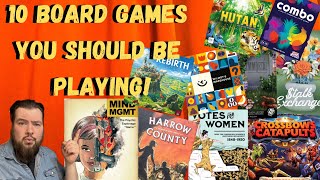

Stalk Exchange Deep Dive
What the Community Thinks About Stalk Exchange
Reviewers across multiple channels share a unified appreciation for Stalk Exchange as a polished, accessible stock market game wrapped in an elegant gardening theme. Watch It Played describes the core appeal directly: the game replaces traditional wheeling and dealing with planting and harvesting. Ryan and Bethany found themselves pleasantly surprised by its simplicity and elegance after initial skepticism about the pun-based theme. Board Game Animal praises it as a really nice, clean, pure stock market game with a very approachable, easy to understand theme, though notes it does not break new ground in the hobby. Reviewers consistently emphasize the game plays fast enough to encourage repeated plays, and families can easily join in. kovray's group observed that the game creates genuinely close finishes, with meaningful decision-making throughout.
Core Mechanics That Define Stalk Exchange
Planting, Surrounding, and Harvesting
The garden board sits at the heart of the game. Players spend their turns planting flowers from a rotating stock exchange into the garden as bulbs, which then bloom into flowers. The real strategic tension emerges when flowers of the same type become adjacent to each other: once a group is completely surrounded by other flower types or the garden's edge, it gets harvested and moved to the value track. Reviewers emphasize how this mechanic creates interesting spatial puzzles, blending a unique board-control mini-game with stock-market betting. The hidden aspect, not knowing which flowers opponents hold, means players cannot intentionally sabotage each other, but they can read the board and infer strategy based on what gets planted and harvested.
The Stock Crash and Portfolio Management
Each harvested flower increases its flower type's value on the market track. Players try to build a hidden portfolio of high-value flowers behind their player screen, swapping flowers from their hand with those in the stock exchange to chase rising values. The tension peaks at the end: once any harvested flower meets or exceeds the highest-valued stock token, the game ends and the highest-value flower crashes, losing half its value. This mechanic forces players to balance aggression, pushing flowers high in value, with self-preservation, avoiding a crash in the flowers they hold. Reviewers note that tightly matched games emerge from players diversifying portfolios, though spreading investments too thin rather than focusing on a single high-value flower carries real risk.
The Stalk Exchange Experience
Quick-Playing and Elegant
Multiple reviewers emphasize Stalk Exchange's snappy pace and streamlined rules. Board Game Animal calls it a really clean, straightforward design that plays quick enough to make you want to just shuffle up the tiles and start it again. The rules are light enough for a seven-year-old to grasp, yet strategic enough for adults to develop meaningful plays. kovray highlights how the game's two core actions, planting and swapping, combined with optional powerful tokens create a little extra power play and decision-making. The constant cycling of the stock exchange and garden keeps the board evolving, meaning no turn feels repetitive.
Hidden Information and Tense Finals
Because players keep their flower portfolios hidden behind player screens, nobody knows the final standings until scoring. This uncertainty builds tension throughout the game and makes the stock crash mechanic potentially devastating or rewarding depending on which flowers someone chose to hold. kovray's commentary captures this dynamic: players never quite know who they are going to out maneuver with the flower tokens, and the hidden information prevents accidental kingmaking since players only enjoy the game with people they genuinely want to play alongside. Watch It Played notes that ties are resolved by comparing holdings of the most valuable flowers, adding another layer of strategic wrinkle to portfolio selection.
What Makes Stalk Exchange Stand Out
Striking, Cohesive Artwork and Theme
Ryan and Bethany are visibly enchanted by the artwork: paper-folded flowers by Diana Beltran Herrera that blur the line between botanical illustration and game component. Board Game Animal affirms the production is absolutely beautiful and contributes to the game's approachability. The theme, a flower market disguised as stock exchange through wordplay, is not simply a coat of paint. The physical act of planting bulbs and seeing them bloom mirrors the metaphor of value growth, making the economic system feel natural rather than pasted on. Multiple reviewers note the flowers are visually memorable and help make the game inviting for all player types.
Accessible Yet Strategic
Stalk Exchange walks a careful line between simplicity and depth. Ryan and Bethany played it with their seven-year-old and were surprised that their daughter could grasp strategy, not merely rules compliance. The two-action economy per turn, plant or swap, is transparent, but where to plant, when to swap, and which flowers to hold create genuine strategic decisions. Reviewers appreciate that the game does not require perfect memory since the board itself tells a story: observant players can infer swaps and upcoming opportunities. The business tokens add flexibility for players who want to take extra actions or refresh the market entirely, giving people agency to adapt to bad draws.
Potential Drawbacks
Lack of Novelty
Board Game Animal's review strikes the only cautionary note, observing that the game does not necessarily rock the hobby with something new and inventive. Stock market games are well-established in the hobby, and Stalk Exchange executes the formula well without introducing novel mechanisms. The game is best appreciated as a refined, beautifully produced entry in a familiar genre rather than a genre-defining title. For players seeking cutting-edge innovation, Stalk Exchange may feel like a well-made but familiar experience.
Board Chaos and Harvest Unpredictability
The shared garden board can become chaotic, especially as it fills. Large groups can form that become nearly impossible to surround without massive collateral harvesting. Reviewers note this creates moments of high variance: a player might invest heavily in a flower only to watch a cascade of harvests deflate its value or inflate a rival's portfolio. While most players frame this as engaging interaction, the board-state volatility means careful planning can sometimes unravel due to factors outside individual control. Smaller flower groups are easier to harvest but contribute less value growth, forcing players to balance the risk of pursuing big payoffs against the safety of incremental wins.
If You Enjoy Stalk Exchange
Stock market games like Pit, Jaipur, and Ra all scratch a similar competitive itch around commodity trading and price manipulation. If Stalk Exchange resonates, consider Jaipur for faster two-player negotiations around goods trading, or Ra for end-of-round auctions and risky bidding. For the aesthetic and theme specifically, gardens and nature games like Cascadia or Arboretum offer flowery charm. However, Stalk Exchange's specific combination, a stock market game played through garden manipulation with beautiful artwork and genuine family appeal, makes it fairly unique. The game's quick playtime and elegant rules place it alongside titles that reward both newcomers and experienced players.
What Reviewers Are Saying
there's nothing more competitive than the Garden stock market where wheeling and dealing is replaced with planting and harvesting as players try to ensure they're collecting the most lucrative flowers as values rise and potentially come crashing down
— Watch It Played
the artwork is absolutely beautiful and it's ultimately a really clean, straightforward design that plays quick enough that'll it'll make you want to just shuffle up the tiles and start it again
— Board Game Animal
those types of decisions and then um at least from our experience we've had really close games mhm and it's it's fun to see that different player counts too because it kind of ever flows and you can really manipulate what you're going to do and really mess with some people too
— kovray