
















Viticulture World: Cooperative Expansion Deep Dive
What the Community Thinks About Viticulture World
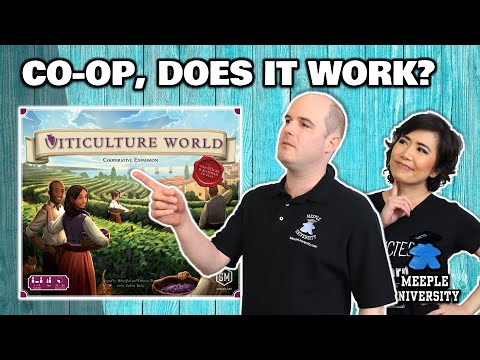
Viticulture World has captured the attention of the board game community as a striking departure from the competitive vineyard-building experience players know. Watch It Page's Rodney Smith, along with voices from Allies or Enemies, Get Into Games, and Board Game Garden, see the expansion as a bold reimagining rather than a simple add-on. The consensus is clear: this isn't Viticulture with a cooperative coat of paint. It is a tightly wound, strategically demanding puzzle that transforms what players love about the core game into something fundamentally different. Skepticism met the concept initially, particularly among those invested in the competitive game's asymmetrical charm, yet nearly every reviewer concluded the cooperative transformation delivers on its promise.
Core Mechanics That Define Viticulture World
Innovation Tiles and Strategic Board Evolution
The innovation tile system sits at the heart of Viticulture World's design. These rectangular and oval tiles fundamentally upgrade or reimagine how the board functions throughout play. Rectangular tiles slot into action spaces, improving them permanently for all players, while oval tiles can be placed on dotted outlines and unlock bonuses for trained workers. This creates a shared progression where the collective team's investments reshape the game state. Designer Mahir Shah and Francesco Tassini, under publisher Stonemaier Games, structured the innovation system so players can draft these tiles for just one lira, making early resource allocation decisions matter deeply. The tiles chain together; an arrow tile pointing to another tile creates cascades of rewards, turning the seemingly simple decision of which tile to take into a puzzle where each choice echoes across future turns. This mechanic ensures that no two games follow the same strategic path and gives the expansion genuine replayability despite the demanding difficulty.
Seasonal Workers and the Cooperative Transformation
The iconic feature of Viticulture World is the seasonal worker system, enforced through adorable tiny hats. Players begin with four regular workers split between summer and winter roles, plus a grande worker and a temporary worker. This hat system elegantly solves a design problem: how to create meaningful worker placement tension in a cooperative game where players can communicate openly. Workers with hats can only work during their season until trained at the dedicated Train action. Training removes the hat and costs lira, but unlocks workers to act flexibly and gain bonuses from oval innovation tiles. The hats themselves have become iconic among reviewers, praised not just for functionality but as a charming, durable solution that makes the cooperative variant feel distinct. The grande worker retains its capacity-overflow ability but gains a new trade action, allowing targeted resource swaps between any two players on the same action space. This cooperative twist on worker placement keeps the familiar engine of Viticulture intact while enforcing the coordination and shared goal that define the expansion.
The Viticulture World Experience
A Brain-Burning Race Against Time
Viticulture World is relentlessly tight. Players have six years to achieve a shared win condition: each player must reach 25 victory points and the team must push the influence token to the end of its track. Six rounds. That constraint transforms the game into a puzzle where every action counts and bad decisions compound quickly. Reviewers describe it as min-maxing your best choices with the need to coordinate three or four moves ahead. Unlike the base game, which allows natural ramp and forgiveness for suboptimal turns, World penalizes hesitation. The randomness of the innovation tile market and continent-specific events means players cannot execute a preset strategy; instead, they must react to constraints, identify critical actions, and optimize across limited worker slots. This tension is the game's hallmark. It demands focus, communication, and mental stamina from everyone at the table. Some players find this exhilarating; others find it exhausting. Either way, reviewers agree that the difficulty ensures players keep returning, driven by the desire to crack the puzzle.
Asymmetric Continent Scenarios Create Distinct Puzzles
Rather than a single cooperative challenge, Viticulture World offers seven continent-specific decks (including Green Gully, North America, Europe, Asia, South America, and Africa) that each rewrite the rules in subtle but meaningful ways. North America introduces a fame track, Europe adds private goals, Asia uses board overlays, and each region's event cards enforce different strategic priorities. Reviewers emphasize that while the core goal remains the same, the path is different in each continent. This modular design avoids the trap of sameness that can plague cooperative expansions. The randomness in the event card order and innovation tile draws means that even repeat plays of the same continent feel fresh. Players cannot memorize a solution; they must learn the continent's flavor and adapt. This structure encourages experimentation and long-term engagement, transforming World into not one game but a series of related challenges with increasing difficulty.
What Makes Viticulture World Stand Out
A Cooperative Expansion That Actually Changes the Game
Many cooperative expansions add a shared enemy or tacked-on timer. Viticulture World rewrites the fundamental rules. The wake-up chart replaces simultaneous worker placement with a turn-order-defining clock mechanic. The year proceeds as players pass, potentially freeing spaces for remaining players. The card hand shrinks from seven to five cards. These changes feel cohesive rather than arbitrary, transforming Viticulture from a game about personal vineyard empire-building into a choreographed team performance. Reviewers highlight that this is not a lesser version of Viticulture designed for families; it is a genuinely different strategic challenge that rewards deep engagement. The expansion respects the core game's fans while offering them something unexpected, and it provides a teaching tool for introducing new players to base Viticulture because the shared goal and hand-revealing option encourage mentorship and collective problem-solving. Skeptics initially doubted a cooperative Viticulture could work, but the transformation proved them wrong through confident design.
Seven Asymmetric Continent Scenarios and the Modular Play Experience
The seven continent decks represent the expansion's greatest innovation. Rather than offering a single cooperative experience that players repeat, each continent rewrites the game's core rules. This asymmetry means players cannot simply optimize and memorize; they must learn each continent's unique pressures and adapt their strategies accordingly. The difficulty progression from Green Gully (introductory, recommended first) through harder regions provides a natural learning curve and ensures long-term replayability. The randomness of event timing and innovation tile availability means that even expert teams will face surprises. Reviewers praise this design choice as elevating what Viticulture World offers beyond the standard cooperation-against-a-timer formula. It transforms the expansion into seven games in one box, each with its own puzzle to solve and mastery to achieve.
Potential Drawbacks
Extreme Difficulty That Demands Player Commitment
Viticulture World is brutally challenging. Some reviewers describe specific regions as so difficult that they border on punishing. At two players, the game becomes a high-wire act where every action must optimize for the team's narrow path to victory. Even at four players (cited as the sweet spot), the puzzle remains demanding. This intensity attracts players seeking a cerebral cooperative experience but excludes those preferring lighter, more forgiving gameplay. Newcomers to Viticulture itself should not attempt World, as the cooperative variant assumes solid understanding of the base rules. Additionally, the difficulty can create decision paralysis at the table. With so many moves to consider and limited resources to distribute, some groups may find themselves analysis-paralyzed, turning a 90-minute game into a longer ordeal. While reviewers cite this difficulty as a feature encouraging repeated plays, it is equally a wall for players seeking casual entertainment.
Shift Away From Thematic Wine-Making Toward Puzzle-Solving
The base Viticulture game centers on the theme of building a vineyard and selling wine. Viticulture World, while retaining wine mechanics, drifts toward pure optimization. Reviewers note that the focus will likely shift away from actual wine making, partly because the important spaces fill up and partly because many continents will naturally move your focus elsewhere. A player might find themselves chasing influence points, managing innovation tiles, and executing trade chains without ever feeling deeply invested in grape cultivation. This thematic drift is not inherently negative, but it matters to players who chose Viticulture for its cozy theme and resource management. The game still involves wine, grapes, and vineyard building, but these become mechanics serving the cooperative puzzle rather than the focal point. For theme-first players, the departure from competitive Viticulture's slower, more narrative pacing toward World's frantic optimization may feel like a loss of identity.
If You Enjoy Viticulture World
Players who find satisfaction in Viticulture World's cooperative puzzle should explore Orleans, a tile-placement game whose cooperative scenarios share World's design philosophy of transforming a competitive engine into a collaborative experience without losing mechanical depth. Tuscany, the original Viticulture expansion, pairs well with World as a competitive counterpoint, allowing the same table to experience both cooperative and competitive wine-making across sessions. For those craving additional cooperative brain-burners, Spirit Island offers similarly demanding asymmetric roles and modular challenges, though with a completely different theme and mechanics. The Crew series provides lighter cooperative experiences that share World's emphasis on communication and forward planning without the resource management overhead. Finally, Moor Visitors and Visit from the Rhine Valley, the other Viticulture expansions, integrate seamlessly with World and offer additional strategic layers for competitive play, letting players build a richer Viticulture ecosystem across expansion boxes.
What Reviewers Are Saying
"The vast majority of these continents are real tests of your mental metal. You will need to work as a team to coordinate three or four moves ahead as the cooperative puzzle is genuinely tight and demanding."
— Allies or Enemies
"I was quite skeptical about a cooperative version of Viticulture, and I never really thought it would work, but my gosh it works and it works really well. It's so difficult, and it makes you come back for more."
— Get Into Games
"The yellow and blue hats are both adorable and functional. They fit surprisingly well just enough to stay put but not so much that they get stuck, and they instantly solve the problem of adding seasonal workers without a ton more meeples."
— Allies or Enemies